The sunniest Canary Islands are the desert-dry eastern pair, Fuerteventura and Lanzarote, closely matched by the southern resorts of Gran Canaria and Tenerife — Maspalomas, Playa del Inglés and Costa Adeje all bask in a rain shadow while the greener northern coasts see far more cloud. The whole archipelago is generously sunny by British standards, but sunshine is not spread evenly. Understanding the north–south split, and the role of the trade winds, is the key to booking a holiday where the sun actually shows up.
The one rule that decides Canarian sunshine
Almost everything about where the sun shines comes down to a simple pattern: south and east are bright and dry; north is greener and cloudier. The north-east trade winds push moist Atlantic air against the northern slopes of the taller islands, where it cools, condenses and forms cloud. The southern coasts sit in the lee — a rain shadow — so they get the lion's share of the sunshine. The low, flat eastern islands barely interrupt the wind at all, so they stay sunny almost everywhere. Our Canary Islands weather guide has the full explanation; the practical version follows.
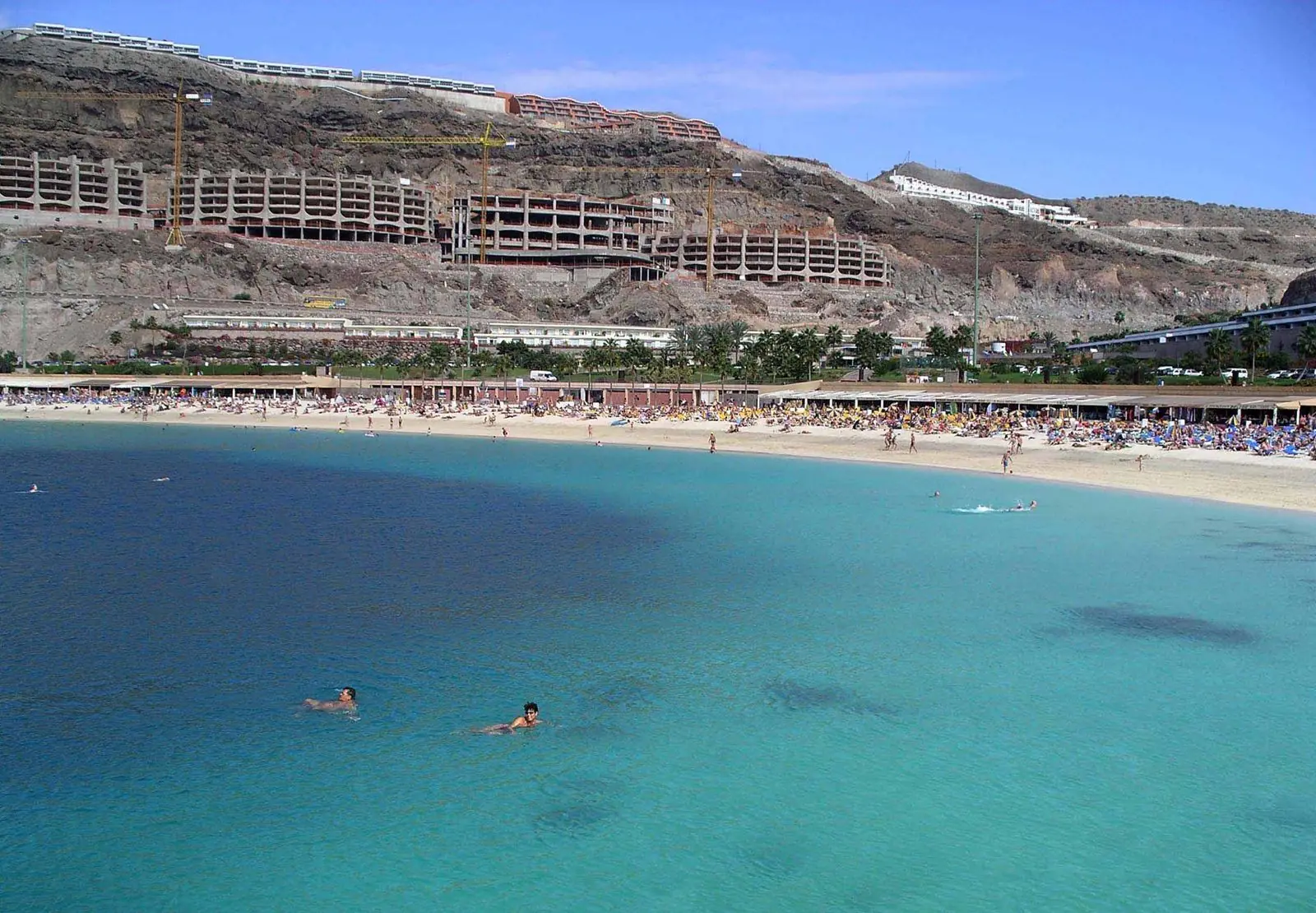
Photo: Javier Branas · CC BY 3.0 · Wikimedia Commons · scaled
The sunniest islands and resorts, compared
Here's how the main options stack up for reliable sunshine across the year, not just in summer.
| Island / area | Sunshine | Cloud tendency | Character |
|---|---|---|---|
| Fuerteventura | Among the very sunniest | Very low — near-desert | Big skies, beaches, wind |
| Lanzarote | Among the very sunniest | Very low | Volcanic, dry, bright |
| South Gran Canaria (Maspalomas, Playa del Inglés) | Excellent | Low — sheltered by mountains | Lively resorts, dunes |
| South Tenerife (Costa Adeje, Los Cristianos) | Excellent | Low | Warm, sheltered, busy |
| North Tenerife / Gran Canaria | Good but variable | Higher — the "sea of clouds" | Green, scenic, cooler |
| La Palma, La Gomera, El Hierro | Variable, cloudier north | Highest — lush and misty | Wild, green, quiet |
Fuerteventura and Lanzarote: sunshine almost guaranteed
Because the eastern islands are low and flat, there's no mountain to trap cloud, so the sun reaches nearly every corner. Fuerteventura in particular is close to a desert — arid, bright and blessed with enormous skies. The only asterisk is wind: the same trade winds that keep the cloud away also make these islands the breeziest, which surfers and kitesurfers love and still-beach seekers notice. Lanzarote offers the same reliable sun with the bonus of extraordinary volcanic landscapes.
The southern resorts: sun in a rain shadow
On the bigger, mountainous islands the sunshine concentrates in the south. Around the Maspalomas dunes, the resorts of Maspalomas and Playa del Inglés enjoy some of the most dependable sunshine anywhere in the Gran Canaria, sheltered by the island's central peaks. It's the same story in south Costa Adeje, where the bulk of Teide holds the northern cloud at bay. Book a southern resort on these islands and you tilt the odds firmly towards sunshine.
Why the north sees more cloud
The greener north is greener for a reason: it gets more moisture. Above towns like Puerto de la Cruz you'll often see a "sea of clouds" — a low, flat blanket of cloud that hangs against the hills at mid-altitude, feeding the laurel forests while the coast below stays hazier and cooler than the south. La Palma, La Gomera and El Hierro are cloudier still on their northern flanks, which is precisely what makes them so lush and beautiful. It's a straight trade: sunshine for scenery. If you're weighing that up, our best time to visit guide breaks the seasons down island by island.
Does the season change things?
The north–south split holds all year, but summer brings the strongest trade winds and the biggest "sea of clouds" episodes in the north, while winter can occasionally bring the odd cloudier spell to the south. Even so, the southern resorts and the eastern islands stay reliably bright across every month — one of the reasons the Canaries are Europe's go-to winter-sun destination. For a warmth-focused version of this question, see our guide to the warmest winter sun.
How to make the most of the sunshine
Wherever you land, a few habits help you catch the best of the sun. Book a south- or east-facing resort on the mountainous islands and you sidestep the northern cloud entirely. If you're on a green island and the coast looks grey, remember the "sea of clouds" usually sits below the peaks — driving up above it often breaks you out into brilliant sunshine, which is why the Teide and La Palma observatories are perched so high. Mornings are frequently the clearest window in the north before cloud builds through the afternoon, so plan beach time early. And whatever the forecast, the Canarian sun is strong all year given how far south the islands lie — factor 30 and a hat are sensible even in winter.
Chasing a tan in a cloudier spell up north? Drive up above the cloud line — the sun is almost always shining on the mountains even when the coast is grey.
Sunshine isn't the only question
It's worth remembering that the cloudier islands offer things the sun-traps can't — misty laurel forests, dramatic green ravines and blissful quiet. If total sunshine is your single priority, follow the guidance above. If you want the fullest picture of which island suits your kind of holiday, our master which Canary Island should you choose guide weighs sunshine against beaches, nightlife, families and budget.
The bottom line: which is the sunniest Canary Island?
For the most dependable sunshine, choose Fuerteventura or Lanzarote, or the southern coasts of Gran Canaria and Tenerife — all four sit dry and bright while the northern coasts and western isles catch the cloud. Pick a south-coast resort or an eastern island, pack the factor 30, and you'll spend far more of your holiday under blue skies than grey.