Lanzarote works very well with children: the island is small enough that nothing is more than about an hour's drive, the south coast around Playa Blanca and Puerto del Carmen has calm, gently shelving beaches, and the volcano coach tour at Timanfaya, the camel rides beside it and the lava caves of the north are the kind of days out children talk about for years. It is quieter than Tenerife or Gran Canaria, with fewer big theme parks and more wild landscape, and for many families that is exactly the point.
The island has two personalities. The south and east, where the resorts are, are sunny and largely sheltered. The north-west coast, around Famara, faces the open Atlantic, with big surf and dangerous currents, and the trade winds blow hard across the middle of the island on many afternoons. Choose your base and your beach with that in mind and Lanzarote is gentle; ignore it and a toddler's beach day can end in a sandstorm.
This page goes deeper than our overview of the Canary Islands with kids, which compares all the islands. Here the question is Lanzarote alone: which resort suits which family, the beaches in order of calm, which attractions are worth it with young children, and what has changed in 2026.
Choosing a resort
Three resorts take almost all the island's family holidays, and each suits a different kind of trip.
Playa Blanca, at the southern tip, is the sunniest and most sheltered. Its town beaches are calm, the long seafront promenade is flat enough for a buggy, and the Papagayo coves and the ferry to Fuerteventura are close by. It is the first choice for families with toddlers, though it is the furthest resort from the airport and from the caves of the north.
Puerto del Carmen, on the south-east coast, is the island's biggest resort, with the widest choice of apartments, restaurants and family hotels and a long sandy beach running for several kilometres. It is about ten minutes from the airport and central for day trips, and its busy Avenida de las Playas is lively in the evenings without being rowdy in the way the biggest Tenerife strips can be.
Costa Teguise, north of Arrecife, is smaller and more spread out, and more exposed to the wind. It has one of the island's calmest beaches for small children, the aquarium, and the quickest drive to the northern caves and the Sunday market at Teguise.
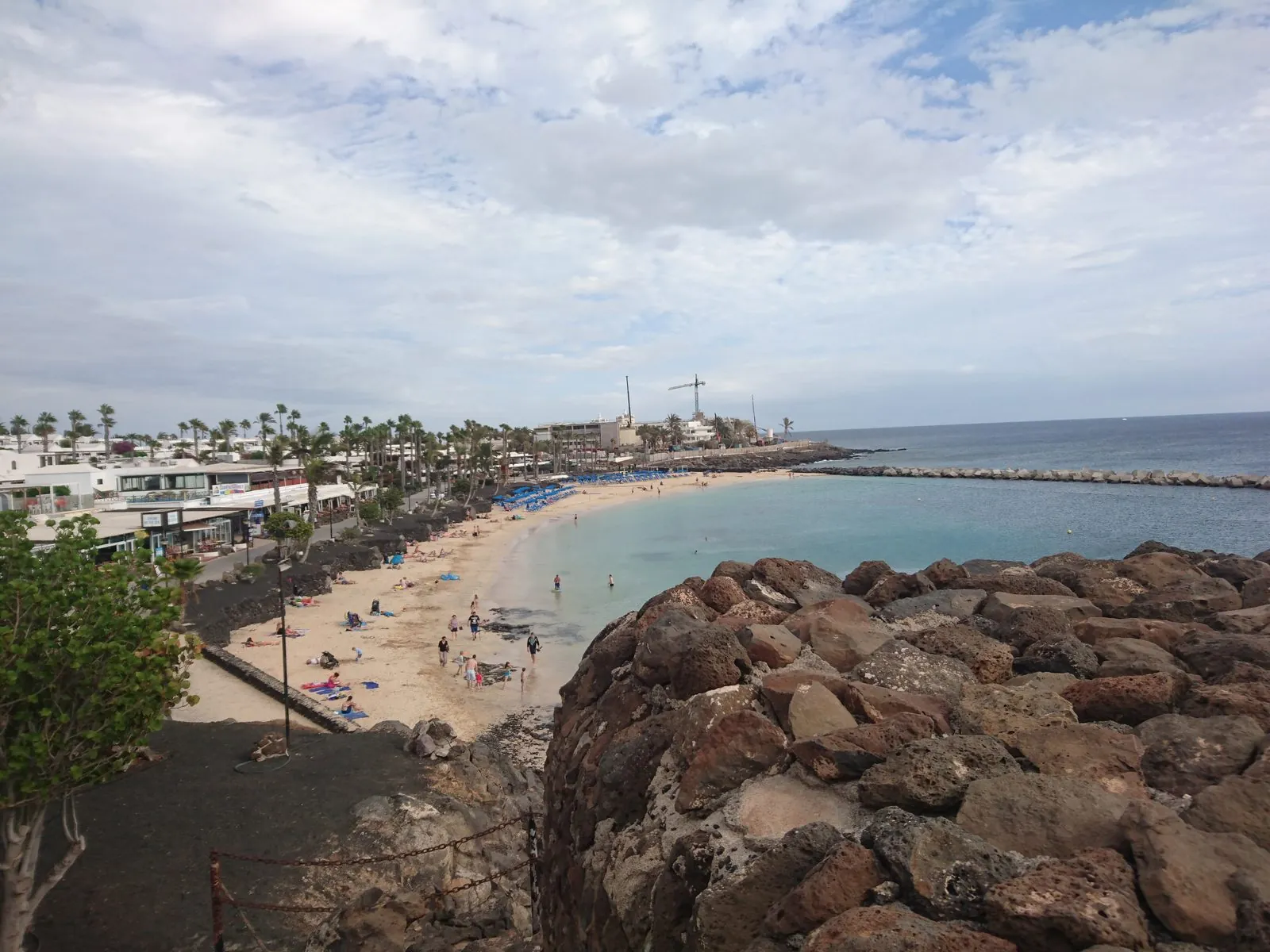
Photo: BrotherDarksoul · CC BY-SA 3.0 · Wikimedia Commons · scaled
Beaches by how calm they are
On Lanzarote the rule is that the south and east are for paddling and the north-west is for looking at. These are the family beaches, roughly calmest first.
| Beach | Resort | Why families use it | Watch for |
|---|---|---|---|
| Playa Dorada and Playa Flamingo | Playa Blanca | Sheltered bays, gentle entry, facilities | Busy in high season |
| Playa del Jablillo | Costa Teguise | Protected by a breakwater; very still water | Small, fills early |
| Playa Grande | Puerto del Carmen | Long golden beach, lifeguards in season | Some small waves |
| Playa de los Pocillos | Puerto del Carmen | Wide sand, room to spread out | Breezy in the afternoon |
| Caletón Blanco | Near Órzola | White sand and shallow lagoons among black lava | No facilities; tide matters |
| Papagayo beaches | Near Playa Blanca | Beautiful coves, clear water | Dirt track, no shade, few facilities |
| Playa de las Cucharas | Costa Teguise | Long beach, watersports school | Often windy |
| Famara | North-west | Spectacular, surf lessons for older children | Dangerous currents; do not swim |
Caletón Blanco, near Órzola in the far north, is the beach most families never find and the one toddlers love most. The white sand sits between fingers of black lava, and as the tide drops it leaves warm, shallow pools that are perfect for small children with buckets and nets. Combine it with the La Graciosa ferry, the caves or lunch in Órzola.
Famara's sea is not for paddling. The great beach under the Famara cliffs looks inviting, and it is a fine place for kites, walks and surf schools. But the currents along it are strong and have caught out visitors who only meant to cool off; keep small children out of the water unless the lifeguards say otherwise.
Timanfaya and the camels
The Fire Mountains are the day out that children remember. At Timanfaya National Park a coach takes you on a 35-minute route through the craters, and at Islote de Hilario the staff pour water into a pipe in the ground and it comes back as a jet of steam, and push dry brush into a hole until it catches fire on its own. Children under seven go free; the adult ticket was €30 in 2026.
Two changes matter for families. Since June 2026 tickets are sold online only, for a fixed date and time slot, with nothing sold at the gate, so book before you drive out. And the coaches stop at about 15:45, so this is a morning trip; the queue and the heat both build towards midday.
On the road up from Yaiza, the Echadero de los Camellos is where camel trains carry visitors up a cinder slope at the edge of the park. Two people ride on each camel, one on each side, and the ride is short. It is separate from the Timanfaya ticket and is paid on the spot. Our page on camel rides has what to expect, including an honest word on animal welfare.
Caves, crabs and a trick of the light
The north of the island has two lava-tube attractions that work well with children who can manage steps. At Jameos del Agua, a tunnel of cooled lava with a lake inside, look into the dark water for the tiny white crabs, jameitos, which are blind and found almost nowhere else in the world. Children are fascinated by them; please stop them throwing coins, which harms the crabs.
Nearby, the Cueva de los Verdes is visited on a guided tour of about an hour. Near the end, the guide reveals a surprise that we will not spoil, except to say: tell your children nothing beforehand, and keep a hand on any small child when the moment comes. The cave has low ceilings and uneven steps, so leave the buggy in the car and bring a carrier for babies.
Both centres let under-sevens in free. Adults pay full price at each centre, because CACT no longer sells multi-centre vouchers; the Lanzarote attractions pass page adds up a family day.
Parks, pools and the aquarium
Lanzarote has fewer theme parks than its bigger neighbours, but a handful are worth knowing. Rancho Texas Lanzarote Park, on the edge of Puerto del Carmen, is a Wild West-themed animal park, and its water park, Aqua Rancho, is included in the ticket. Encounters with dolphins and sea lions are sold separately. The park runs a shuttle from several points on the island; check where it stops.
In Playa Blanca, the Aqualava water park offers slides and pools, and in Costa Teguise the Lanzarote Aquarium is a small indoor aquarium, a useful hour or two on a windy day; ticket sellers were still listing it in 2026, but confirm hours before you go, because sources disagree about Sunday opening.
One park you may still find in older guidebooks no longer exists. Guinate Tropical Park, the bird and animal park in the north near the Mirador del Río, closed around 2016 after complaints from the Guardia Civil's nature service, Seprona, and from animal welfare groups. In April 2017, La Voz de Lanzarote reported that Rancho Texas had taken in 30 of its remaining animals, among them seven crocodiles and six macaws, at the request of the Canarian government. Do not drive to Haría expecting to find it open.
Gentler days out
- La Graciosa: a 25-minute boat from Órzola to a car-free island with sand streets. Older children love cycling the tracks; with small ones, use the jeep taxis.
- The Sunday market in Teguise: busy and colourful, with food stalls; go early with a buggy.
- Lagomar at Nazaret: a house built into a quarry wall, full of tunnels and secret staircases. Children treat it as a maze, but the steps are steep.
- The Castillo de Santa Bárbara above Teguise: a hilltop fort that housed the piracy museum until it closed for restoration. It stands largely empty while a new use is decided, but the view from the walls is still the reason to go (more on the castle).
- A glass-bottom boat trip: where the resorts offer one, a short, calm way to see fish without getting wet; pick a still morning.
Practical tips for small children
- The wind: pack a windbreak or a small beach tent. On breezy afternoons the sand blows, and a sheltered spot makes the difference.
- Sun: the UV is high all year and the wind makes it feel cooler than it is. Rash vests and hats beat sun cream alone.
- Pushchairs: the resort promenades are good; the caves, Lagomar and Papagayo are not. A baby carrier is worth packing.
- Car seats: children 135 centimetres tall or less need an approved child seat in a car, so book seats with your hire car or transfer.
- Driving times: Playa Blanca to Timanfaya is about half an hour, Puerto del Carmen to the northern caves around 40–45 minutes. With children, plan one big outing a day and no more.
- Mealtimes: resort restaurants serve early and welcome children; in villages, lunch starts around 13:30.
The family island, resort by resort
For toddlers, base yourselves in Playa Blanca and use Playa Dorada and Flamingo, with Caletón Blanco and Papagayo as day trips. For a mix of ages and the most choice, Puerto del Carmen is the all-rounder, with Rancho Texas on the edge of town. For older children who like wind and watersports, Costa Teguise is the base, with Jablillo for the younger siblings. Whichever you choose, book the Timanfaya slot before you leave home, leave the buggy for the caves, and let the volcanoes do the entertaining. The rest of the island, from Manrique's houses to the wine country, is on our Lanzarote guide.