Valverde is the Canaries' quiet oddity — the only island capital in the archipelago built inland, away from the sea, high on the misty green hills of El Hierro. A small, unhurried town of whitewashed houses and a stout old church, it was set back from the coast centuries ago as protection against pirate raids, and it remains the calm administrative heart of Spain's smallest, wildest and westernmost inhabited island. This is the gateway to a place that feels like the edge of the world — and gloriously untouched by mass tourism.
Few visitors make it to El Hierro, and that's exactly its charm. Valverde is where you land or dock, get your bearings, and set out into an island of volcanic landscapes, ancient junipers and some of the cleanest air and clearest skies in Europe.
What it's like
Valverde sits at around 600 metres up in the green, often cloud-brushed north-east of the island, a short drive from both the airport and the ferry port at Puerto de la Estaca. It's tiny by capital standards — a compact grid of low white houses, small plazas and the fortress-like church of Santa María de la Concepción, whose tower once doubled as a lookout. The pace is slow and thoroughly local; there are shops, cafés and island offices, but no resort trappings and no crowds.
The setting is misty and pastoral, often cooler and cloudier than the coast below thanks to the trade winds — a green, hilly world of small farms, stone walls and grazing land. It feels remote, peaceful and refreshingly real: a working town rather than a tourist destination, and the calm hub from which the whole island is explored.
El Hierro is a UNESCO Biosphere Reserve and a pioneer in renewable energy, at times running almost entirely on wind and water power. It's one of the greenest islands on earth in every sense — and a wonderful place to slow right down.
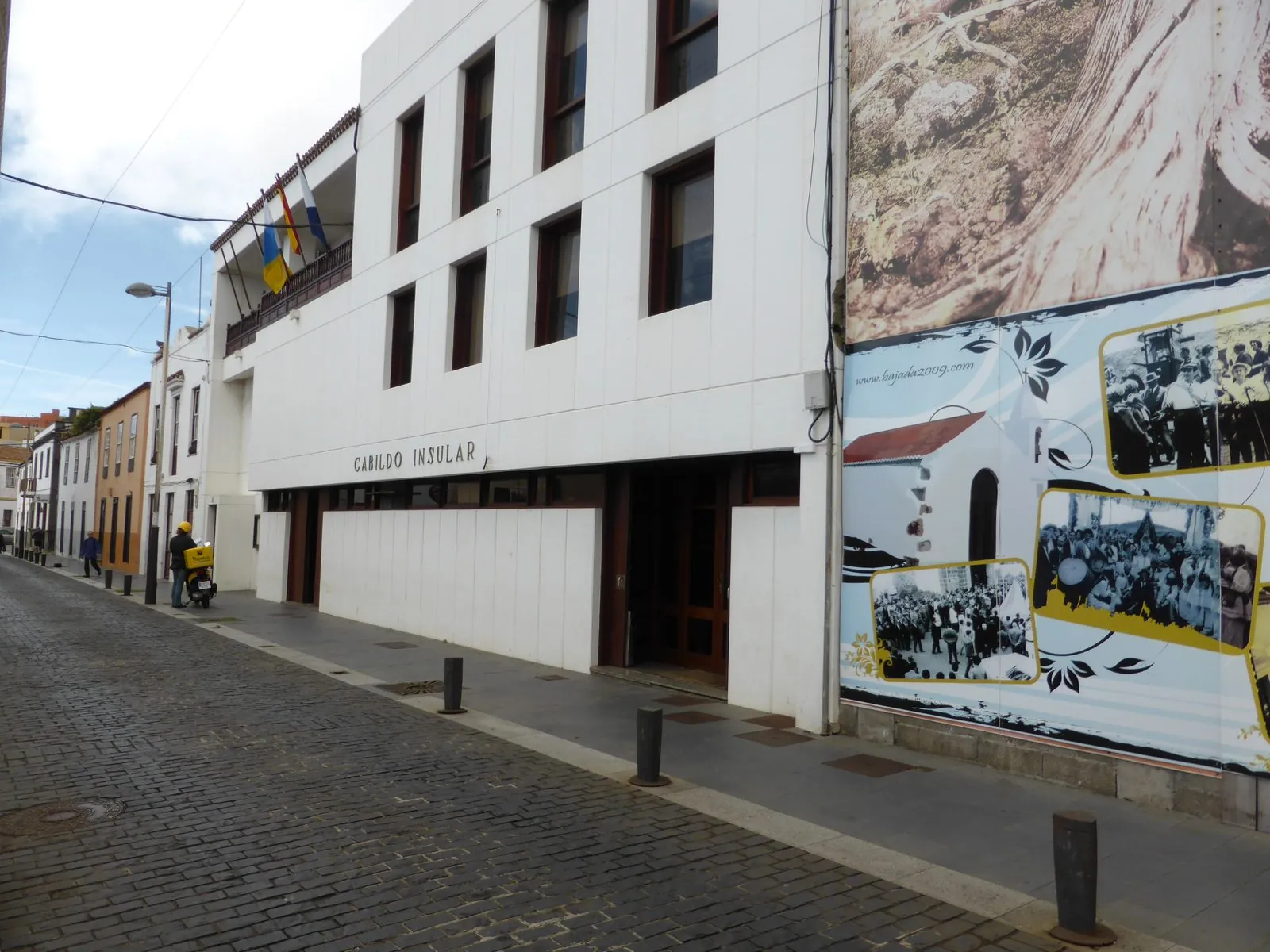
Photo: Carlos Teixidor Cadenas · CC BY-SA 3.0 · Wikimedia Commons · scaled
Gateway to El Hierro
Valverde's real role is as the gateway to the island. From here, roads climb and wind out to El Hierro's remarkable sights: the twisted, wind-sculpted juniper trees of El Sabinar, bent almost flat by centuries of gales; the great crescent depression of El Golfo; and the volcanic dive paradise of the far south. The island is small enough to tour in a couple of days but rugged enough to feel vast, its single mountain road linking pine forest, lava fields and dizzying coastal viewpoints.
This is above all an island for walkers, divers and nature lovers. Trails cross ancient volcanic terrain and the network of old paths that once linked the island's scattered settlements, while the crystal-clear waters of the south are among the best diving in the Canary Islands. There are no big beaches — bathing is in natural sea pools and rocky coves — but the scenery and the sense of escape more than compensate.
Where to stay and who it suits
Accommodation across El Hierro is small-scale and simple — guesthouses, rural cottages and a modest scattering of hotels, including the island Parador on the coast. In and around Valverde you'll find a handful of low-key options handy for the airport and ferry. The island suits independent travellers, walkers, divers and anyone wanting genuine peace and nature far from the tourist trail — ideally with a hire car. It is not the place for beach resorts, nightlife or big-name attractions, and that's the whole point. Our where to stay guide sets expectations.
Eating and nightlife
Food on El Hierro is honest, hearty and local. The island is known for its cheese (its smoked cheese has a protected designation), its wine, and fresh fish landed on the coast, alongside island staples like papas arrugadas with mojo, grilled meats and warming stews. Family-run restaurants in and around Valverde serve the real thing at gentle prices; our Canarian food guide has more. Nightlife is all but non-existent — a good dinner and a starlit sky are the evening's entertainment, and the island's dark, clear skies are superb for stargazing.
Getting there and around
El Hierro is reached by a short flight from Tenerife (and sometimes Gran Canaria) into the small airport near Valverde, or by inter-island ferry to Puerto de la Estaca just below the town — see our guide for routes and timings. Once here, a hire car is essential: the island's single winding mountain road and remote corners are made for driving, and public transport is very limited. Our guides to car hire and getting around have the practicalities, and drive carefully on the bends and through frequent low cloud.
Nearby
From Valverde the whole island is within reach: the ancient junipers of El Sabinar, the sweeping El Golfo valley, and the dive haven and lighthouse of La Restinga at the island's far southern tip, gateway to its marine reserve. Rocky bathing coves, volcanic viewpoints and old forest trails fill the days in between. Start with our El Hierro hub to plan a trip to the Canaries' most remote and rewarding island.