Twisted, crouching and bent almost flat to the ground by centuries of wind, the ancient juniper trees of El Sabinar are the living emblem of El Hierro — nature sculpted into something that looks half tree, half work of art. Out on the wild, windswept La Dehesa plateau at the island's far western edge, these gnarled sabina junipers have been shaped over generations by the relentless trade winds into extraordinary, contorted forms. Some arch right over until their crowns touch the earth. It's a strange, beautiful and utterly unique sight, and the defining image of tiny, unspoilt El Hierro.
Trees shaped by the wind
The sabina is a hardy Canary juniper, and on the exposed La Dehesa it grows in the teeth of the wind. Rather than break, the trees bend — and over decades and centuries the constant pressure has twisted their trunks into corkscrews, spirals and low arches, with branches streaming away from the prevailing wind like hair in a gale. Many lean at impossible angles; the most famous specimens curve all the way over so their tops brush the ground. Frozen mid-motion, they look as though a storm has just passed, though the shaping took lifetimes. It's a rare, humbling reminder of nature's slow power, and no two trees are alike.
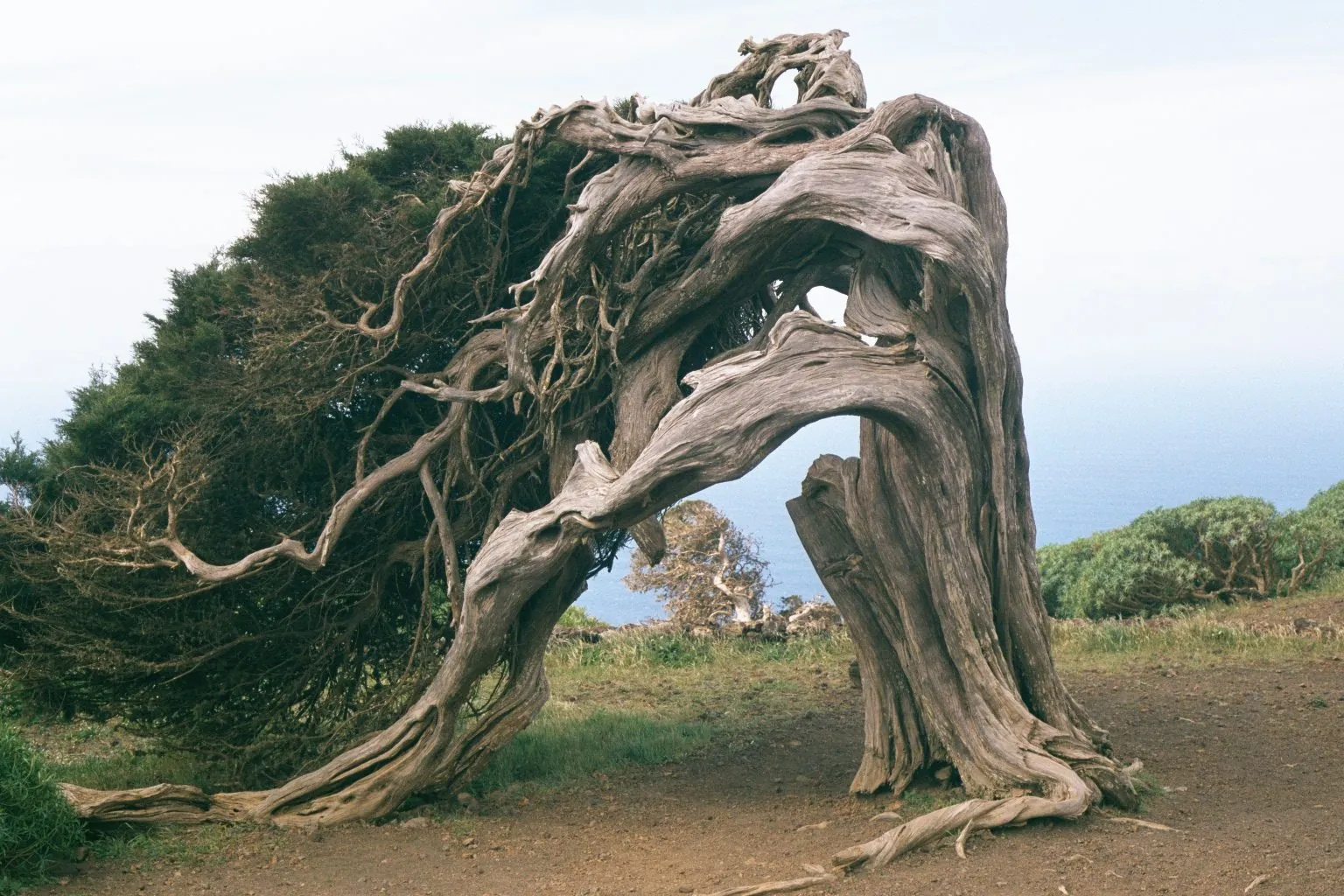
Photo: Eckhard Pecher · CC BY 2.5 · Wikimedia Commons · converted
An emblem of El Hierro
El Sabinar is far more than a curiosity — it's a symbol of the whole island. The bent juniper appears on postcards, logos and tourist literature across El Hierro, standing for the island's rugged character and its people's long, patient adaptation to a harsh, beautiful land. El Hierro is the smallest, most remote and least developed of the main Canary Islands, a UNESCO Biosphere Reserve that has made itself a byword for sustainability and renewable energy. The windswept junipers, thriving where little else could, fit that identity perfectly.
Combine it with the Ermita de los Reyes. Nearby on the same La Dehesa plateau stands the little hermitage of the Virgen de los Reyes, the island's patron, reached across open moorland with sweeping views to the Atlantic. It's a peaceful, atmospheric spot and an easy add-on to a visit to the junipers, tying together the island's nature and its traditions in one quiet corner.
Visiting El Sabinar
El Sabinar is an open natural site out on the western plateau, free to visit, with a short walk from the roadside to reach the most photographed trees. The setting is as memorable as the junipers themselves: high, treeless moorland swept by the wind, with the land often dropping away to the sea and, on clear days, huge views across the Atlantic. It's quiet and remote — you may well have the place almost to yourself, which only adds to the sense of standing somewhere genuinely off the beaten track.
The junipers are protected — look, don't climb. These trees are fragile and slow-growing, and their unique forms are irreplaceable, so admire and photograph them without climbing on or touching them. The plateau is exposed and the weather can turn windy, misty or cold quickly even when the coast is warm, so bring a windproof layer, and keep to the paths to protect the delicate ground.
Getting there and around the island
El Sabinar lies at the western end of El Hierro on the La Dehesa plateau, reached by a winding road across the island's high, green interior. A hire car is essential here — public transport to this remote spot is minimal, and having your own wheels lets you explore at leisure. The drive out from the island's small capital, Valverde, takes you through pine forest and open uplands and is a scenic pleasure in itself; allow time, as El Hierro's roads are slow and twisting.
Most visitors reach El Hierro by ferry from Tenerife or by a short island-hopper flight, landing near Valverde on the northeast coast. Once there, the whole island invites unhurried exploration: natural rock swimming pools on the coast, terrific diving in the crystal-clear waters of the south, dark night skies and a network of old walking trails. El Sabinar makes a perfect focal point for a day out west — a short, easy stop with an image you won't forget, and the truest picture of what makes El Hierro so special.
Trees bowed flat by the wind on a lonely plateau at the edge of the map — El Sabinar is El Hierro in a single, unforgettable silhouette.