La Restinga is the end of the road — Spain's most southerly village, and the diving capital of tiny El Hierro. A small, whitewashed fishing settlement clinging to a shore of black lava at the southern tip of the island, it looks out over the crystalline waters of the Mar de las Calmas marine reserve, some of the clearest and richest diving in the whole Atlantic. There's little here but a harbour, a scatter of houses and restaurants, and an enormous sense of peace — which is exactly why divers and lovers of the wild, quiet Canaries seek it out.
What it's like
El Hierro is the smallest, most remote and least-visited of the main Canary Islands — a rugged, volcanic UNESCO Biosphere Reserve with almost no mass tourism — and La Restinga is its southernmost outpost. The village sits amid a raw, striking landscape of dark lava fields, the legacy of the island's young volcanic geology, running right down to the sea. It's a working fishing port first and foremost, small and unpretentious, with a handful of streets, a sheltered harbour and a slow, off-the-beaten-track rhythm.
The mood is quiet, elemental and gloriously undeveloped. This is not a place for resort facilities or nightlife; it's a place for the sea, the volcanic scenery and the deep calm of somewhere the crowds simply don't reach. Visitors are overwhelmingly divers, walkers and travellers seeking the real, unspoilt Canaries, drawn by El Hierro's reputation as a green, self-sufficient island pushing towards running on renewable energy.
Because it sits at the sheltered southern tip, La Restinga enjoys some of the calmest, mildest conditions on El Hierro — the clue is in the name of the waters offshore.
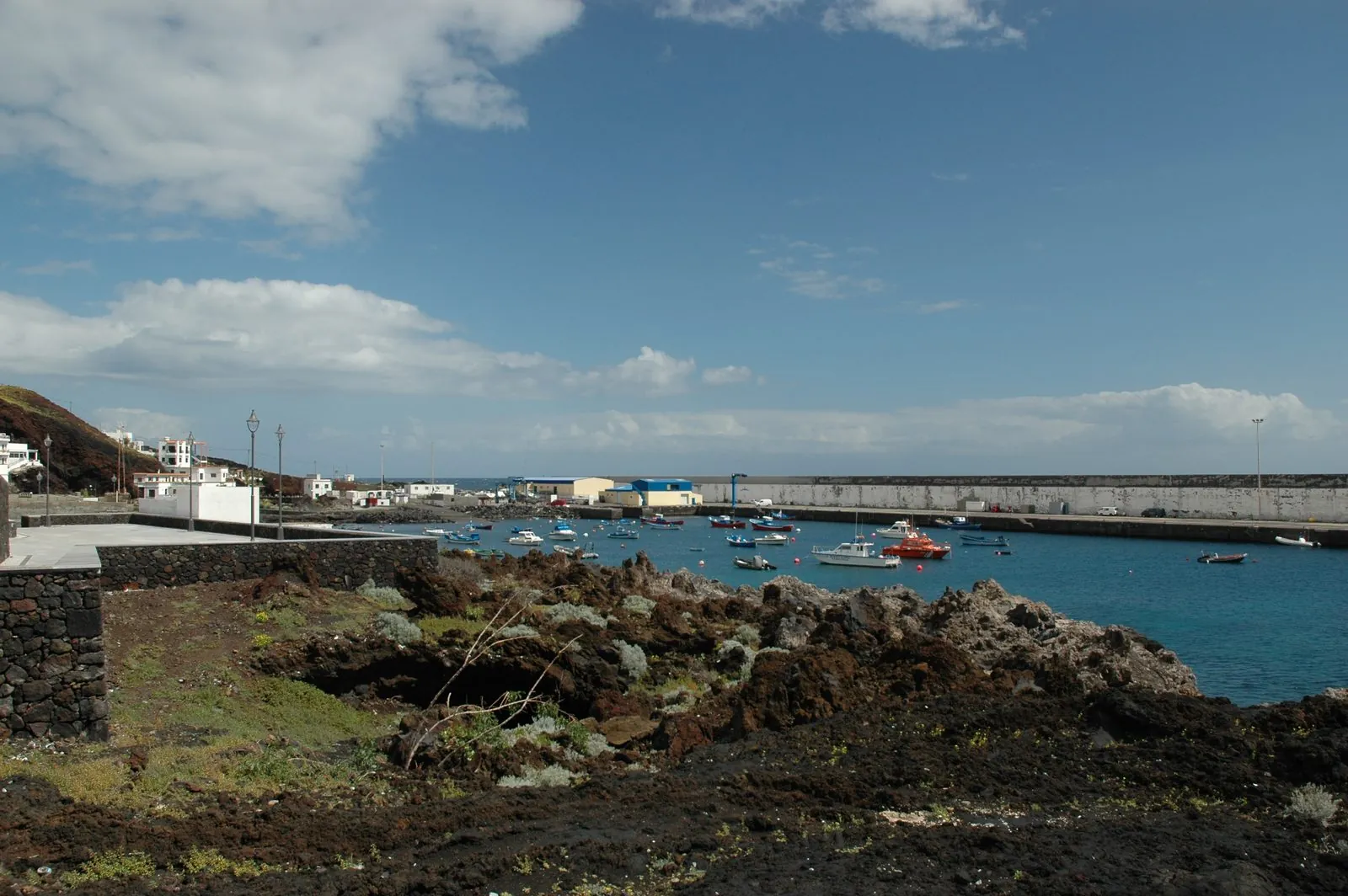
Photo: Pepelopex · CC BY-SA 3.0 · Wikimedia Commons · scaled
The Mar de las Calmas and diving
La Restinga's fame rests on what lies beneath the surface. The Mar de las Calmas ("sea of calms") is a protected marine reserve of exceptionally clear, warm, sheltered water, plunging quickly to volcanic drop-offs, caves and reefs teeming with fish. It's widely rated among the very best diving in the Canary Islands — indeed in Europe — with superb visibility and abundant marine life, and the village is home to several dive centres that make the most of it. Whether you're a seasoned diver or trying it for the first time, this is the reason most people come.
The Mar de las Calmas is a protected reserve, so diving is managed and some areas are restricted — book through one of La Restinga's established dive centres, who handle permits and know the best sites and conditions.
Above the water there's snorkelling straight off the rocks, sea kayaking and simply watching the fishing boats come and go. The volcanic coast makes for dramatic swimming spots rather than sandy beaches.
Swimming and the coast
Don't come to La Restinga for golden sand — the shoreline here is black lava, and swimming is mostly from the harbour and natural rocky spots in the sheltered, glass-clear water. For a proper beach day, El Hierro's coast has a few special natural bathing places, including the photogenic sea pools and coves elsewhere on the island. One of the nicest lies a short drive away at Tacorón, a beauty spot of turquoise water, lava arches and natural pools that's a favourite for a swim and a picnic.
Where to stay and who it suits
Accommodation is small and simple — a few guesthouses, apartments and rural cottages rather than hotels, matching the village's modest scale. La Restinga suits divers above all, plus walkers, nature lovers and travellers who want to get right off the tourist trail and experience the quietest corner of the Canaries. It won't suit anyone after resort comforts, nightlife or a beach holiday in the conventional sense. Many visitors combine a stay here with time in the island's greener uplands and its little capital, Valverde. Our where to stay guide gives the wider picture.
Eating and evenings
What La Restinga does have is outstanding fresh fish. The harbour-side restaurants serve the day's catch straight off the boats — this is one of the best places in the Canaries to eat simply grilled local fish, often with papas arrugadas and mojo and a glass of El Hierro's own well-regarded wine. Evenings are quiet and easy — a long seafood dinner, a drink by the harbour, the stars overhead. On such a remote island the night skies are wonderfully dark and clear.
Getting there and around
Getting to El Hierro is a small adventure in itself. The island is reached by ferry from Los Cristianos in Tenerife, or by short flights from Tenerife North and Gran Canaria — see our ferries between the islands guide, and viamo's route planning helps with joining up the connections. From the port or airport near the capital, La Restinga is a scenic drive of around three-quarters of an hour down to the southern tip. A hire car is really essential for exploring El Hierro's winding roads and scattered sights.
Nearby
Beyond La Restinga, El Hierro rewards exploration: the turquoise natural pool at Tacorón nearby, the green misty uplands and juniper forests of the interior, the dramatic western cliffs and the little capital of Valverde. It all adds up to one of the most unspoilt islands in the Atlantic. Start with our El Hierro hub to plan the rest of your trip.