Tacorón is El Hierro's idyllic hidden cove — a sheltered inlet on the island's sunny south coast where turquoise water laps against black lava, sea caves and natural pools. Protected from the swell that batters much of El Hierro, it's one of the calmest and most beautiful places to swim, snorkel and picnic on the smallest of the main Canary Islands, and a firm favourite with island families who come to spend a long, lazy day by the sea.
How to get there
Tacorón lies on the southern coast, a short drive down from the village of La Restinga at the island's southern tip. A hire car is essential, as public transport barely reaches this corner and the site is accessed by a road that winds down through old lava fields to a small parking area above the cove. Most visitors arrive on El Hierro by ferry from Tenerife or by the short inter-island flight, then explore by road — distances are modest, and the drive down to Tacorón is part of the pleasure.
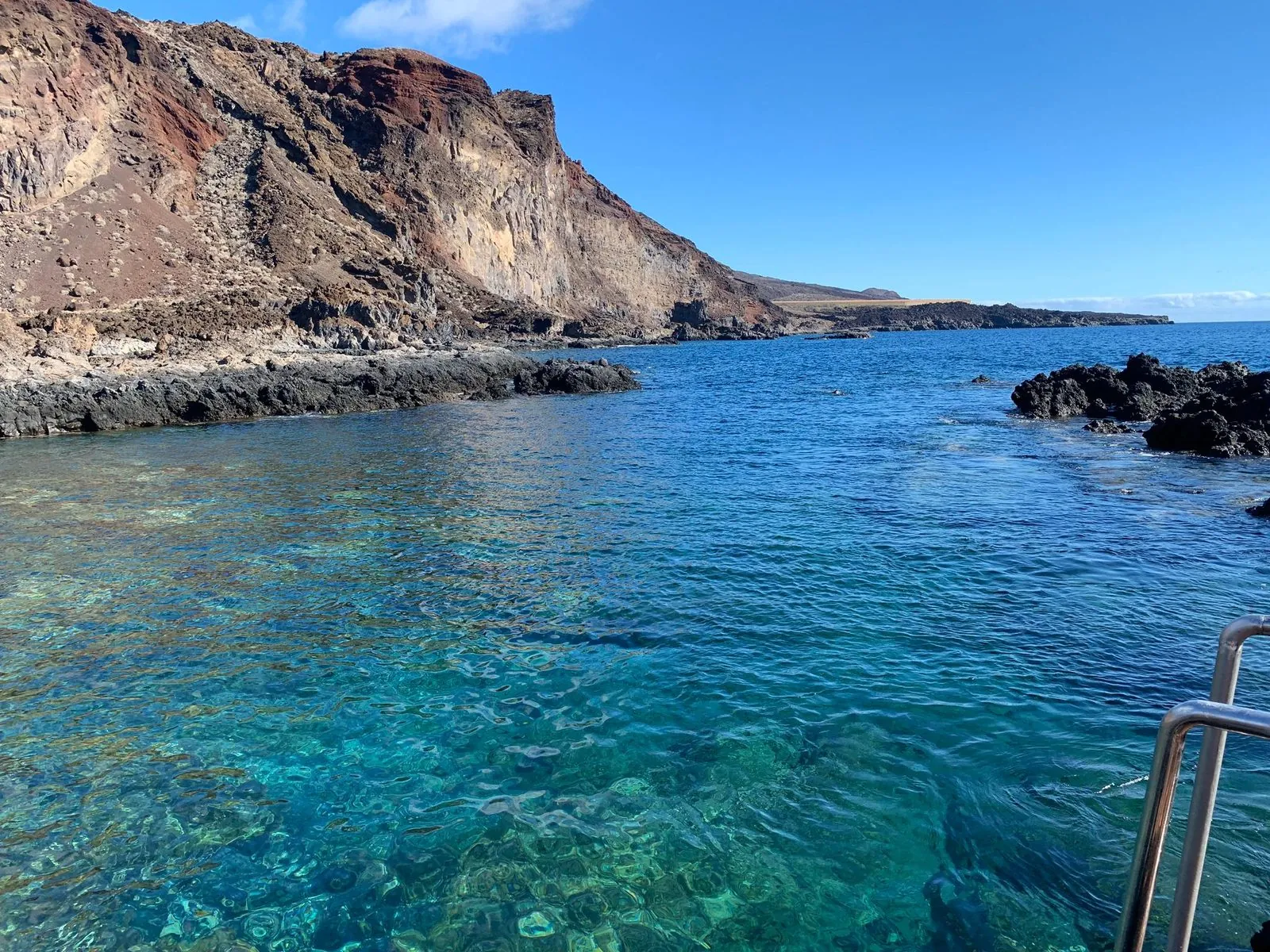
Photo: Irene perez02 · CC BY-SA 4.0 · Wikimedia Commons · scaled
What it's like
The cove is a little masterpiece of volcanic scenery. Black lava arms shelter a bay of remarkably clear, turquoise water, dotted with rock formations, arches and small sea caves you can swim or paddle into. Natural and semi-natural pools sit among the rocks, and shaded picnic areas with tables make it easy to settle in for the day. The mood is peaceful and unspoiled — no resort, no strip of bars, just the sea, the lava and the sky. It's the kind of place you plan to visit for an hour and stay for the afternoon.
Clear turquoise water, hidden caves and shady picnic tables — Tacorón is where El Hierro comes to relax.
Swimming and safety
Because it faces south and is well sheltered, Tacorón usually offers some of the calmest, safest swimming on the island, and the clear water and rocky ledges make it excellent for snorkelling — expect to see plenty of fish in the protected shallows. Entry is over volcanic rock rather than sand, so water shoes are strongly recommended, and there's little formal lifeguard cover. It's far calmer than exposed north-coast spots, but it's still the Atlantic, so check the sea on the day and take care around the rocks and caves.
Bring water shoes and a snorkel: the entry is over lava and the sheltered, crystal-clear water is ideal for spotting fish. On the rare rough day, respect the sea around the caves and rocks.
Facilities
For such a natural spot, Tacorón is thoughtfully equipped for a day out. You'll typically find shaded picnic tables and barbecue-style areas, a parking area, and steps or ladders into the water, though there's little in the way of shops — so bring your own food, drink and supplies. Services can be minimal out of season, and there's limited shade beyond the picnic shelters, so come prepared with water and sun protection. That self-sufficient, low-key character is part of its charm.
Best for whom
Tacorón is ideal for families, snorkellers and anyone who loves a sheltered, scenic cove for swimming and lazing over a picnic. It rewards travellers exploring El Hierro at a slow pace and happy to bring their own provisions. It's less suited to those wanting soft golden sand, sunbed hire and beach bars, or to anyone expecting a lively resort scene — but for a calm, beautiful, genuinely local day by the sea, it's hard to beat.
Nearby
Just up the road, La Restinga is a small fishing village and Spain's southernmost settlement, famous as one of the finest diving destinations in Europe thanks to its protected marine reserve and volcanic underwater landscapes. The wider island — a UNESCO Biosphere Reserve and Geopark — offers dramatic cliffs, the natural volcanic pools of La Maceta on the wilder north coast, ancient juniper woods bent by the wind and some of the clearest night skies anywhere. To plan your whole trip, see our full guide to El Hierro.