Artenara is Gran Canaria's highest village — a cluster of white houses clinging to a ridge nearly 1,300 metres up, where many homes, a chapel and even restaurants are carved straight into the volcanic rock. Up here the air is cool and pine-scented, the streets tilt at improbable angles, and the whole village looks out over one of the most spectacular panoramas in the Canaries: a great crater of ravines and rock towers with the pointed peak of Teide floating beyond. It is the island at its wildest and most timeless.
Officially the loftiest settlement on the island, Artenara is famous for its cave houses — a living tradition of homes dug into the soft volcanic tuff, cool in summer and warm in winter. It sits deep in the mountainous heart of Gran Canaria, a short but winding drive from its prettier-known neighbour Tejeda, and rewards anyone who makes the climb with big skies, big views and a slow mountain pace.
What it's like
Artenara feels a world away from the beaches far below. The village drapes itself along a high ridge, its whitewashed houses stacked in tiers between pine forest and bare volcanic rock, and everywhere the land drops away into deep barrancos (ravines). It is small, quiet and genuinely local — you'll hear far more Spanish than English, and life runs on unhurried mountain time.
The defining feature is the way people have always lived inside the rock. Many homes here are troglodyte dwellings, hollowed into the hillside with only their whitewashed fronts and chimneys showing. This is no museum piece: cave homes remain lived-in and loved, a practical answer to the mountain climate and a link back to the island's earliest inhabitants. Our feature on the cave houses of the Canaries puts the tradition in its full context.
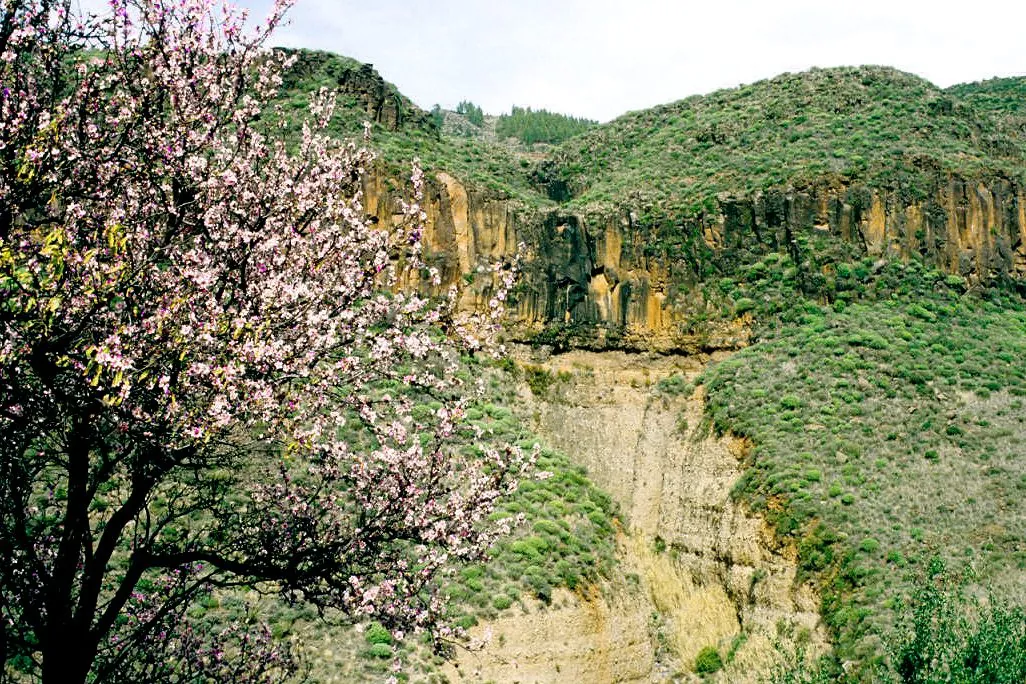
Photo: LBM1948 · CC BY-SA 4.0 · Wikimedia Commons · converted
What to see and do
The single greatest thing to do in Artenara is simply to take in the view. From the village and its miradors (viewpoints) you gaze across a vast eroded crater studded with volcanic plugs — including, on a clear day, the iconic silhouette of Roque Nublo and, far beyond, Mount Teide on neighbouring Tenerife rising above the clouds. A large statue of Christ, the Corazón de Jesús, watches over one of the best lookout points.
Don't miss the Ermita de la Virgen de la Cuevita, a small chapel carved entirely out of the rock on the edge of the village — altar, pulpit and confessional all hewn from stone. It's an atmospheric, humbling little place and the spiritual heart of Artenara. There's also a small cave-house museum that recreates traditional mountain life, and marked trails fanning out into the pine forests of Tamadaba nearby.
The mountains are markedly cooler than the coast and cloud can roll in fast. Bring a warm layer and comfortable shoes even on a hot beach day — and time your visit for a clear morning, when the crater views are at their sharpest.
The whole area is a paradise for walkers, with well-marked routes threading through pine woods and along crater rims. Our guide to hiking in the Canary Islands helps you match a trail to your legs — and reminds you to carry water and check the weather before you set off.
Where to stay and eat
Artenara's most memorable tables are its cave restaurants, dug into the hillside and serving hearty mountain food — rich stews and potaje (vegetable soup), grilled and roast meats, local cheese, and warming plates built for cool highland evenings, often with a knockout terrace view thrown in. It is honest, generous Canarian cooking a world away from beachfront fare; our Canarian food guide has more, and a robust Canary wine is the natural partner.
Accommodation is small-scale and characterful — rural guesthouses and casas rurales (country cottages), some of them cave dwellings you can actually sleep in. Artenara suits walkers, nature lovers and anyone craving a peaceful, scenic contrast to the resorts, ideally with a hire car. It makes a wonderful one-night mountain interlude between beach days, or a day trip if time is short; our where to stay guide compares the island's very different bases.
Getting there and around
Artenara sits high in the island's centre, reached only by winding mountain roads, so a hire car is all but essential — and confident driving on bends is a must. The drive up, through pine forest and past dizzying viewpoints, is half the pleasure. See our guides to car hire and getting around. From the southern resorts allow around 1.5 hours; from Las Palmas a little less. Public buses do reach the village but run infrequently, so a car gives you the freedom the mountains deserve.
Nearby
Artenara is the perfect companion to the rest of the central highlands. Just down the road lies the beautiful village of Tejeda, base camp for the great rock of Roque Nublo and the island's summit at Pico de las Nieves. West and down towards the coast, the pine forests of Tamadaba give way to the green Agaete valley and the sea. Start with our Gran Canaria hub to pair a few mountain days with the beaches below.