For the warmest, driest winter sun in the Canaries, head to the southern and eastern islands and their south coasts — Fuerteventura, the south of Gran Canaria around Maspalomas, the south of Tenerife, and Lanzarote all sit reliably at the top from December to March. The whole archipelago is famous for mild winters, but there's a real and predictable split: the sheltered southern resorts bask in sunshine while the greener north coasts stay a few degrees cooler and cloudier. If your one non-negotiable is shirtsleeves-and-sunshine in January, this page tells you exactly where to point the plane.
Why one archipelago has such different winters
The Canaries lie off the coast of Africa, level with the Sahara, which is why winter here feels nothing like a British December. But two things shape where the warmth actually lands. The first is the north-east trade winds, which pile moist air and cloud against the northern flanks of the higher islands. The second is the mountains themselves: Tenerife's Teide and Gran Canaria's central massif act as giant weather shields, so the southern coasts sit in a rain shadow — drier, brighter and a touch warmer. The low, flat eastern islands of Lanzarote and Fuerteventura have no such peaks, so they're sunny almost everywhere, just breezier. Our full Canary Islands weather guide unpacks the science; the practical upshot is below.
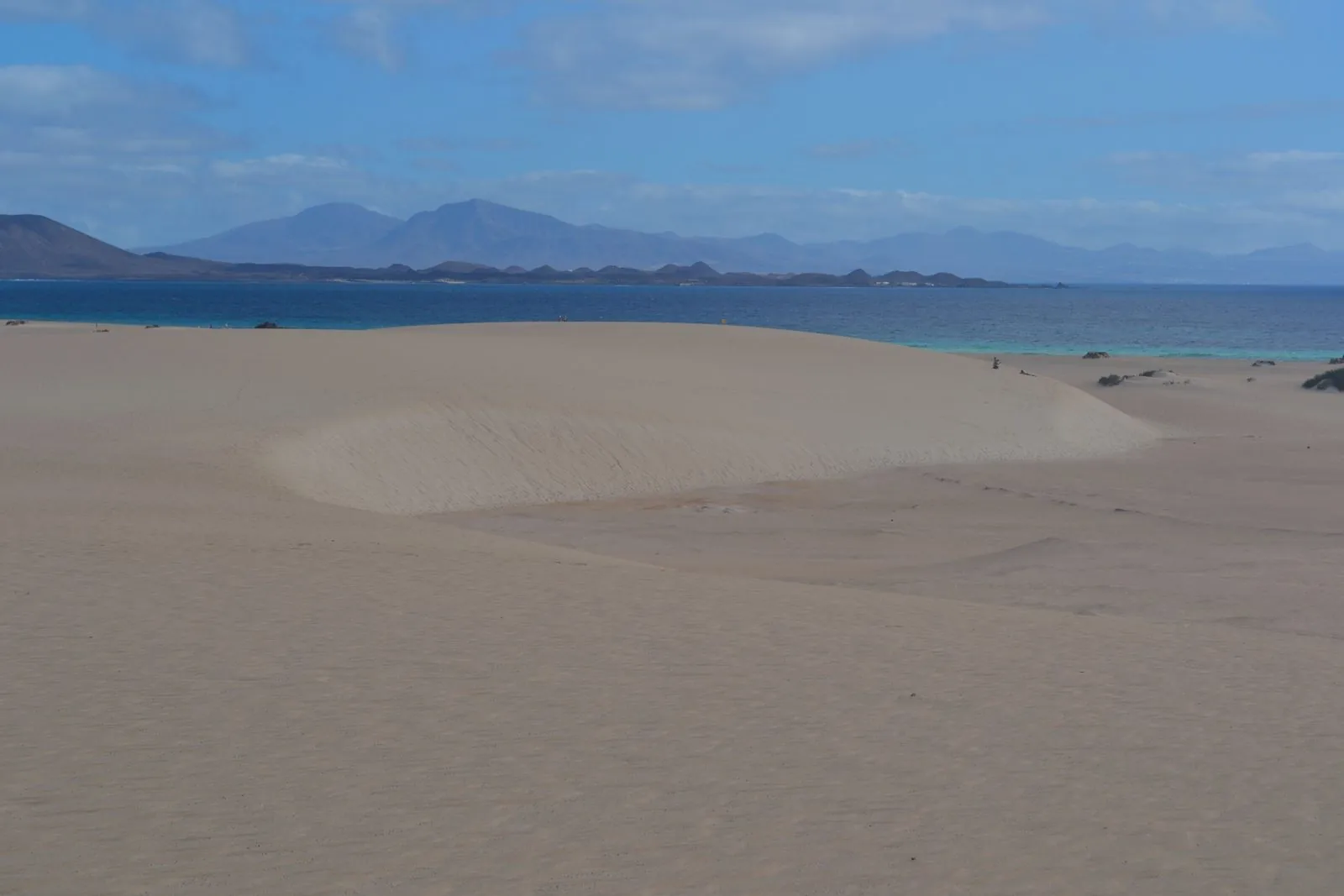
Photo: Ivan Hernandez Cazorla · CC BY-SA 4.0 · Wikimedia Commons · scaled
The warmest winter islands, ranked
In broad terms, daytime highs across the southern resorts sit in the low-to-mid 20s Celsius through the depths of winter, with sea temperatures staying swimmable. Here's how the main islands compare for a December–March holiday.
| Island / area | Winter warmth & sun | Rain | Wind | Best for |
|---|---|---|---|---|
| South Gran Canaria (Maspalomas, Playa del Inglés) | Excellent — among the sunniest, warmest spots | Very low | Light to moderate | The all-round winter-sun winner |
| South Tenerife (Costa Adeje, Los Cristianos) | Excellent — warm, sheltered, very sunny | Very low | Light | Warmth plus the most to do |
| Fuerteventura | Very warm and bright almost everywhere | Very low (near-desert) | Breezier — the trade-off | Beach days, if you don't mind wind |
| Lanzarote | Warm and sunny island-wide | Very low | Breezy | Sun with volcanic scenery |
| North Tenerife (Puerto de la Cruz) | Mild but cooler, more cloud | Higher | Variable | Green scenery over guaranteed sun |
| Western isles (La Palma, La Gomera, El Hierro) | Mild but greenest and cloudiest | Highest | Variable | Peace and nature, not sunbathing |
Gran Canaria's south: the safest bet
If you want to load the dice as far as possible in your favour, the resorts around the Maspalomas dunes — Maspalomas, Playa del Inglés and Meloneras — are as close to a winter-sun guarantee as the Atlantic allows. The great central mountains shelter this corner from the northerly cloud, so you get long, dry, bright days a short flight from the UK. It's also brilliantly set up for a winter break, with a promenade, endless restaurants and an easygoing feel. See the Gran Canaria island hub for the full picture.
South Tenerife: warmth plus the most to do
Tenerife has the sharpest north–south divide of all, precisely because Spain's highest mountain sits in the middle of it. The southern resorts — Costa Adeje, Los Cristianos and Playa de las Américas — are warm, sheltered and very sunny in winter, while Puerto de la Cruz on the north coast can be markedly cooler and greyer on the same day. Pick the south and you also get the widest choice of things to do when a cloud does drift over. The Tenerife hub has the detail.
Fuerteventura and Lanzarote: sunny but breezy
The two eastern islands are low and desert-dry, so cloud rarely builds and sunshine is spread right across them rather than concentrated on one coast. The catch is wind — the same trade winds that make Fuerteventura a kite- and windsurf paradise can take the edge off a still beach day in January, and you'll feel it more here than in the sheltered coves of southern Gran Canaria. On a calm day, though, the beaches are magnificent, and Lanzarote pairs winter warmth with genuinely otherworldly volcanic scenery.
A word about Teide and altitude
Don't let the summit fool you. It's entirely normal to sunbathe on a southern Tenerife beach in the morning and see snow on Mount Teide in the afternoon — the mountain tops 3,700 metres and gets genuinely cold and snowy in winter. If you drive up to the national park, take warm layers even on a hot coastal day. The altitude changes the game completely, which is exactly why the coasts below stay so mild.
Where NOT to go for guaranteed winter sun
Nowhere in the Canaries is a bad winter choice, but if pure sunbathing is the goal, the northern coasts and the three western islands aren't the smart pick. La Palma, La Gomera and El Hierro are lush, mountainous and often cloudier — wonderful for walkers and nature-lovers, less so if you're chasing an all-day tan. Likewise, the north of Tenerife and Gran Canaria trades some sunshine for green hills and dramatic scenery. Know what you're there for.
The bottom line: which is the warmest Canary Island in winter?
For the warmest, driest, sunniest winter break, choose the southern coast of Gran Canaria or Tenerife, or the sun-soaked eastern islands of Fuerteventura and Lanzarote if you don't mind a breeze. The northern coasts and the western isles are milder, greener and cloudier — lovely, but not the sun-trap you're picturing. Time it for the depths of winter and you'll still find swimmable seas and beach weather; see our winter sun in the Canary Islands guide and our month-by-month look at the Canaries in January to plan the trip.