The best day trips from Lanzarote are by sea: La Graciosa is about 25 minutes by boat from Órzola in the far north, and Fuerteventura is a 25–35 minute crossing from Playa Blanca in the south, so you can stand on a second island before mid-morning and be back for dinner. The tiny protected islet of Lobos, just off Fuerteventura, is reachable too, though it takes two boats and a little paperwork. On Lanzarote itself, the classic full-day tours (the volcanoes, the caves of the north, the wine country) fill the days you keep your feet dry.
Which trip suits you depends mostly on where you are staying. Lanzarote is only about 60 kilometres from end to end, but the two ferry ports sit at opposite tips of it. From Playa Blanca, Fuerteventura is the easy one and La Graciosa means an hour or more of driving first. From Costa Teguise or the north, it is the other way round. Puerto del Carmen sits in the middle and can do either with an early start.
This page takes each trip in turn: how you get there, who runs the boats, what a realistic day looks like, and the details that trip people up. Timetables change with the season, so the times below are a guide to how the day works, not a schedule to rely on without checking.
Which trip, from which resort
| Trip | Port | Crossing | Best from | Car needed on arrival? |
|---|---|---|---|---|
| La Graciosa | Órzola | About 25 minutes | Costa Teguise, Arrecife, the north | No: cars are not allowed on the island |
| Fuerteventura (Corralejo) | Playa Blanca | 25–35 minutes depending on the boat | Playa Blanca, Puerto del Carmen | No for Corralejo and the dunes; yes for anything further |
| Isla de Lobos | Playa Blanca, then Corralejo | Two crossings, plus a permit | Playa Blanca | No |
| Lanzarote island tour | None | None | Anywhere | Yes, or join a coach tour |
If you only have time for one boat trip and you have never been to either island, the choice is really about mood. La Graciosa is the stranger, quieter day: sand streets, no traffic, empty beaches. Fuerteventura is the bigger, easier day: a lively harbour town, enormous dunes and plenty of lunch. Both are worth doing; neither needs a tour company if you are happy to buy a ferry ticket yourself.
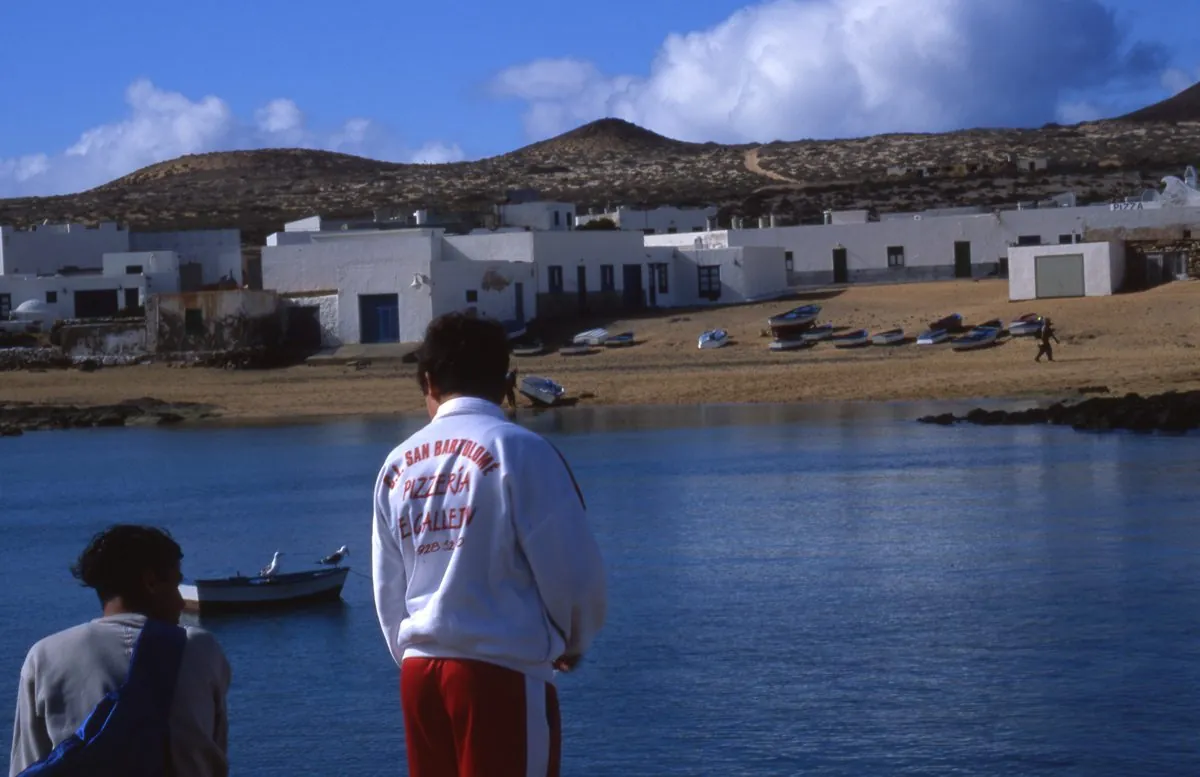
Photo: Toño Antón · CC BY-SA 4.0 · Wikimedia Commons · converted
La Graciosa: the boat from Órzola
The crossing to Caleta de Sebo, La Graciosa's only village, leaves from the small harbour at Órzola at the northern end of the LZ-1. Two companies run it: Líneas Romero and Biosfera Express. Biosfera Express gives an average crossing of 25 minutes and says plainly that the weather decides the real time; Líneas Romero quotes 25–30 minutes. Between them there are departures through the day, with a gap in the early afternoon, so read both timetables before you choose a return.
The stretch of water you cross has a name that explains a famous viewpoint. Locals call the strait between Lanzarote and La Graciosa El Río, "the river", because from the cliffs above it looks like one, and that is where the Mirador del Río gets its name. Stop there on the drive up or the drive back and you will see the whole of your day laid out below: the harbour, the boat lane and the low yellow island beyond.
Everything about the day on La Graciosa itself, from hiring bikes to the jeep taxis and which beaches are safe for swimming, is covered on our page about the day trip to La Graciosa, so it is not repeated here. The short version: catch a morning boat, bring water and cash, and do not plan to swim at Playa de las Conchas, however inviting it looks. Our La Graciosa island guide is the place to start if you are tempted to stay a night.
Órzola fills up before the first boat. The car park by the harbour is small and the roadside spaces go early on busy days, especially in summer and at Easter. Arrive at least half an hour before your sailing, or you may spend it hunting for a space while your boat leaves.
Fuerteventura: across the Bocaina strait
The crossing from Playa Blanca to Corralejo is the easiest island hop in the Canaries, with well over a dozen sailings a day between the operators. Three companies run it. Fred. Olsen Express gives 25 or 35 minutes depending on the vessel. Líneas Romero runs fast passenger boats in about half an hour. The third operator has changed name: in May 2026 Baleària took effective control of the Armas Trasmediterránea business in the Canaries, and its refurbished ferry Volcán de Tindaya was scheduled for seven return trips a day on this route in summer 2026. You may still see the Armas name on older signs and booking sites during the changeover.
Corralejo greets you at the harbour, and the old fishing quarter with its small beaches and fish restaurants is a five-minute walk away. The big draw is the Grandes Playas, the beaches of the Corralejo dunes natural park, which start just south of town. They are too far to walk comfortably in the heat with bags, so take a taxi or one of the local buses down the coast road, and agree a meeting point for the return. Our page on Corralejo covers the town itself.
A realistic day looks like this. Take a boat around nine, have coffee by the harbour, spend the late morning on the dunes beaches, come back into town for a long fish lunch, and catch a boat back in the late afternoon. Going further into Fuerteventura (El Cotillo, Betancuria, the south) is possible, but the island is large and you will need a car.
Taking a car across, or hiring on the other side
Fred. Olsen and Baleària carry vehicles; Romero's fast boats generally carry foot passengers only. Before you drive a hire car onto a ferry, read your rental agreement. Many Lanzarote contracts forbid taking the car to another island, or allow it only with written permission and extra cover, and a breakdown in Fuerteventura with an unauthorised car can leave you paying the full cost. The detail is on our page about hiring a car in the Canaries.
For a single day, it is usually simpler to leave the car in Playa Blanca and hire a second one for a few hours in Corralejo, or to stay on foot. Operators, crossing times and the rules on vehicles across all the inter-island routes are gathered on the Canary Islands ferries overview at Viamo, which is useful if you are thinking of turning a day trip into a two-island holiday.
Choose the bigger boat if the wind is up. The strait is short but exposed, and on a breezy afternoon the fast catamarans can bounce. The larger conventional ferry is slower and noticeably steadier, which matters with small children or anyone who suffers. Our page on seasickness on the ferries has the rest.
Lobos: two boats and a permit
Isla de Lobos is a flat, roadless islet of lava, dunes and lagoons a couple of kilometres off Corralejo. From Lanzarote it is a two-stage trip: the ferry to Corralejo, then one of the small boats that shuttle across to Lobos from Corralejo harbour. It can be done in a day from Playa Blanca, but it is a full one, and it only works if you plan the boat connections carefully.
The permit is the part people miss. Visits to the natural park need a free authorisation from the Cabildo de Fuerteventura, issued through its LobosPass website, and the management plan limits the island to around 200 people at a time. A ferry ticket to Lobos does not automatically include it; check what you are buying. Enforcement has been patchy, and Canarian Weekly reported in August 2025 that campaigners had seen far more than 200 visitors on summer days. In September 2026 the Cabildo announced new surveillance of public use on the island, according to rtvc.es, so expect the rules to be checked more often.
What you do on Lobos, from the lagoon at El Puertito to the climb up the little Caldera volcano, is on our Isla de Lobos page. From Lanzarote, the honest advice is this: if Lobos is the thing you most want to see, think about spending a night in Corralejo and doing it fresh the next morning.
Full-day tours without a ferry
The days you stay on Lanzarote can be just as full. Three circuits cover most of the island, and each makes a good day with a hire car or a coach tour.
- The fire mountains and the south-west coast. Start at Timanfaya, where the ticket (€30 for adults in 2026, free for under-7s) covers a 35-minute coach route through the craters and the geothermal demonstrations at Islote de Hilario. Since June 2026 tickets are sold online only, for a fixed date and time slot, with nothing sold at the gate; the last coaches leave at about 15:45, and you cannot drive the volcano route yourself. Then follow the coast road past Los Hervideros and El Golfo to the salt pans at Janubio.
- The north and its caves. Jameos del Agua, the Cueva de los Verdes, the Jardín de Cactus and the Mirador del Río sit within a few kilometres of each other. Pair them with lunch in Arrieta or Punta Mujeres.
- The centre and the wine country. La Geria's vines in their black ash pits, the Monumento al Campesino and, on a Sunday, the market at Teguise.
Coach tours of all three are sold in every resort and include hotel pick-up, which spares you the driving and the parking at Timanfaya. Prices vary a great deal by company and season, so compare what is actually included: entry tickets, lunch, and how long you get at each stop.
What is too far for a day
Tenerife and Gran Canaria are a different matter. By sea they are long crossings from Arrecife, and by the time you have got to the port, sailed, and sailed back there would be little left of the day. If you want to see one of the bigger islands, either fly (the hop takes under an hour, and our page on flying between the islands explains how) and stay at least a night, or save it for another holiday.
La Graciosa and Fuerteventura in the same day is also a bad idea. The ports are at opposite ends of the island, the timetables do not line up neatly, and you would spend most of the day in transit for two short visits.
Booking, tickets and timing
- Ferry tickets: buy online from the operator or at the port. Online is usually a little cheaper and guarantees a seat in high season. Fares vary by company and season, so compare on the day you book.
- Returns: some tickets let you change the time or date for free; others do not. Check the conditions before you commit to an early return you may want to push back.
- ID: carry your passport or ID card. Ferry staff can ask for it, and you will need it if you hire a car on the other island.
- Lobos permit: apply on LobosPass as soon as you know your date; it is free, but slots are capped.
- Weather: crossings can be delayed or cancelled when the wind and swell rise, more often on the La Graciosa route. If your flight home is the next morning, do the boat trip early in the week.
A sea day well chosen
For a first visit, take the boat from Órzola to La Graciosa if you want silence and empty beaches, and the boat from Playa Blanca to Corralejo if you want dunes, a busy harbour and an easy lunch. Lobos rewards those who plan, and is better done from Corralejo than from Lanzarote. On the other days, the Timanfaya and northern caves circuits show you the island that makes those crossings so striking in the first place. If you are based in Playa Blanca, Fuerteventura is almost on your doorstep; leave the car, buy a foot-passenger ticket and go.