The Canary Islands are one of the great winter cruising grounds — a warm, reliable string of ports just a few days' sailing from mainland Europe, with dramatic volcanoes, handsome old capitals and beaches all within reach of the quay. Between roughly November and April, when northern Europe is grey and cold, the archipelago fills with cruise ships making a relaxed loop of the islands, often paired with Madeira and a Moroccan or Iberian port or two. If you're weighing up a Canaries cruise — or you've already booked one and want to make each port day count — this guide covers the typical itineraries, the ports themselves, and how to squeeze the most out of the few hours you'll have ashore.
Why the Canaries suit a winter cruise
The appeal is simple: dependable warmth. While the Mediterranean cruise season winds down for winter, the Canaries stay mild and dry, making them the natural home for "winter sun" sailings. The islands sit close enough together that a ship can visit a different one almost every day, yet each has a genuinely distinct character — the volcanic drama of Lanzarote, the green heights of Tenerife, the dunes and buzz of Gran Canaria. Add short sea crossings, modern port facilities and easy shore excursions, and you have a cruise region that works beautifully for first-timers and old hands alike. For more on the seasons, see our guide to the best time to visit and the deeper detail on winter sun in the Canaries.
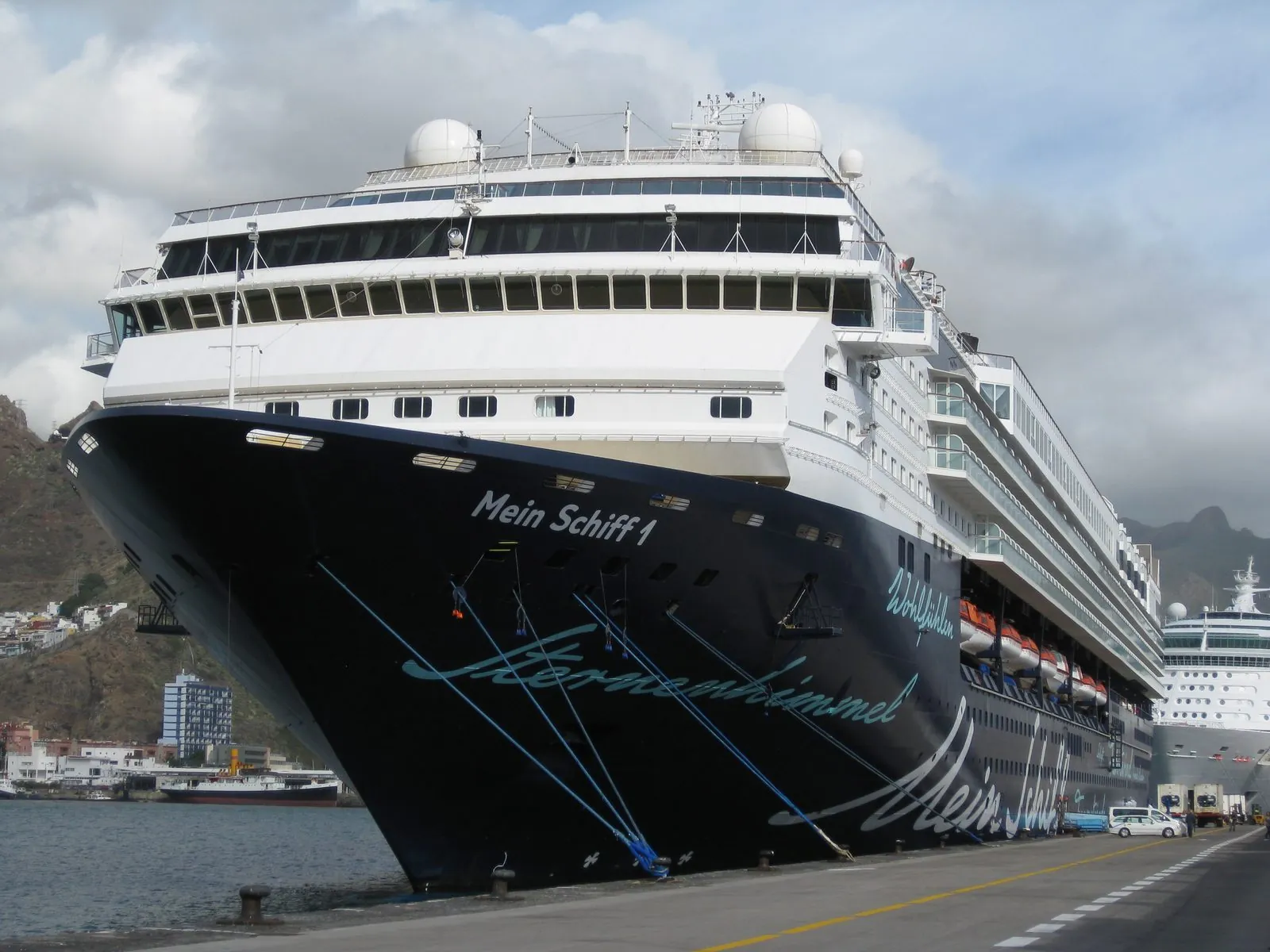
Photo: Sir James · CC BY-SA 3.0 · Wikimedia Commons · scaled
Typical itineraries and when to go
Most Canary Islands cruises run as 7- to 14-night round trips, either sailing down from Southampton, Lisbon or a Mediterranean port, or flying you out to join the ship in the islands themselves ("fly-cruises"). A classic loop calls at four or five of the islands — commonly Gran Canaria, Tenerife, Lanzarote and Fuerteventura — with Madeira added as a lush green bookend, and sometimes a north-African or Iberian stop en route. La Palma appears on some itineraries too. The core season is October to April, peaking around Christmas, New Year and February half-term. Sea conditions on the Atlantic crossing can be lively in midwinter, so if you're prone to seasickness the shorter fly-cruises that stay among the islands are the gentler choice.
| Port | Island | What a day ashore offers |
|---|---|---|
| Santa Cruz de Tenerife | Tenerife | Walkable capital, La Laguna, distant Teide by tour |
| Las Palmas | Gran Canaria | Old-town Vegueta, Las Canteras beach, museums |
| Arrecife | Lanzarote | Manrique sights, Timanfaya, seafront capital |
| Puerto del Rosario | Fuerteventura | Sculpture trail, huge beaches and dunes by taxi |
The four main cruise ports
Each Canarian capital has its own cruise terminal, and they vary a lot in how much sits within walking distance. We've written a full day-ashore guide to each — the Santa Cruz de Tenerife cruise port, the Las Palmas cruise port, the Arrecife cruise port and the smaller Puerto del Rosario port on Fuerteventura. In short: Santa Cruz and Arrecife drop you closest to a walkable town centre, Las Palmas puts you a short taxi or bus ride from both the old town and a famous city beach, and Puerto del Rosario is the quietest, best treated as a springboard to Fuerteventura's beaches.
Making the most of a port day
You'll typically have somewhere between six and ten hours in port — enough for one good excursion or a relaxed wander, but not both islands' worth of sights. The single biggest decision is ship excursion versus doing it yourself. Ship tours are effortless and guarantee you won't miss the sailing, but they cost more and move in a crowd. Independent trips — a taxi to a beach, a local bus into the hills, a self-guided walk around the old quarter — are cheaper and more flexible, with the one caveat that you alone are responsible for getting back on time.
Pick one headline experience per port and build the day around it. Trying to cram Teide, a beach and the old town into a single call means seeing all three in a blur. Depth beats breadth on a port day.
Getting around on your own
All four capitals have taxi ranks right by the cruise terminals, and the two big islands have excellent bus networks — Global on Gran Canaria and TITSA on Tenerife — that reach the main sights cheaply. For anything ambitious, such as reaching Mount Teide or Timanfaya, an organised tour or a pre-booked private driver is usually wiser than improvising, simply because the distances and timings are tight. Our overview of getting around the Canary Islands explains the local options island by island, and our sister travel-logistics site is a useful planner for working out how to get from the port to where you want to be.
Always work to the ship's stated "all aboard" time, not its departure time — they're usually 30–60 minutes apart. Independent excursions carry no guarantee the ship will wait, so build in a generous cushion and note that the islands keep GMT/WET time, the same as the UK.
Cruise plus ferry: island-hopping without a ship
If a big-ship cruise doesn't appeal but the idea of moving between islands by sea does, the Canaries' own fast ferries let you build a DIY "mini-cruise" — Los Cristianos to La Gomera, or Playa Blanca to Corralejo, for example. Our guide to ferries between the islands covers the operators and routes, and the island-hopping itineraries page suggests ways to string several islands together at your own pace.
Before or after the cruise
Many cruisers add a few nights on land at either end. If your ship starts or finishes in Gran Canaria or Tenerife, it's easy to extend into a proper island stay — see where to stay for the resort-versus-town decision, and one week in the Canaries for a ready-made plan. Whether you're calling for a day or settling in for a fortnight, the islands reward a little forward thinking — and a port day spent well can be the thing that tips you into coming back for longer.