Gran Canaria's capital knows how to lose itself in a party, and every winter its Carnival turns the whole city inside out. The Carnival of Las Palmas de Gran Canaria is one of the two giants of the Canarian calendar — a rival and a mirror to the famous Santa Cruz spectacle across the water — and for many visitors it's the more approachable of the pair, thanks to a warm, sprawling seaside city built to soak up crowds. Its most celebrated moment, the extravagant Drag Queen Gala, has become internationally famous, but there's far more to it than one show: weeks of parades, contests, night-time revelry and a joyously inclusive atmosphere.
Here's what to expect from the Las Palmas Carnival — the galas, the parades, the theme that shapes each year — plus when it roughly falls and how to make the most of it.
Carnival dates shift every year with the church calendar, usually falling across February and occasionally into early March. Any dates you see are indicative only — confirm with the Las Palmas tourist office or town hall before you book. It's a natural pairing with a February trip, so see our guide to the Canary Islands in February.
A theme that sets the tone
Like its Tenerife counterpart, the Las Palmas Carnival is built around a single theme each year — anything from outer space to the roaring twenties to a favourite decade of pop culture. Everything follows suit: the stage designs, the costumes, the murga songs and the giant set-pieces. The festivities officially run for around three weeks, with the energy building steadily towards the climactic parade and the burial that closes it all.
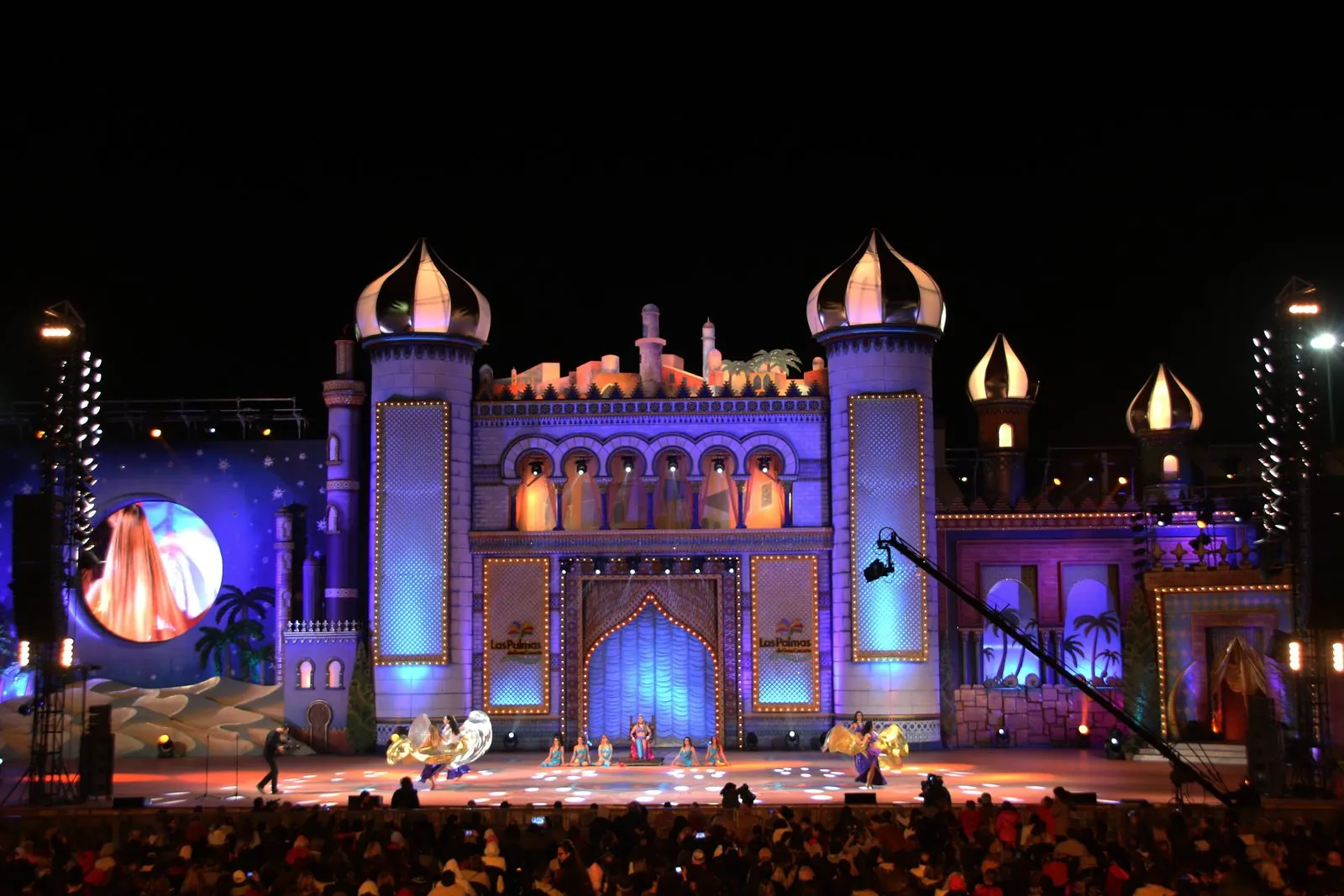
Photo: El Coleccionista de Instantes Fotografia y Video · CC BY-SA 2.0 · Wikimedia Commons · scaled
The famous Drag Queen Gala
If one event has put this Carnival on the world map, it's the Gala Drag Queen. Held in the vast Parque de Santa Catalina near the port, it's a jaw-dropping competition in which performers appear in colossal, gravity-defying costumes — mounted on platform heels that can be half a metre high — and are lowered, hoisted and wheeled across a huge stage in a riot of choreography, lights and spectacle. It's broadcast live nationally, hotly debated, and utterly unlike anything else. The gala reflects the city's genuinely open, welcoming spirit; for more on that side of the islands, see our guide to the LGBTQ+ Canary Islands.
Tickets for the Drag Queen Gala sell out fast and the arena fills to bursting. If you can't get in, the atmosphere in the streets around Santa Catalina on gala night is electric — and it's shown on big screens and TV all over the city.
Queens, murgas and comparsas
Beyond the drag gala, the Carnival crowns its own Carnival Queen — and a Grand Dame (Reina de los Mayores) and a children's queen too — in galas of towering fantasy costumes. The performing troupes supply the backbone of the whole affair: the murgas, satirical singing groups whose sharp, funny songs skewer politicians and the year's events, and the comparsas, samba-style dance troupes with feathers, percussion and dazzling colour. Their contests run through the weeks and are followed with real passion by locals.
Night parades and the mogollón
The heart of the street Carnival is the mogollón — the huge open-air party in and around Parque Santa Catalina, where stages host live bands and DJs and the costumed crowds dance late into the night. Come in fancy dress; turning up in everyday clothes is the surest way to feel like a spectator rather than a participant. The festivities culminate in the Gran Cabalgata, the grand night parade, when floats, queens, murgas and thousands of dancers process through the city in a slow-moving tide of light and sound.
Carnival by day and by the sea
Las Palmas has a trump card: Playa de las Canteras, the golden city beach, is right on the doorstep. That means you can pair late Carnival nights with easy beach days, and the city also stages daytime Carnival sessions that are far gentler for families. A charming local twist is the Carnaval al Sol — daytime celebrations that let you enjoy the spectacle in sunshine rather than the small hours.
The Burial of the Sardine
As across the islands, Las Palmas sends Carnival off with the surreal Entierro de la Sardina — the Burial of the Sardine. A giant papier-mâché fish is carried through the streets in a mock funeral procession, mourned by wailing "widows" in outrageous black, then set alight in a blaze of fireworks by the sea. It's a fittingly theatrical farewell to weeks of excess and marks the start of the sober Lenten season.
| Highlight | What it is | Roughly when |
|---|---|---|
| Drag Queen Gala | The famous drag competition in giant costumes | Main week |
| Carnival Queen galas | Crowning of the queens in fantasy costumes | Opening weeks |
| Mogollón street party | Night parties around Parque Santa Catalina | Peak weekends |
| Gran Cabalgata | The grand night parade | Towards the end |
| Burial of the Sardine | Mock funeral & fireworks by the sea | Closing night |
Where to stay
The action centres on the port district around Parque Santa Catalina and Las Canteras beach, so staying in that part of Las Palmas puts you in the thick of it. Book months ahead — the city fills and prices rise. If you'd rather have a quieter base, the resorts of the south are an easy motorway drive away, though be prepared for a late-night return.
Make it part of a bigger trip
The Las Palmas Carnival is the boldest expression of the character of Gran Canaria — open, exuberant and proud of it. It sits within a year-round calendar of island celebrations covered in our guide to festivals and carnival in the Canaries. If your dates are flexible, weigh it against the equally spectacular Carnival of Santa Cruz de Tenerife — or, better still, catch a taste of both. Either way, book early, pack a costume, and get ready for the party of the year.