For a couple of weeks each winter, the buttoned-up capital of Tenerife throws off its office clothes and becomes one of the biggest street parties on the planet. The Carnival of Santa Cruz de Tenerife is a spectacle of feathers, sequins, brass and sheer stamina — often billed as the second-largest carnival in the world after Rio, and twinned with the Brazilian city for exactly that reason. Whole neighbourhoods dance until dawn, the seafront fills with tens of thousands of costumed revellers, and the whole thing runs on an infectious, all-ages good humour. If you build a single trip around one Canarian event, this is a very strong candidate.
Here's how the Santa Cruz Carnival works — the queens, the parades, the satirical choirs and the surreal funeral that ends it all — plus when it roughly falls and how to enjoy it without losing your mind (or your hotel room).
Carnival dates move every year because they're pegged to the church calendar, usually landing in February and sometimes spilling into early March. Treat any dates you read as a rough guide and confirm with the Santa Cruz ayuntamiento or tourist office before booking. See our overview of the Canary Islands in February for the wider picture.
A carnival with a theme
Every year the Santa Cruz Carnival adopts a single theme — one year it might be the circus, another the movies, another the 1980s — and everything from the costumes to the stage sets is built around it. That gives each edition its own flavour and keeps a decades-old tradition feeling fresh. The official programme runs for weeks, but the wildest days cluster around the long lead-up to Ash Wednesday, when the street party (carnaval de la calle) takes over the city centre and the plazas around the Plaza de España.
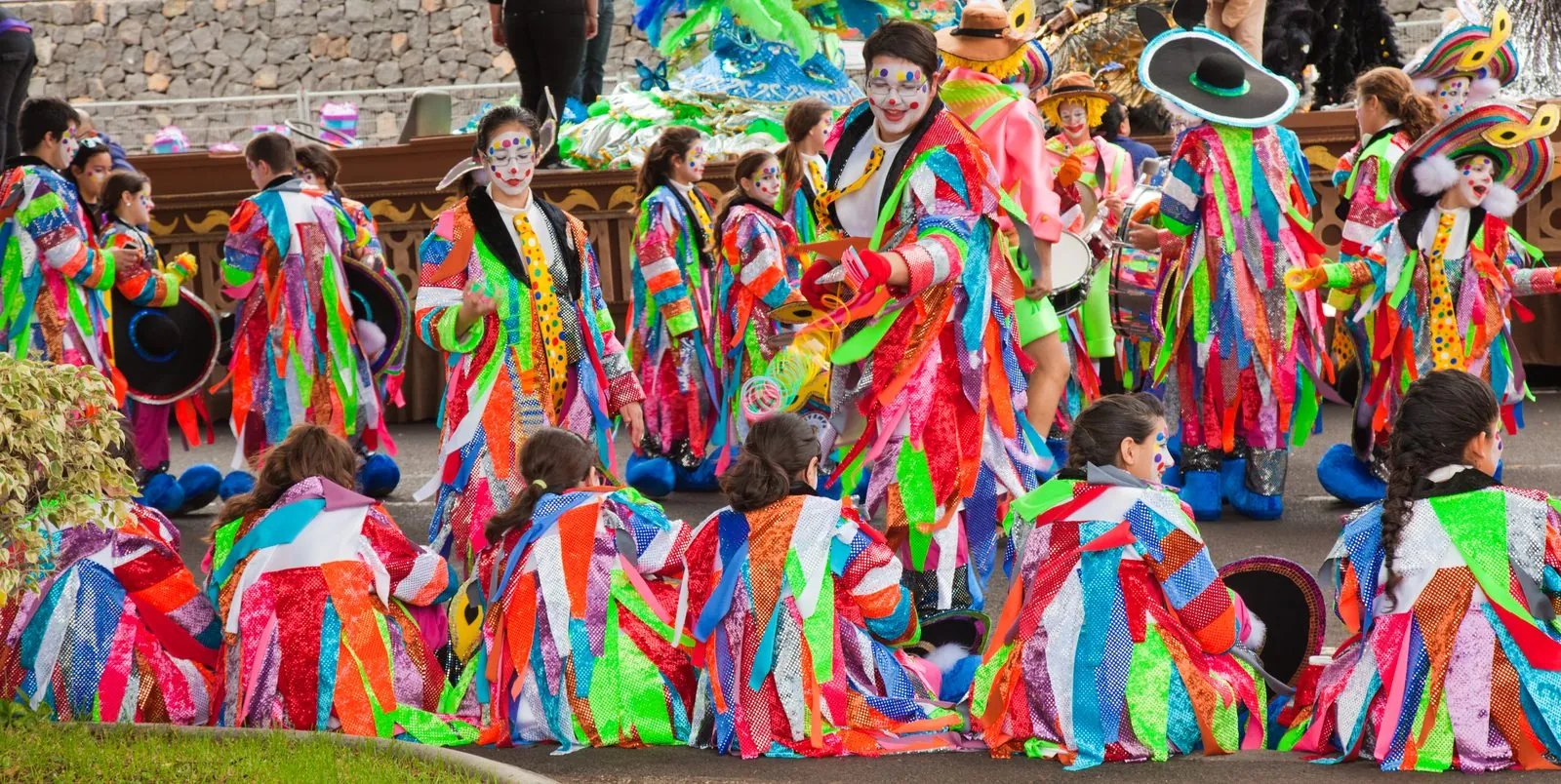
Photo: Tamara Kulikova · CC BY-SA 4.0 · Wikimedia Commons · scaled
The Carnival Queen gala
The event that opens the festivities in earnest is the Gala de Elección de la Reina — the crowning of the Carnival Queen. This is not a modest beauty pageant. Contestants parade in towering, motorised fantasy costumes that can weigh well over a hundred kilos and stand several metres tall, so elaborate they need wheels and a team of handlers to move. The gala is staged in a huge purpose-built arena, broadcast live across Spain, and watched by locals as devotedly as any sporting final. Tickets sell out early; even if you can't get in, the buzz around it is palpable.
Murgas, comparsas and the sound of Carnival
The soul of the festivities lies with the performing troupes. The murgas are satirical singing groups — dozens of costumed performers who spend all year writing sharp, funny songs poking fun at politicians and current events, then compete fiercely on stage. Their humour is very local and often ferociously political, and winning the murga contest is a serious point of neighbourhood pride. The comparsas, by contrast, bring the Brazilian-style samba: feathered dancers, thunderous percussion and rippling colour. Between them they supply Carnival's soundtrack.
You don't need a ticket to enjoy the best of it. The free street party — bands, food stalls, dancing and fancy dress in every direction — is where most visitors have the most fun. Wear a costume, however simple; turning up in ordinary clothes is the one way to feel out of place.
The coso — the grand parade
The visual highlight for many is the coso, the great procession that snakes along the Avenida de Anaga by the port. Floats, the Carnival Queen and her court, comparsas and thousands of costumed dancers file past packed grandstands in a river of colour and noise that lasts for hours. Get there early for a good spot along the barrier, or book a seat in one of the stands if you want to watch in comfort.
The Burial of the Sardine
Carnival doesn't simply stop — it's given a gloriously absurd send-off. The Entierro de la Sardina (Burial of the Sardine) is a mock funeral held on the night before Ash Wednesday, in which a giant papier-mâché sardine is paraded through the streets accompanied by "mourners" — many of them men in elaborate widow's weeds, weeping theatrically and dabbing their eyes. At the end, the sardine is set ablaze and fireworks light the sky, symbolising the death of Carnival and the start of the sombre Lenten season. It's high camp, deeply silly and wonderful to witness.
Daytime Carnival and the Piñata weekend
Even after the sardine burns, the party isn't quite done. The following weekend, sometimes called the Piñata Chica, brings a final flourish of daytime parades and family events — a gentler coda for those who've had enough of the small hours. There are also dedicated carnaval de día daytime sessions, which are far easier if you're travelling with children or simply prefer your revelry in daylight.
Where to stay and how to cope
Santa Cruz and neighbouring towns book up fast and prices climb, so reserve accommodation months ahead. Many visitors base themselves in the historic university town of La Laguna, a short tram ride away, which stages its own lively Carnival and offers more beds and a great tapas scene. Others stay in the northern resort of Puerto de la Cruz — which holds a famous Carnival of its own, complete with the tongue-in-cheek Mascarita Ponte Tacón high-heel race — and travel in for the big Santa Cruz nights.
| Highlight | What it is | Roughly when |
|---|---|---|
| Carnival Queen gala | Crowning of the Reina in giant fantasy costumes | Opening week |
| Murga & comparsa contests | Satirical choirs and samba troupes compete | Through the main weeks |
| Street party (calle) | Free all-night party in the city centre | Peak weekend |
| The coso | Grand seafront parade | Carnival Tuesday |
| Burial of the Sardine | Mock funeral & fireworks | Eve of Ash Wednesday |
Make a trip of it
Carnival is the loudest, brightest window into the character of Tenerife you'll ever get — but it sits within a whole calendar of island celebrations, from Easter processions to summer pilgrimages, all rounded up in our guide to festivals and carnival in the Canaries. If your dates are flexible, compare it with the equally beloved Carnival of Las Palmas on Gran Canaria, then book early, pack a costume and prepare for very little sleep. Time it right and you'll come home with stories that no beach holiday could ever match.