For their size, the Canary Islands are one of the richest wildlife treasure-troves in Europe. Cut off in the Atlantic for millions of years, their plants and animals evolved in isolation, and a remarkable number are found nowhere else on Earth. You won't see big game here — there are no native large mammals — but look closer and the islands teem with unique lizards, birds and insects, many of them clinging on in ancient forests and volcanic corners. This is a land of endemics, and getting to know them adds a whole extra layer to a Canarian holiday.
Why islands breed one-of-a-kind species
Isolation is the engine of Canarian wildlife. When a plant seed, a lizard on a raft of driftwood or a windblown bird first reached these young volcanic islands, it arrived in a world with few competitors and empty niches to fill. Over thousands of generations, cut off from the mainland, those pioneers evolved into distinct new forms perfectly suited to local conditions. The result is a very high rate of endemism — species that live only in the Canaries, and often only on a single island. It's the same natural laboratory effect that made the Galápagos famous, playing out on Atlantic soil.
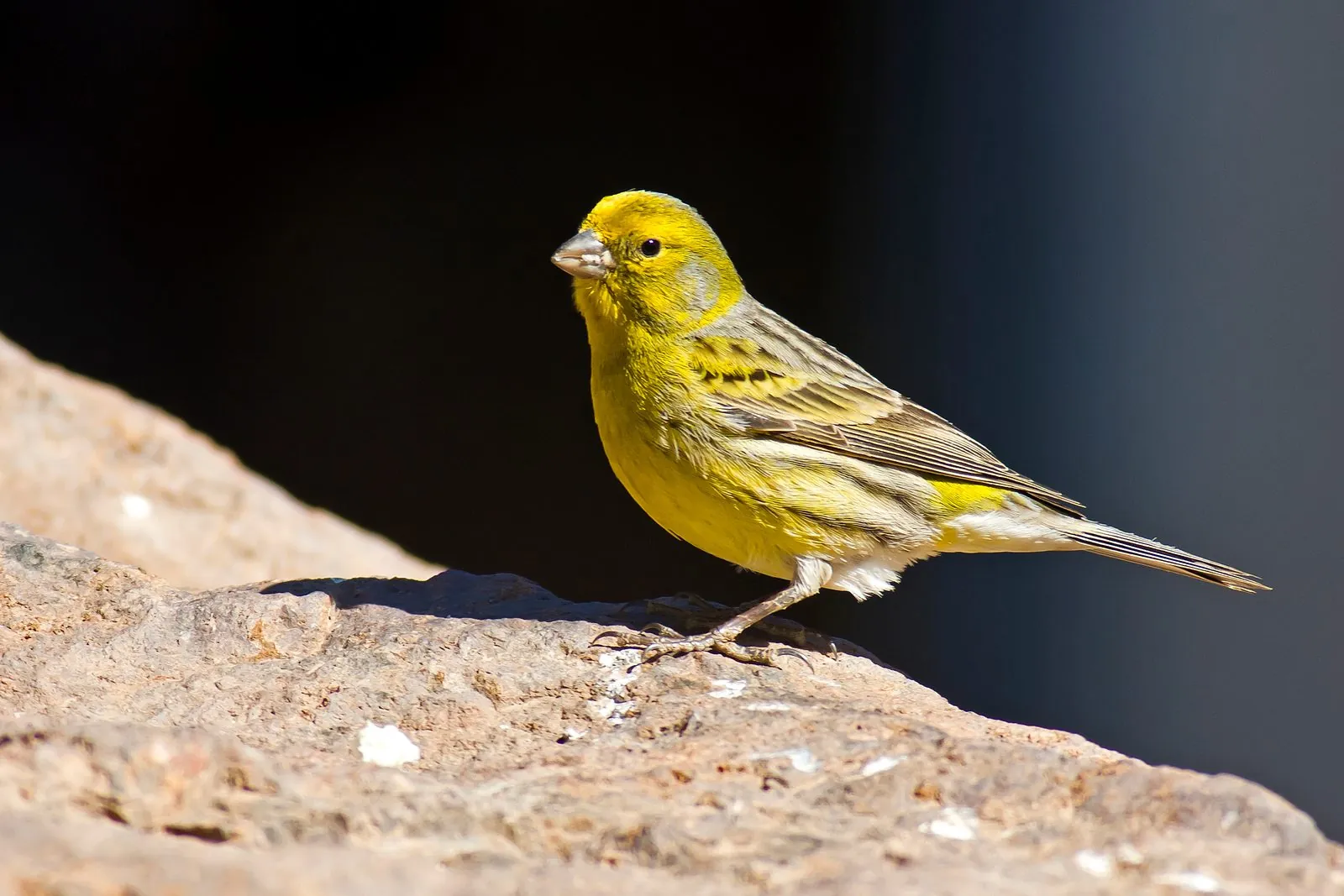
Photo: Juan Emilio · CC BY-SA 2.0 · Wikimedia Commons · scaled
The famous Canary lizards
The most visible wildlife you'll meet are the lizards. Every island has its own species of Gallotia, sun-loving lizards that scamper across walls, paths and volcanic rock, often growing surprisingly bold around picnic tables and viewpoints. On Tenerife and Gran Canaria the larger males can be a good 20–30 cm long, handsomely marked in grey, green and blue. They're harmless, endlessly entertaining, and a highlight of any hike.
Enjoy the lizards, but don't feed them. It's tempting to toss them bread or fruit at a viewpoint, but human food is bad for them and encourages unnatural, aggressive gatherings. Watch, photograph and let them forage naturally.
The giant lizard of El Hierro
The most remarkable member of the family is the giant lizard of El Hierro (Gallotia simonyi), which can reach well over half a metre long. Once thought extinct, it survived on a single remote cliff and is now one of Europe's most endangered reptiles. A dedicated recovery and breeding centre on El Hierro is slowly bringing it back from the brink, and similar giant lizards cling on in tiny numbers on La Gomera and La Palma. They are a powerful symbol of how fragile island wildlife can be — and of how conservation can help.
The wild canary and other endemic birds
Yes, the bird really is named after the islands — not the other way round. The wild canary (Serinus canaria) is a small, streaky, greenish finch, far plainer than its bright yellow cage-bred descendants, but with the same lovely bubbling song. You'll hear it in gardens, orchards and forest edges across the western islands. It shares the skies with a host of other endemics, from the sturdy blue chaffinch of the pine forests to two shy pigeons of the laurel woods. Birdwatchers travel a long way for these specialities, and it's a whole rewarding pastime in itself — we cover the best spots in our guide to birdwatching in the Canary Islands.
Geckos, insects and the small stuff
After dark, the Canary geckos come out — soft-skinned, big-eyed little reptiles that gather around outdoor lights to snap up insects, and cling to walls with their padded toes. They're completely harmless and rather charming house guests. The islands are also extraordinarily rich in invertebrates: unique beetles, butterflies, crickets and snails, many restricted to a single valley or forest. Much of this hidden diversity lives in the damp, mossy world of the ancient woodland, where you'll also find cave-dwelling creatures found nowhere else.
Life in the laurel forest
The islands' most magical habitat is the laurisilva, the misty subtropical laurel forest that once covered much of southern Europe and now survives mainly in the Canaries and Madeira. Fed by the moisture of the trade winds, these green, dripping woods are a refuge for the archipelago's rarest wildlife — the laurel pigeons, endemic insects, and a lush undergrowth of ferns and mosses. Walking beneath the gnarled, lichen-hung trees feels like stepping back millions of years. You can explore this world in the Garajonay National Park on La Gomera, and learn more about it in our feature on the laurel forests.
Bats, hedgehogs and the few native mammals
Land mammals are the great gap in the Canarian story: with no land bridge to the continent, almost none reached the islands under their own steam. The exceptions are the bats, which simply flew across — several species hunt the night skies, including one found only here. Almost everything else with fur, from rabbits to hedgehogs to the goats that shaped the landscape, was brought by people over the centuries. That absence of native predators is exactly why the islands' birds and reptiles evolved so freely, and why introduced animals now cause such harm. Offshore, though, the mammals are magnificent — the whales and dolphins of the surrounding Atlantic are a wildlife spectacle in their own right, covered in our guide to marine life of the Canary Islands.
Conservation: fragile and precious
Island wildlife is wonderful but vulnerable. Species that evolved without predators are easily undone by animals people brought with them — rats, cats and, above all, the many feral animals that hunt ground-nesting birds and slow-moving reptiles. Habitat loss, roads and, in a few places, over-visiting add to the pressure. That's why several islands hold UNESCO Biosphere Reserve status and why the giant lizards, in particular, depend on careful breeding programmes.
Travel gently with wildlife. Keep to marked paths in protected areas, never remove plants, rocks or creatures, take all litter away, and give animals space. On the water and shore, don't disturb nesting or resting wildlife. Small habits protect species that exist nowhere else on the planet.
You don't have to seek any of this out to enjoy it — the lizards will find you at the first viewpoint, and the canary will be singing before breakfast. But knowing that so much of what surrounds you exists only here turns a good walk into something quietly extraordinary. The Canaries reward the curious traveller with a natural world all their own.
Every island its own lizard, every valley its own beetle — the Canaries are evolution's Atlantic workshop.