The clear blue water around the Canary Islands isn't just lovely to swim in — it's one of the great marine wildlife havens of the Atlantic. Deep ocean comes right up to the shore here, and cool, nutrient-rich currents mix with warm subtropical seas to feed an astonishing web of life. Resident whales and dolphins live off the islands year-round, turtles glide past headlands, rays cruise the sandy shallows, and one of the world's rarest sharks quietly makes its home in the bays. Whether you snorkel, dive, or simply take a boat trip, the underwater Canaries are a wonder in their own right.
An ocean full of food
The islands rise steeply from very deep water, so you don't have to go far offshore before the seabed plunges hundreds — even thousands — of metres. That deep water, stirred by Atlantic currents and local upwelling, brings nutrients toward the surface and supports huge shoals of small fish. Those shoals in turn feed everything above them, from tuna and seabirds to dolphins and whales. It's this combination of deep, clean, food-rich water and mild temperatures that makes the Canaries such a hotspot for large marine animals.
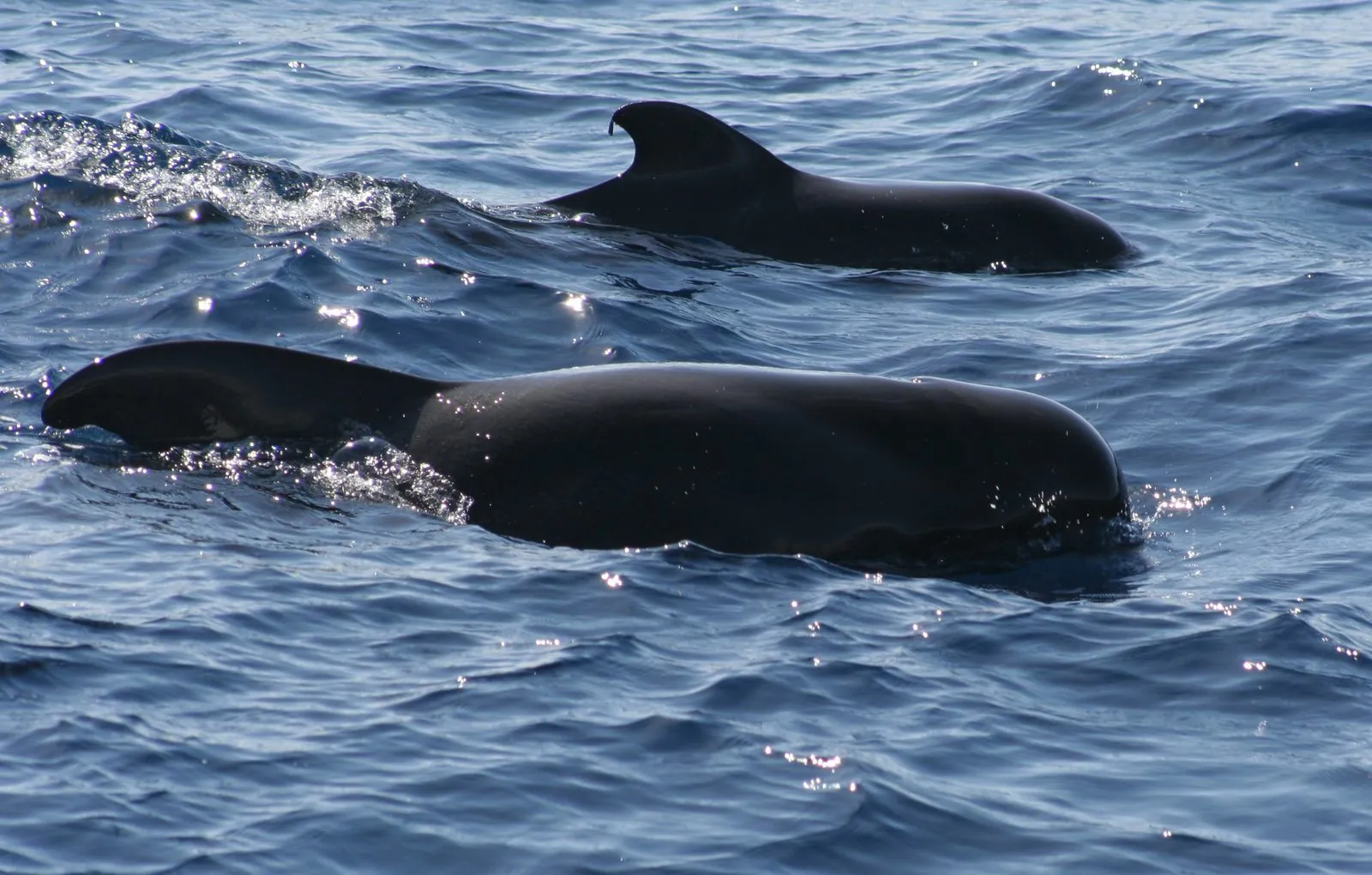
Photo: ahisgett · CC BY 2.0 · Wikimedia Commons · scaled
Whales and dolphins on your doorstep
The archipelago is one of Europe's finest places to see cetaceans, with a long list of species recorded in its waters. The headline act is the short-finned pilot whale: a large, sociable, blunt-headed member of the dolphin family that lives here permanently. A famous resident population cruises the deep channel between Tenerife and La Gomera, making sightings reliable in a way few places on Earth can match. Alongside them, bottlenose and Atlantic spotted dolphins are common, often bow-riding boats in playful groups, while seasonal visitors can include sperm whales and even the occasional passing giant.
Choose a responsible boat operator. Look for the yellow flag scheme that licenses well-behaved whale-watching boats, keep trips small where you can, and pick outfits that keep their distance and cut engines rather than chasing animals. A good skipper will often give you a longer, closer, calmer encounter than a pushy one. See our guide to whale and dolphin watching.
Turtles, rays and the reef fish
Beneath the surface the cast grows. Loggerhead turtles are seen fairly regularly, especially young ones drifting past the coasts, and green turtles turn up too; some quiet bays have become dependable spots to snorkel alongside them. Along sandy bottoms you'll find rays — elegant stingrays and eagle rays, and in a few places the huge, harmless angel shark (more on that below) — while rocky reefs and lava ledges shelter parrotfish, damselfish, moray eels, octopus, trumpetfish and clouds of colourful smaller species. The volcanic seabed, riddled with arches, caves and drop-offs, gives the diving here real drama.
The rare angel shark
The Canaries have become the last great stronghold of the angel shark (Squatina squatina), a flat, ray-like, bottom-dwelling shark that has all but vanished from the rest of Europe. Perfectly camouflaged, it lies half-buried in the sand waiting for prey, and it's completely harmless to swimmers. Encountering one on a dive is a genuine privilege and a conservation success story in the making — the islands' sheltered sandy bays are among the very few places these gentle sharks still thrive.
Diving and snorkelling the volcanic coast
The same geology that shaped the islands above the water makes them superb below it. Warm, clear, plankton-rich water gives good visibility for much of the year, and the volcanic terrain creates caves, tunnels and reefs alive with fish. El Hierro, and in particular the protected Mar de las Calmas around La Restinga, is famed as one of the best dive destinations in the Atlantic, its clear waters and marine reserve status drawing divers from all over the world. There's superb diving off the other islands too — our guide to diving in the Canary Islands covers where to start, whether you're a first-timer or a seasoned diver.
Look, don't touch. Never chase, ride or grab marine animals, don't handle turtles or angel sharks, and keep your fins clear of the reef. Coral and volcanic reef damage easily and takes years to recover. Reef-safe sun cream, no feeding of fish, and taking every scrap of litter home all help keep these waters healthy.
Rock pools, tuna and shore life
You don't even need a boat or tank to meet the sea's inhabitants. The volcanic coasts are studded with natural rock pools where, at low tide, you can find crabs, blennies, sea urchins, limpets and darting little fish in warm, sheltered water — a joy for children and snorkellers alike. Out in the blue, the islands sit on an ancient migration route for tuna, and big pelagic fish like bonito, wahoo and dorado draw sea anglers year-round. Seabirds wheel over the shoals, and lucky watchers from a headland may spot dolphins or the distant blow of a whale without leaving dry land. It all adds up to an ocean that feels alive at every scale, from a tide pool the size of a bath to the open Atlantic.
Seeing it responsibly
You can meet the Canaries' marine life at every level of effort. Snorkelling straight off a calm beach or natural rock pool costs nothing and often turns up fish, octopus and rays. Glass-bottom and semi-submarine boat trips suit families and non-swimmers. Scuba diving opens up the caves, reefs and the chance of turtles or an angel shark. And a whale-watching boat out of the southern resorts is one of the most memorable half-days you can have on holiday.
However you go, the golden rule is the same: enjoy these animals on their terms. Their year-round presence off the islands is precisely because the sea here is still wild, clean and full of food — and keeping our distance is what lets them stay. Treat the ocean gently and it will keep rewarding visitors with encounters most of the world can only dream of.
Deep blue water, resident whales and a shark that time nearly forgot — the Canaries' greatest sights are the ones beneath the waves.