For centuries the Canaries were poor islands with too many mouths and too little land — so their people left, in their tens of thousands, bound for the sugar plantations and booming cities of the Americas. Most went to Cuba and Venezuela. Some never returned; some sent money home; and a fortunate few came back rich, transformed into the figures known as indianos, who built grand mansions, endowed churches and reshaped island life. Their story is one of hardship, ambition and the deep, still-living bond between the Canaries and the New World.
You can read this history in the architecture of towns like Santa Cruz de La Palma, in the accent and vocabulary of Canarian Spanish, and — most joyously — in one of the strangest and best carnivals in Spain.
Why the Canarians emigrated
Emigration was woven into Canarian life from the conquest onwards. Land was concentrated in few hands, harvests failed, volcanic eruptions displaced whole districts, and the islands' cash crops — sugar, then wine, then cochineal — each boomed and crashed in turn. When a crop collapsed, families faced ruin. The Americas offered the way out.
The crown even used the islanders deliberately, shipping Canarian families to populate its American colonies. Canarians helped found or settle towns across the Spanish Americas — San Antonio in Texas, Montevideo in Uruguay, communities across Cuba, Venezuela, Puerto Rico and Louisiana. To this day, families in those places trace their roots to the islands, and the human links run both ways.
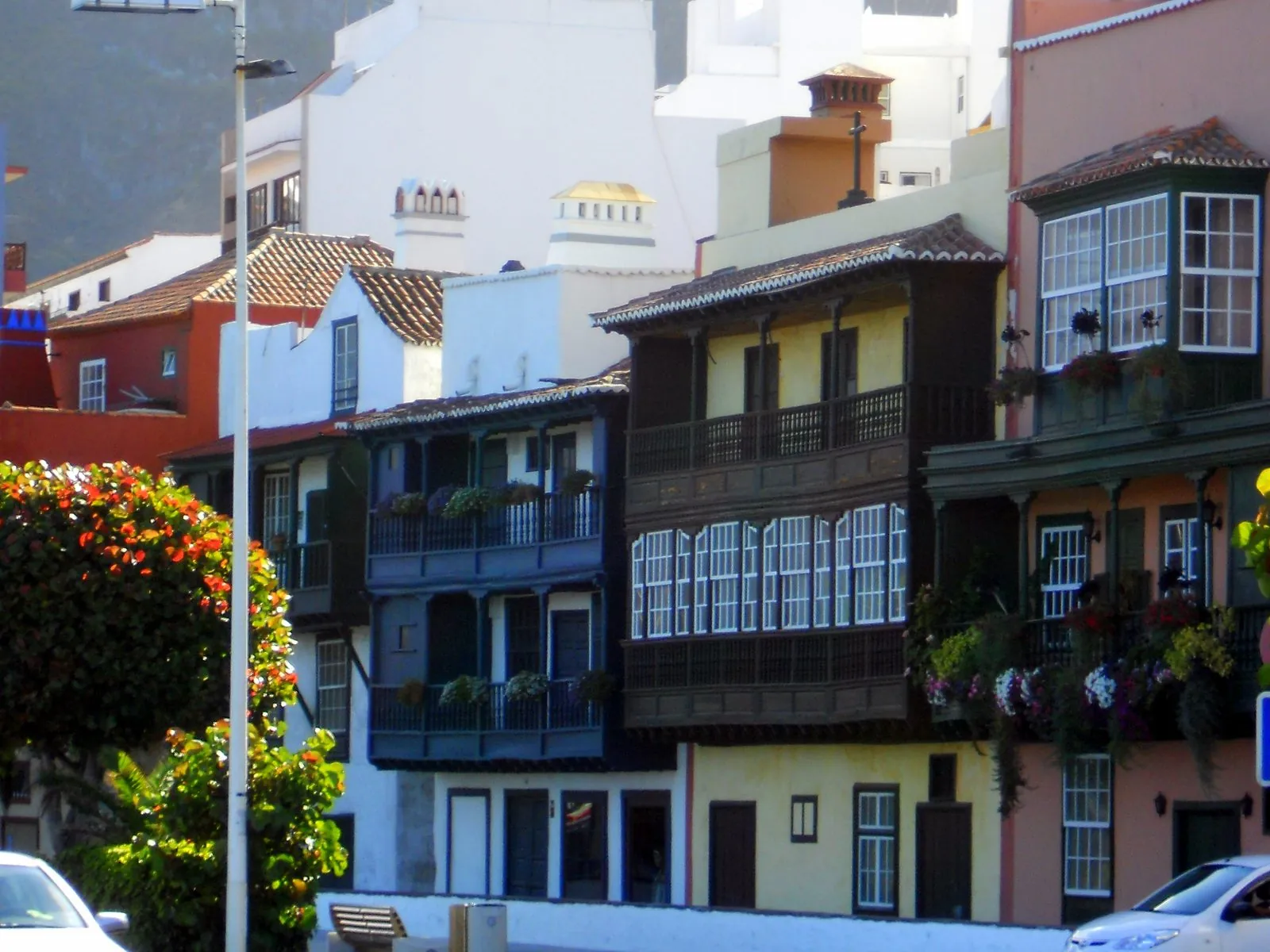
Photo: Ipatia · CC BY-SA 3.0 · Wikimedia Commons · scaled
Cuba, Venezuela and the great waves
Two destinations stand out. Cuba drew Canarians throughout the 19th century to work the tobacco and sugar fields — so many that returning migrants brought back Cuban habits, foods and turns of phrase that are now simply Canarian. The bond with Havana in particular is so strong that the Canaries have half-jokingly been called Cuba's "ninth province", and vice versa.
Venezuela took the largest wave in the 20th century. Through the hard decades after the Spanish Civil War, boatloads of islanders — some sailing clandestinely on small vessels in a desperate gamble — crossed to Caracas, where oil wealth promised work. That connection remains vivid: Canarian families with Venezuelan cousins are everywhere, arepas are sold in island cafés, and when Venezuela's economy collapsed, many families of Canarian descent returned "home" to islands their grandparents had left.
Listen for the American echo in everyday Canarian speech — words like guagua (bus) and papa (potato) travelled back and forth across the Atlantic with these migrants. Our guide to Canarian Spanish traces exactly how the islands came to sound so Latin American.
The indianos and their mansions
An indiano was an emigrant who returned having "made it" in the Americas. They came home with capital, new tastes and a hunger for status, and they spent it visibly. Across the islands — but above all on La Palma — they built handsome mansions with carved wooden balconies, lush gardens of imported American plants, and interiors full of Cuban furniture and tropical hardwoods.
Many were generous benefactors, funding schools, hospitals, roads and churches in their home villages. Others simply displayed their wealth — a fine house, a pocket watch, a good cigar. The classic image of the returning indiano is a dapper gentleman in a white linen suit and Panama hat, complete with a talking parrot brought from the tropics. Their legacy gives towns like Santa Cruz de La Palma and Los Llanos their distinctive colonial-tinged elegance.
La Palma's Indianos Carnival
Nowhere celebrates this heritage like La Palma. Every year on Carnival Monday, Santa Cruz de La Palma stages Los Indianos — one of the most original carnivals in Spain, and a joyous parody of the returning emigrant. The whole town dresses head to toe in white colonial clothing: linen suits, long dresses, parasols, Panama hats. Fictional indianos "arrive from Havana" with their trunks and their parrots, and Cuban music fills the streets.
The signature ritual is a city-wide talcum-powder fight. Revellers hurl clouds of talc into the air until the whole town centre disappears into a white fog — a giddy, good-humoured send-up of the dandies who once came home flaunting their fortunes. It is genuinely one of the great spectacles of the Canarian year, soundtracked by live Cuban son and salsa. You can read more about the islands' festival traditions in our guide to Canarian music and folklore.
If you plan to be in Santa Cruz de La Palma for Los Indianos, dress in white and old clothes you don't mind ruining — the talc gets everywhere. Accommodation books out well ahead for carnival week, so plan early.
The living transatlantic bond
The indiano story is not a closed chapter. The Canaries and Latin America remain intimately connected — through family, food, music and constant coming and going. Cuban and Venezuelan influences flavour Canarian cooking, cafés serve tropical fruits and rum, and the islands' cigars (grown on La Palma) descend directly from the Cuban tobacco tradition. When you sense something faintly Caribbean about the islands — the music, the sweetness, the easy warmth — you are feeling the return current of centuries of emigration.
Seeing the indiano heritage
Santa Cruz de La Palma is the obvious place to start: wander its balconied streets, admire the indiano mansions, and if you can, time your visit for carnival. Beyond La Palma, look for grand returned-emigrant houses in old towns across the archipelago, and let the accent, the food and the music tell you the rest. It all fits into the wider history of the Canary Islands — the story of islands so tied to the Americas that, in a very real sense, the Atlantic never really divided them.