Behind the beaches, the Canary Islands keep a living folk culture that still fills village squares — the bright plink of the timple, the swirl of dancers in traditional dress, and voices trading verses long into the night. This is not a museum piece staged for tourists but a genuine part of island life, heard at fiestas, romerías and family gatherings across the archipelago. From the tiny five-string timple to the astonishing whistled language of La Gomera, Canarian music and folklore are among the most rewarding — and least expected — discoveries of a trip here.
Here's what you'll hear, what it all means, and where to catch it for yourself.
The timple: the little island guitar
If one instrument sums up the Canaries, it's the timple — a small, high-pitched, five-stringed instrument, a cousin of the guitar and ukulele, with a distinctive rounded back. Light, bright and endlessly cheerful, it carries the melody in most traditional Canarian music and has become a true symbol of island identity. Skilled players (timplistas) can be dazzling, and a new generation has taken the instrument well beyond folk into jazz and world music.
It's usually joined by Spanish guitar, the laúd and bandurria (lute-family instruments), and hand percussion — chácaras (large castanets), tambourines and drums. Together they make the warm, rippling sound that underpins the island dances.
A timple makes a wonderful, genuinely Canarian souvenir. Look for one made by a local luthier rather than a mass-produced toy — our guide to Canarian crafts and what to buy explains how to tell the difference.
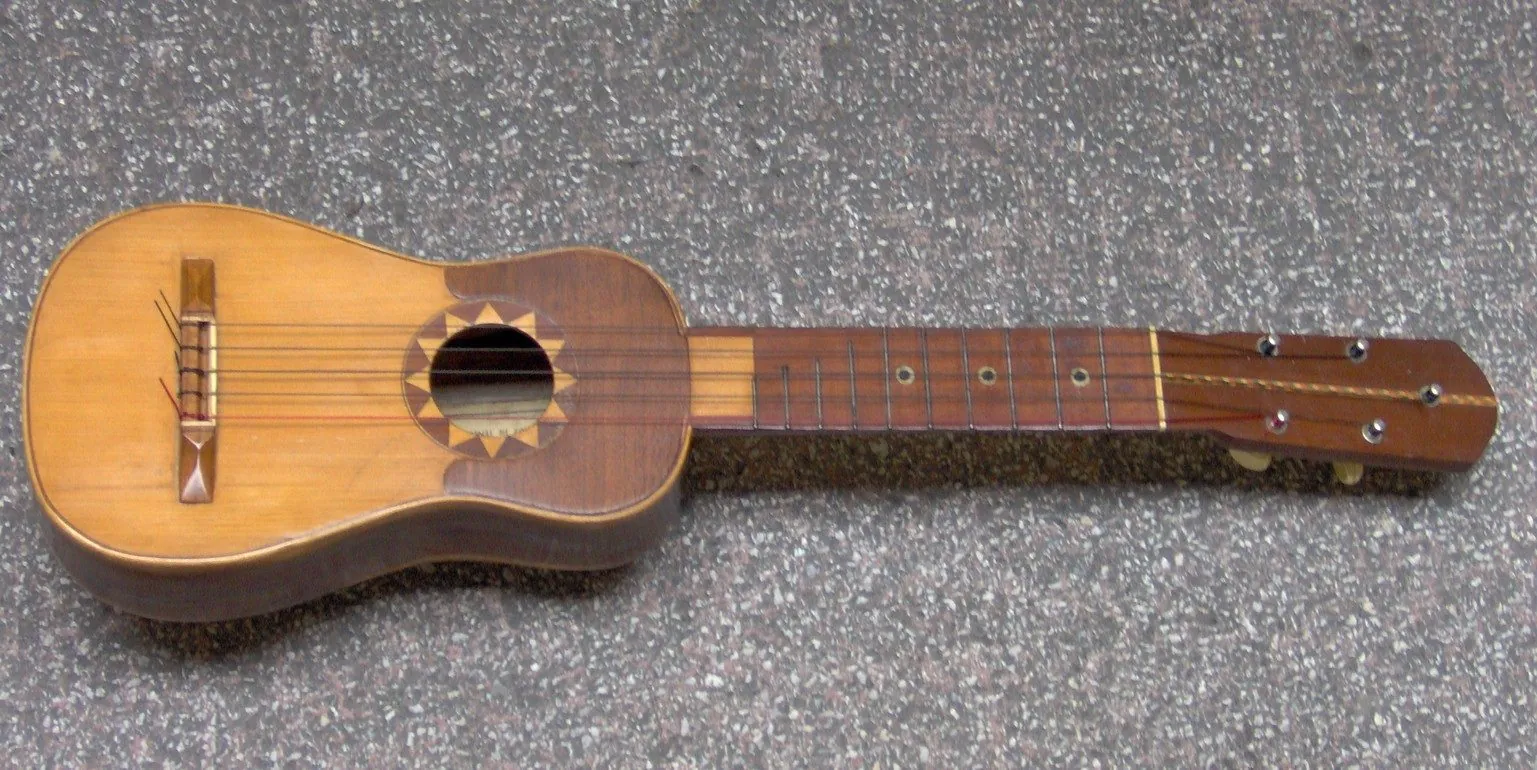
Photo: Villanueva · CC BY-SA 3.0 · Wikimedia Commons · converted
Folk songs and dances
Canarian folk music is a family of song-and-dance forms, many descended from Iberian and Latin American styles and reworked in the islands' own way. The best known include:
- Isa. Fast, lively and joyful, the isa is a group dance with couples weaving arches and chains — the upbeat crowd-pleaser of any fiesta.
- Folía. Slower, more solemn and deeply expressive, the folía is a stately courtship dance and one of the most emotive forms of Canarian song.
- Malagueña. Sharing roots with the Andalusian style, the Canarian malagueña is a heartfelt, ornamented solo song of longing.
- Seguidilla, tajaraste and more. Each island has its own specialities, from the drum-driven tajaraste to local variations found only in a single valley.
Dancers perform in beautiful regional costumes — full skirts, waistcoats, sashes and headscarves that differ island by island — and the whole spectacle is a highlight of any village festival.
Parrandas: music that finds you
The most infectious way to experience all this is the parranda — an informal, roving band of friends and neighbours who gather with timples, guitars and voices to play, sing and move from bar to bar or house to house, especially around Christmas and local feast days. There's no stage and no ticket; the music simply spills out into the street, and everyone is welcome to join in the choruses. Stumble upon a parranda in full flow and you've found the beating heart of Canarian folklore.
Silbo Gomero: the whistled language
La Gomera is home to one of the world's most extraordinary forms of communication: Silbo Gomero, a whistled language that turns Spanish into piercing whistles able to carry for kilometres across the island's deep ravines. Developed by shepherds to "talk" across valleys that take hours to cross on foot, it was once fading but has been revived — it's now taught in island schools and recognised by UNESCO as Intangible Cultural Heritage.
You'll often hear it demonstrated at restaurants and cultural venues on La Gomera, where a whistler will "say" a phrase and translate it. It's genuinely astonishing to witness, and utterly unique to the island — reason alone to make the short ferry hop across.
Silbo is a real language, not a party trick — treat demonstrations with respect. And don't expect to master more than a note or two yourself; fluent silbadores train for years.
Where you'll hear it
The single best place to encounter Canarian music is at a fiesta. Almost every town holds an annual patron-saint festival, and the calendar is packed with romerías (folk pilgrimages) where ox-carts, costumed dancers and folk bands parade through the streets, and food and wine flow freely.
| Occasion | What you'll hear | When |
|---|---|---|
| Romerías (folk pilgrimages) | Timple bands, isas, folías, costumes, ox-carts | Spring–autumn, town by town |
| Patron-saint fiestas | Parrandas, folk dancing, live groups | Year-round, varies by town |
| Carnival | Murgas, comparsas, Latin rhythms and brass | Usually Feb–Mar |
| Christmas season | Parrandas, villancicos (carols) with timple | December–January |
Carnival deserves its own mention: while it leans more towards samba, brass and satirical murga choirs than folk, it's the loudest, most joyful music you'll hear all year. We cover the whole calendar in our guide to festivals and carnival.
Music, sport and island identity
Folk music rarely stands alone here — it goes hand in hand with the islands' traditional games and its food culture. The same fiestas that feature timple bands often stage bouts of Canarian wrestling and other island contests, so it's worth reading our guide to traditional Canarian sports alongside this one. Together they show a culture that, for all the sun-and-sea tourism, has held tightly onto its own voice.
How to make the most of it
Check the local fiesta calendar for wherever you're staying — the tourist office or your accommodation will know what's on. Seek out a folk performance, listen for a timple in a village bar, and if you're anywhere near La Gomera, don't miss a Silbo demonstration. You don't need to understand a word of Spanish to be swept up in it. For many visitors, an evening of unexpected live island music becomes the memory that lasts longest.