Small, stubby, freckled with brown spots and impossibly sweet — the plátano de Canarias is nothing like the big, bland bananas that fill most supermarket shelves, and islanders will happily tell you why theirs is better. These little bananas carry protected European status, grow in the lush green valleys of the wetter northern coasts, and have shaped the islands' landscape, economy and history for well over a century. If you've only ever eaten a tropical banana, the Canary one is a revelation. Here's what makes it special, and how to see the plantations for yourself.
What makes the plátano de Canarias different?
The Canary banana is a distinct type — small and slightly curved, with a thin skin that develops the tell-tale brown speckles when perfectly ripe. Those spots, off-putting on other bananas, are the sign of a Canary banana at its sweetest. Compared with the large "Cavendish"-style bananas grown for export across the tropics, the plátano is:
- Smaller and sweeter, with a more intense, aromatic flavour and a slightly firmer, creamier texture.
- Slower-grown. The islands' subtropical climate is cooler than the equatorial tropics, so the fruit ripens more slowly on the plant, concentrating its sugars.
- Protected. The Plátano de Canarias holds a European PGI (Protected Geographical Indication), meaning the name is reserved for bananas genuinely grown in the islands to defined standards.
The everyday distinction islanders draw is simple: a plátano (the sweet, spotted Canary banana) versus a banana (the larger, blander tropical kind). Once you've tasted the difference, you'll understand the local pride.
Don't be put off by brown-speckled skin at the market or greengrocer — that's exactly when a plátano de Canarias is at its sweetest and best. Buy them slightly spotted and eat within a day or two.
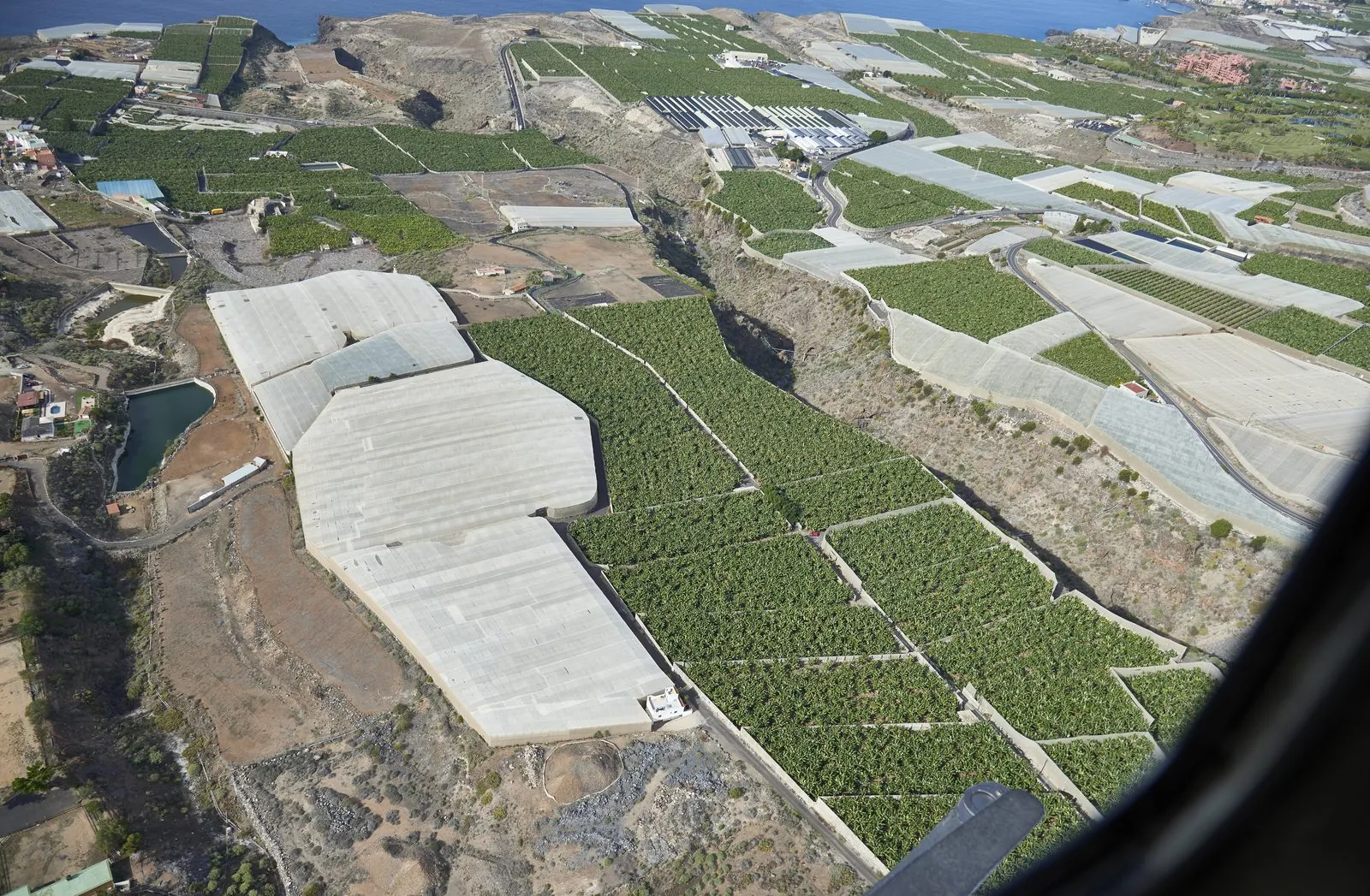
Photo: Wouter Hagens · CC BY-SA 4.0 · Wikimedia Commons · scaled
How the plantations shaped the green north
Bananas need water and shelter, so the plantations concentrate on the wetter, greener northern and western coasts of the islands, where the trade winds bring cloud and moisture. There, whole valleys and coastal plains are carpeted in the broad, glossy leaves of banana plants, often protected under netting or plastic against wind and to trap warmth. It's a landscape utterly different from the sunburnt southern resorts — deep green, terraced and intensively farmed.
The islands richest in bananas include La Palma, whose fertile western slopes around Tazacorte are a sea of plantations running right down to the sea, as well as parts of Tenerife and Gran Canaria. Tazacorte in particular is banana country through and through, and its coastline and valley give you the classic view of the crop that built the local economy.
A crop that built an economy
Bananas became a major Canarian export from the late 19th century, when British trading companies helped establish commercial plantations and shipping links to Europe. For decades the fruit was one of the islands' economic mainstays, and it remains hugely important today — the Canaries supply a large share of Spain's bananas, and the crop supports thousands of families across the northern islands.
That heritage is woven into the wider island story of boom crops — sugar, wine, cochineal and then bananas — that you can follow in our short history of the Canary Islands. The banana simply proved the most enduring, thanks to a protected home market and the fruit's distinctive quality.
Visiting a banana plantation
You don't have to admire the plantations only from the road. Several working plantations, especially on La Palma and Tenerife, welcome visitors with guided tours and small museums, explaining how bananas are grown, harvested, graded and shipped — usually finishing with a tasting. It's a genuinely interesting, family-friendly outing and a good rainy-day (or too-sunny-day) alternative to the beach.
Opening days and hours at plantation visitor centres vary by season and are limited, and some tours run only on certain days or need booking. Check the official website or ask locally before making a special trip, and confirm current prices on arrival.
Even without a formal tour, driving the northern and western coasts takes you straight through banana country — pull over at a mirador and you'll see the plantations tumbling down towards the Atlantic. Pair a plantation visit with the volcanic scenery and laurel forests of La Palma for a rewarding day away from the coast.
How islanders eat them
Beyond eating them fresh, plátanos turn up all over Canarian cooking:
- Fried plátano as a sweet side or dessert, sometimes with palm honey.
- In cakes, breads and desserts, where their intense sweetness shines.
- As a natural, energy-packed snack — a staple in island lunchboxes and on the trail.
They sit comfortably alongside the rest of the island larder, from mojo-dressed potatoes to fresh cheese and tropical fruit; see the bigger picture in our guide to Canarian food.
Bananas, aloe and the volcanic land
The plátano is really part of a larger story about how the Canaries farm their dramatic volcanic terrain — the same sunshine, rich soils and clever water management that give the islands their prized aloe vera, tomatoes and wine. We tie it all together in our guide to aloe vera and Canarian produce, which is the natural next read if the island larder appeals.
Taste the islands' sweetest export
For something so humble, the Canary banana tells you a lot about the islands: their green-and-gold split between wet north and dry south, their history of export crops, and their fierce local pride in doing things their own way. Buy a bunch at the market, eat one when it's properly spotted, and — if you're on La Palma or Tenerife — spend a morning walking a plantation. It's the sweetest, simplest souvenir the Canaries offer.