The Canary Islands' volcanic soil, endless sunshine and clean Atlantic air grow some of the world's most prized aloe vera — and a surprising bounty of other produce, from sweet little bananas to tomatoes, tropical fruit, wine and even the crimson dye that once made islanders rich. Farming here has always been an act of ingenuity, coaxing crops from black lava and stony hillsides with clever water systems and terraces. The result is a distinctive island larder well worth exploring, and aloe vera is its poster child. Here's the story of what grows here and how to buy the genuine article.
Canary aloe vera: why it's so prized
Aloe vera thrives in the Canaries' warm, dry, sunny climate, and the plant grown here — chiefly Aloe vera barbadensis — is widely regarded as exceptionally high in quality. The combination of intense sunshine, mineral-rich volcanic soil and low pollution is credited with producing thick, potent leaves rich in the gel that makes aloe so sought after for skincare, sunburn relief and cosmetics.
You'll see aloe growing in neat rows across the drier islands, especially Fuerteventura, Lanzarote and the south of Gran Canaria and Tenerife, and aloe products fill the souvenir shops: pure gels, after-sun, creams, soaps and drinks. It's one of the most popular things visitors take home — deservedly, when it's the real thing.
Not all "aloe" is equal. Cheap products can be mostly water and filler with only a token amount of aloe. Look for a high aloe percentage (ideally pure or near-pure gel), genuine island origin, and buy from reputable shops or the plantations themselves rather than the cheapest beach stall.
Several aloe farms on the drier islands offer visits and demonstrations, showing how the leaves are cut and the gel extracted, with a shop attached. It's an easy, worthwhile stop and the surest way to buy authentic, high-strength aloe — folded neatly into our guide to Canarian crafts and what to buy.
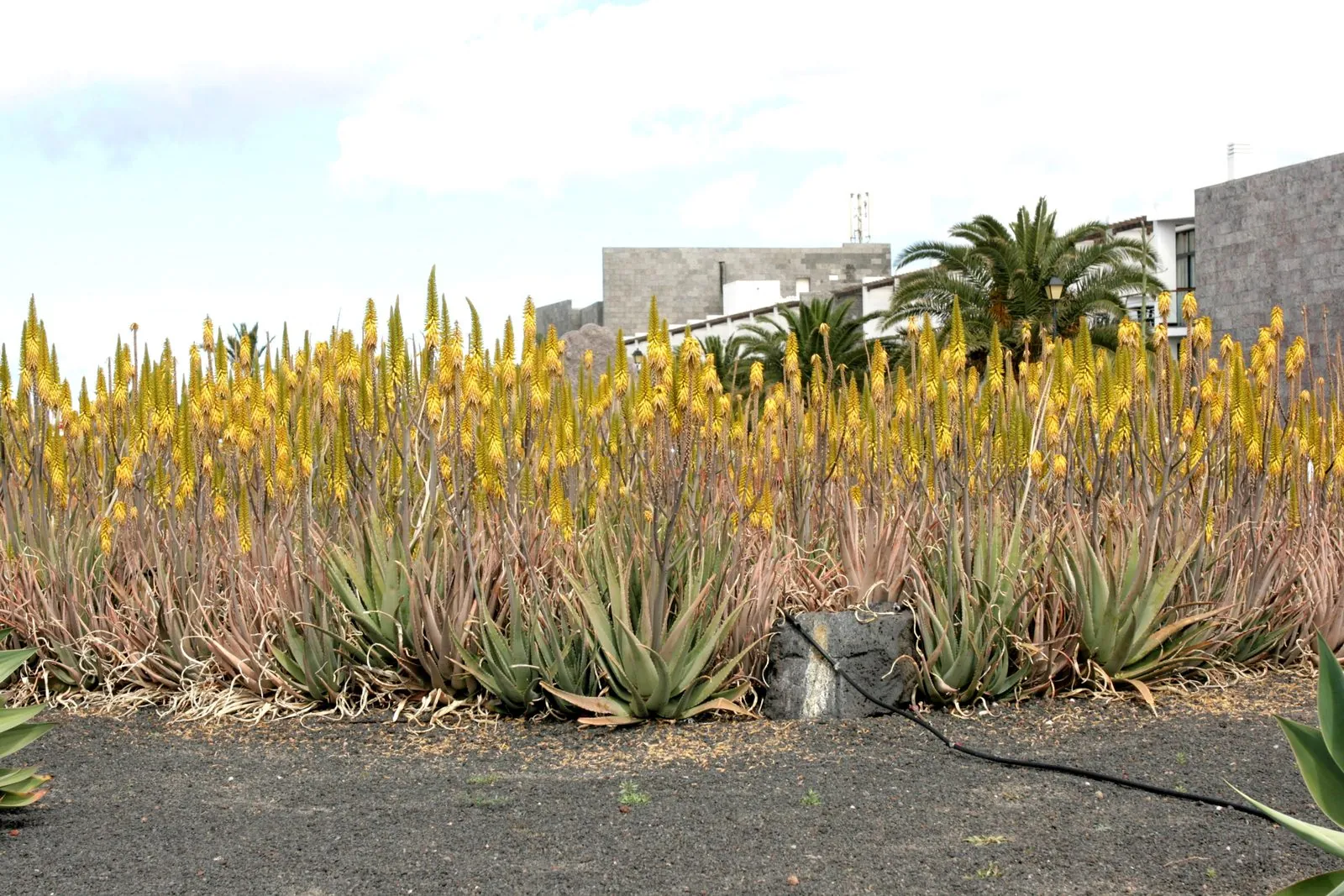
Photo: Frank Vincentz · CC BY-SA 3.0 · Wikimedia Commons · scaled
The volcanic-soil farming story
Canarian agriculture is a masterclass in making the most of hard ground. On Lanzarote, farmers famously plant vines and crops in pits dug into black volcanic gravel (picón), which traps precious moisture from the night air and dew and shelters plants from the wind — the surreal, semicircular-walled fields of La Geria are the classic example. Across the wetter northern slopes, generations built stone terraces to farm steep hillsides, fed by ingenious channels and galleries tapping mountain water.
With little rainfall in the south and no rivers to speak of, water has always been the limiting factor, and much of the islands' history is really a history of water management. That hard-won produce tastes all the better for it.
Beyond aloe: the island larder
Bananas
The small, sweet plátano de Canarias is the islands' signature crop, carpeting the green northern valleys and holding protected (PGI) status. It's sweeter and more intensely flavoured than the big tropical bananas sold elsewhere — the full story, and where to visit a plantation, is in our guide to the bananas of the Canary Islands.
Tomatoes
For much of the 20th century, tomatoes were a huge Canarian export, shipped north to Europe through the winter when the islands' warmth gave them an unbeatable head start. The trade has shrunk under competition, but tomatoes remain an important crop, especially in the south of Gran Canaria and Tenerife.
Cochineal
One of the islands' more curious "crops" is cochineal — a tiny insect farmed on prickly-pear cactus and crushed to make a brilliant natural crimson dye (carmine). In the 19th century it was hugely valuable, colouring fabrics and, still today, foods and cosmetics. Synthetic dyes collapsed the boom, but small-scale production survives, notably on Lanzarote, as a living link to that vivid past.
Tobacco
The Canaries have a long tradition of tobacco growing and cigar-making, particularly on La Palma, where hand-rolled puros palmeros are a genuine craft product with a devoted following. It's a niche today, but a distinctive one, and the island's cigars make an unusual souvenir for aficionados.
Tropical fruit
The subtropical climate lets the islands grow fruit that struggles in mainland Europe: mangoes, papayas, avocados and, on La Palma especially, custard apples. Prickly pears, dates and figs grow easily too. Local markets are the place to taste them at their best.
Wine
Volcanic soils and old, ungrafted vines give Canary wines a character all their own — mineral whites from Lanzarote, characterful reds and the historic sweet Malvasía that Shakespeare's England adored. The best are increasingly sought after by wine lovers; discover them in our guide to Canary wine.
Where to taste and buy island produce
- Municipal markets (mercados). The best all-round choice for fruit, tomatoes, cheese, honey and wine, fresh and local.
- Farm shops and plantation visits. Aloe farms, banana plantations and wineries often sell direct — the freshest, most authentic buys.
- Village fiestas and craft fairs. Seasonal markets bring producers together with food and folklore.
- Specialist delis. In the cities and larger towns, for wine, cigars, gofio and gourmet gifts.
Produce shaped by the land
What ties all of this together is the volcanic landscape itself. The same lava, sunshine and clever water-craft that make the islands so dramatic to look at are what give the aloe its strength, the wine its minerality and the bananas their sweetness. Buying genuine, island-grown produce — pure aloe, real palm honey, PGI bananas, volcanic wine — is a way of tasting that landscape and supporting the farmers who still work it. Choose carefully, favour the markets and the farm gate, and you'll take home the true flavour of the Canaries.