The Ecomuseo La Alcogida is a whole restored hamlet in the heart of Fuerteventura — a cluster of old farmhouses, byres and workshops brought back to life to show how island country people, the Majoreros, once lived, farmed and made everything by hand. Set in the dry, wide-open interior near the village of Tefía, it's part open-air museum, part living time capsule, with craftspeople demonstrating the old skills. For anyone who wants to understand the real, traditional Fuerteventura behind the beaches, it's one of the island's most rewarding stops.
A hamlet frozen in time
La Alcogida is not a museum built to look old — it's the genuine article, a small settlement of stone-and-mud houses that a local farming family and their neighbours actually lived in until relatively recent times. Rather than let it crumble, the island authorities painstakingly restored the buildings and their contents, so that walking through feels like stepping into a home whose owners have only just stepped out. Rooms are laid out with real furniture, tools, cooking pots and beds; outside are the ovens, wells, threshing floors, animal pens and dry-stone walls that made a rural household work.
The Majoreros — the people of Fuerteventura — farmed one of the harshest, driest landscapes in the Canaries, and everything here speaks of that struggle: careful water collection, grain grown and ground into gofio, goats kept for milk, cheese and meat, and a make-do-and-mend ingenuity born of scarcity. It's a moving, human portrait of island life before tourism arrived.
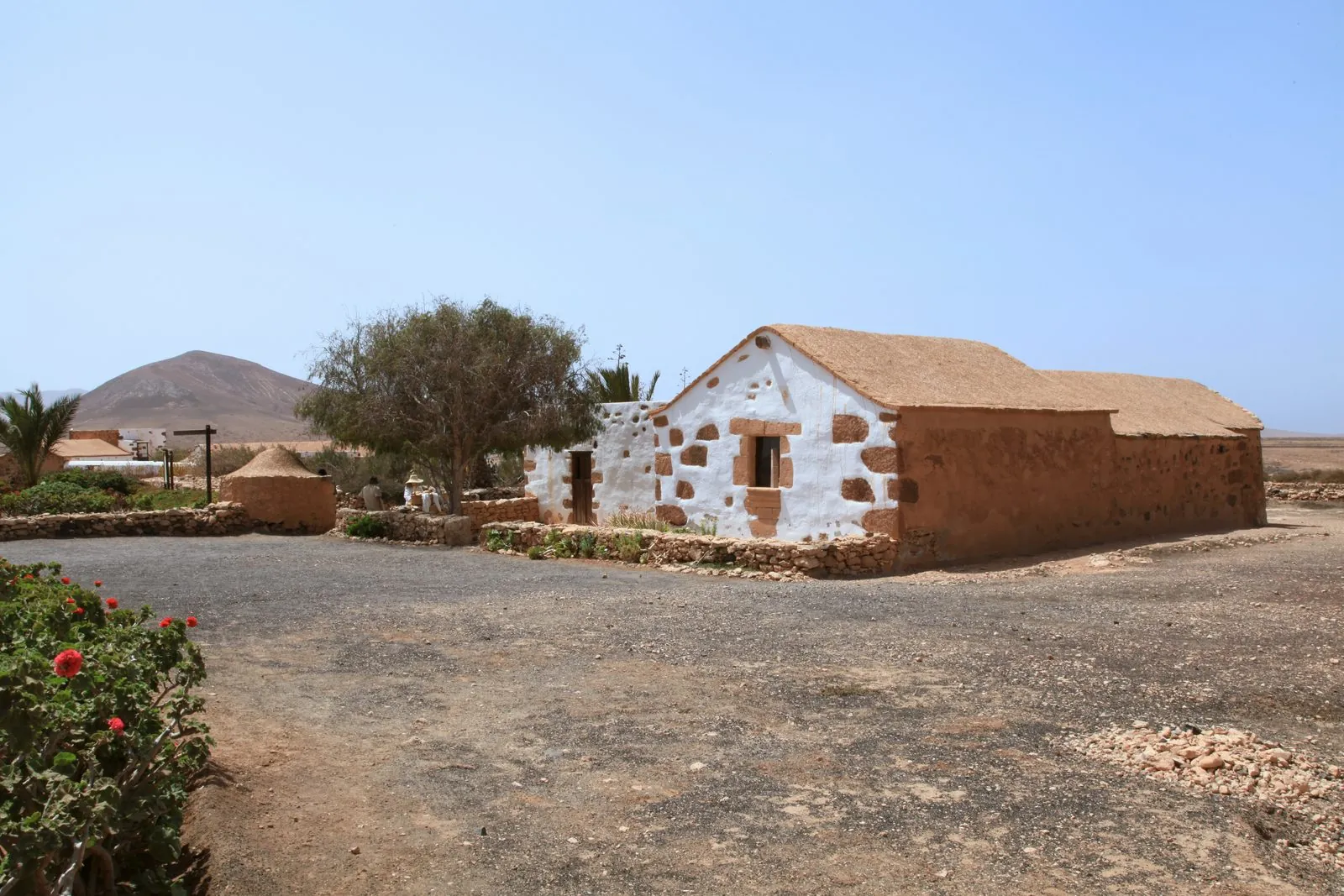
Photo: Frank Vincentz · CC BY-SA 3.0 · Wikimedia Commons · scaled
Traditional crafts, brought to life
What sets La Alcogida apart from a static museum is that the old trades are demonstrated on site. In the various houses and workshops you may find artisans practising crafts that were once part of everyday survival — hand-weaving, basketry from palm leaves, pottery, dry-stone building, bread-making in the traditional ovens and the working of the land. Seeing these skills in action, rather than behind glass, brings the whole hamlet alive and makes it especially engaging for children.
Go on a day with demonstrations and take the guided visit. The crafts and guided tours are the highlight, so it's worth timing your visit for when they're running. Guides bring out the stories of the families who lived here and explain the clever survival tricks you'd otherwise walk straight past.
The architecture of survival
La Alcogida is also a superb, real-world lesson in traditional Canarian architecture — specifically the low, thick-walled, flat-roofed rural style of the eastern islands. Built from local stone and earth, whitewashed or left bare, the houses are designed to shrug off the sun, wind and dust: small windows, sheltered courtyards, and every structure with a practical purpose. After a visit here you'll start noticing the same features in old buildings all over the island, and understand why they look the way they do.
Check opening days and hours before you go. As of 2026 the ecomuseo opens on set weekdays only, with a modest admission charge and reduced rates for children, and it's generally closed at weekends. Times, days and craft schedules change, so confirm with the island's museum service before making the drive out.
Where it sits and what to pair it with
The hamlet lies inland near Tefía, in the sparsely populated centre of Fuerteventura — a landscape of open plains, gentle volcanic cones and huge skies that has a stark beauty of its own. It's an easy add-on to a day exploring the island's cultural heart. The obvious pairing is the old capital, Betancuria — a jewel of a whitewashed town in the western hills, with its historic church and pretty streets — which sits a short drive away and completes a lovely "traditional Fuerteventura" loop.
Together, La Alcogida and Betancuria make a perfect antidote to a beach-only holiday, showing the island's history, architecture and rural soul. Round the day off with a village lunch of goat stew and local cheese and you'll see a completely different side of Fuerteventura.
Getting there
You'll need a hire car: the ecomuseo is in the rural interior with little public transport, signposted off the roads near Tefía between the capital Puerto del Rosario and the west. From the northern resorts around Corralejo or the central beaches allow around 30–45 minutes, and the drive across the open plains is a scenic part of the experience.
No glass cases, no gift-shop gloss — just a real island hamlet and the hard, resourceful lives once lived in it.
Authentic, atmospheric and genuinely educational, the Ecomuseo La Alcogida is among the best cultural things to do on Fuerteventura — a chance to meet the island as it was, and to understand the tough, ingenious world the Majoreros built out of stone, sun and sheer determination.