Tucked away beside a country road in south-east Gran Canaria is a hidden natural wonder that has become one of the island's most photographed spots: the Barranco de las Vacas, a short but spectacular slot canyon of wave-like sandstone walls often dubbed Gran Canaria's "little Antelope Canyon". Water has carved the soft volcanic rock into smooth, honey-and-ochre curves that glow in the sunlight, and squeezing through the narrow gorge feels like stepping into another world entirely. It's small, it's free, and it's utterly Instagram-famous — which is exactly why a little planning makes all the difference.
Gran Canaria's Antelope Canyon
The comparison with Arizona's Antelope Canyon is what put this place on the map, and it's not far off. Centuries of flash-flood water rushing down the ravine have sculpted the compacted volcanic ash — a soft rock the locals call toba — into rippling, layered walls that twist and narrow overhead. The colours shift from cream to gold to deep russet depending on the light, and the fluted shapes look almost man-made. It's compact, so don't expect the vast scale of its American cousin, but for a photographer or a curious wanderer it's a genuine little marvel, and refreshingly untouristy compared with the big southern resorts of Gran Canaria.
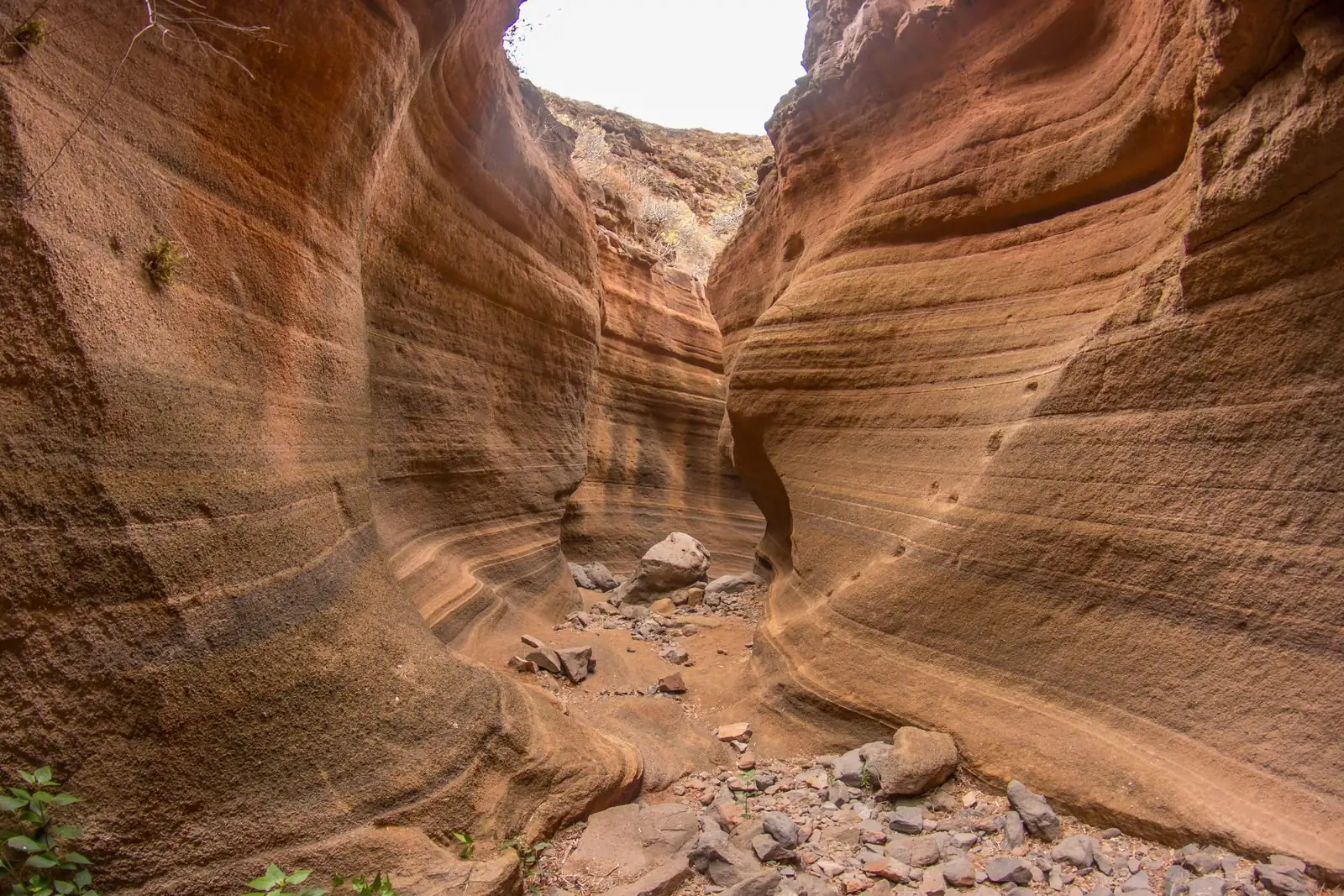
Photo: El Coleccionista de Instantes · CC BY-SA 2.0 · Wikimedia Commons · scaled
Go early — this is the golden rule
The canyon's fame is also its problem. It's tiny, and on a busy day a queue of people waiting to photograph the same narrow slot rather spoils the magic. The single best thing you can do is arrive early, ideally not long after sunrise, when you may have the place almost to yourself and the low light is at its most beautiful. Late afternoon can also work once the coach-tour crowds have gone. Midday is both the busiest and the harshest for photos.
First light is worth the early alarm. Arriving at or soon after sunrise gives you soft, glowing light on the walls and, often, an empty canyon to enjoy in peace. It's a short visit — most people spend twenty minutes to half an hour here — so it slots neatly into the start of a day exploring the island's interior.
Finding it and parking — the tricky bit
Reaching the Barranco de las Vacas takes a little effort, which is part of why it stays relatively quiet. It lies on the GC-550 road between Agüimes and Santa Lucía, in the island's south-east, and there are no signs pointing to it — you'll want the location saved on your phone's map before you set off. The landmark to look for is a small stone bridge over the road with a tunnel beneath it; the canyon opens up right there. A hire car is really the only sensible way to get here, as public transport doesn't serve the spot, and the narrow, winding approach roads reward unhurried, careful driving.
Parking is extremely limited. There is no car park — just room for two or three cars on the roadside near the bridge, plus a slightly larger lay-by a few hundred metres away. The road is a fast rural route, so pull in fully, take care crossing, and don't block it. This scarcity of parking is the number-one reason to come early: later in the day the spaces are gone and the verges become chaotic.
Walking the canyon safely
From the roadside it's only a few minutes on foot into the gorge. The going is easy but the ground can be sandy, uneven and slippery in places, so trainers or walking shoes beat sandals. Once inside, keep in mind that these are soft, protected rock walls: don't climb on them or carve into them, as they're fragile and easily marked, and part of their beauty is that they've been left unspoiled.
Never enter if storms threaten. This is a flood channel, and slot canyons are notorious for sudden flash floods — water can surge down from the mountains even when it's dry where you're standing. Check the weather first and stay well away if rain or thunderstorms are forecast anywhere inland. On a clear, settled day there's nothing to worry about.
Combine it with the interior
Because the visit is so short, it's best woven into a wider day out. The canyon sits close to some of the island's most rewarding inland scenery, and it pairs beautifully with the palm-filled ravine and cave houses of the Barranco de Guayadeque just a little to the north — another of the south-east's hidden gems, with troglodyte homes and famous cave restaurants for lunch. The whitewashed old town of Agüimes nearby is also well worth a stroll. If you'd rather round the day off by the sea, the low-key coastal resort and long beach at Arinaga lie just down on the south-east coast. Between them, these sights make a lovely alternative to a beach day and show a greener, more traditional side of the island.
Is it worth the effort?
For photographers, nature lovers and anyone who enjoys seeking out a hidden corner, absolutely — there's nothing else quite like it on Gran Canaria, and the sculpted walls really are as striking in person as in the pictures. Just go in with realistic expectations: it's small, it can get crowded, and half the trick is timing. Come at first light, park considerately, tread gently and check the sky, and the Barranco de las Vacas rewards you with one of the island's most magical little scenes. For more inspiration across the island, browse our other things to do.
Rippling golden walls in a hidden roadside gorge — arrive at sunrise, and Gran Canaria's "Antelope Canyon" is all yours.