Playa de Arinaga is the breezy, authentic beach of the east coast — a long, open shoreline and seafront promenade fronting a real working town rather than a purpose-built resort, on the sunny south-eastern side of Gran Canaria. This is where local families come to swim, walk and eat, and its reliable wind has made it a magnet for windsurfers and a well-known base for divers. If you want a slice of everyday Canarian coastal life — fishing boats, tapas terraces and salt air — rather than a polished tourist strip, Arinaga is a refreshing change of pace.
How to get there
Arinaga sits on the east coast, conveniently close to the airport — roughly 15–20 minutes by road — which makes it an easy first or last stop on a trip. It's well served by the main coastal routes, and drivers will find parking around the town and along the seafront. Regular buses connect it to the capital and the southern resorts, so you can reach it without a car. Its position on the eastern shore means it gets bright, dry weather but also a good deal more wind than the sheltered south.
What it's like
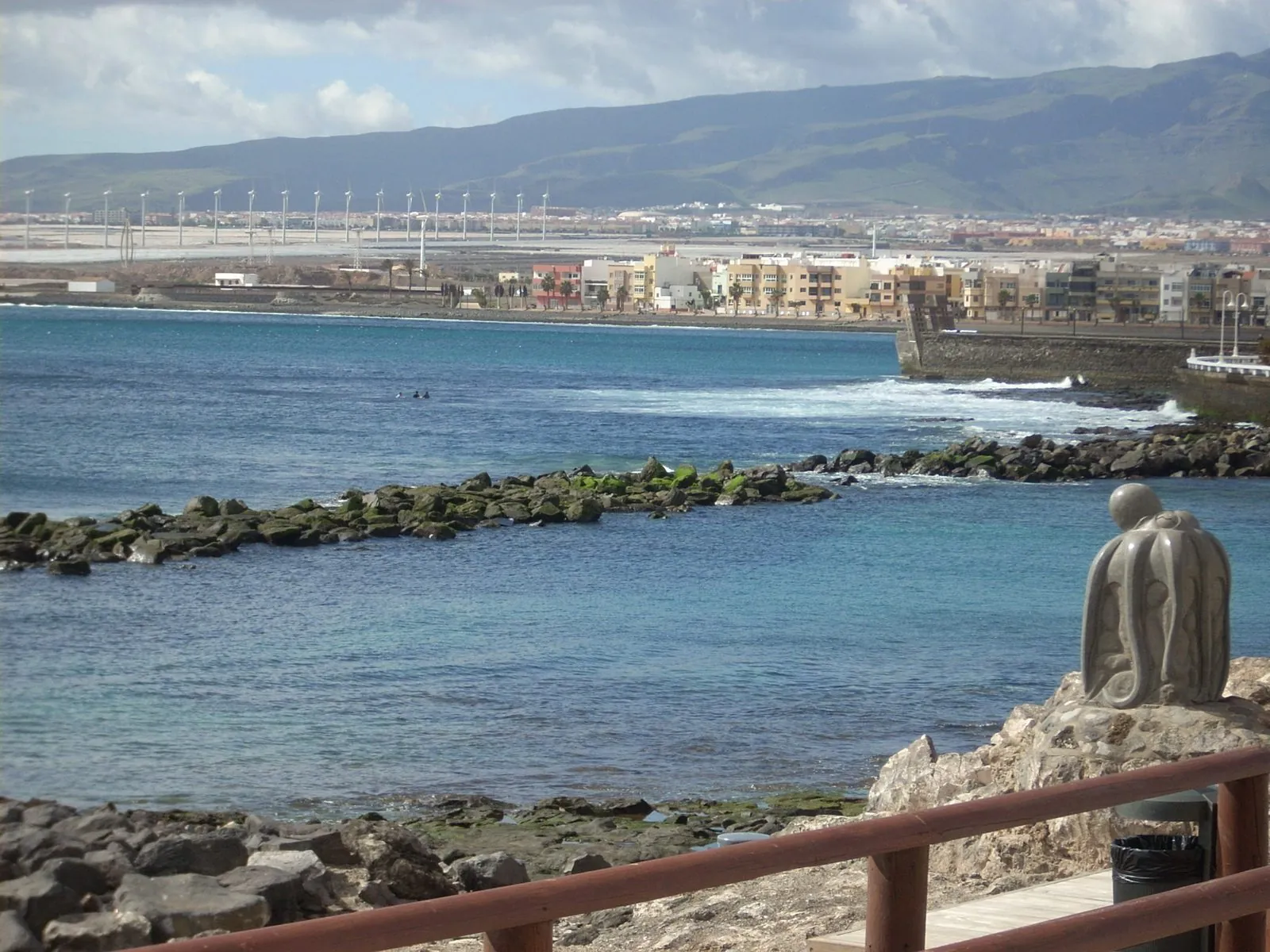
The beach is a mix of dark sand, shingle and rock, stretching along an attractive, well-kept promenade lined with restaurants, cafés and palm trees. It's a genuine town beach, busy with locals and refreshingly free of the high-rise resort feel. The long paseo is perfect for an evening stroll, and the working harbour and fishing heritage give the place real character. The breeze that blows here keeps it fresh even on the hottest days — a bonus if you find the sheltered south too still.
Arinaga is Gran Canaria with its everyday clothes on — and all the better for it.
Swimming and safety
Swimming is pleasant on calmer days, with clear water and sheltered pockets along the shore, and there are natural and man-made bathing spots where locals take a dip. The steady wind that makes the beach so good for watersports can, however, whip up the sea, so conditions vary more than in the tucked-away southern bays. Watch the flag system and any lifeguard guidance, pick a sheltered corner when it's blowy, and take normal care with waves and currents.
Arinaga's dependable wind is a big draw for windsurfers and, at nearby spots, kitesurfers. If you don't fancy the breeze on your towel, tuck in behind the rocks or visit early in the day when it's often calmer.
Facilities
As a town beach, Arinaga is well equipped without feeling touristy. The promenade behind the sand is full of local bars and seafood restaurants, there are showers and toilets, and shops and services are close at hand in the town itself. This is a great place to eat well and inexpensively, with fresh fish a speciality. The area is also a recognised diving base, with clear, life-rich waters offshore and dive centres catering to beginners and experienced divers alike.
Best for whom
Arinaga suits watersports fans, divers, and travellers who want an authentic, local atmosphere close to the airport rather than a manufactured resort. Windsurfers love the breeze, and anyone keen to explore the underwater world will find it an excellent base — see our guide to diving in the Canary Islands for what to expect beneath the surface. It's less ideal if you specifically want soft golden sand and dead-calm, sheltered swimming; for that, the engineered bays of the south are a better match.
Nearby
The east coast around Arinaga is dotted with clear-water dive sites and small local beaches, and the town makes a handy base between the airport, the capital and the southern resorts. Inland, the dramatic ravine of Barranco de Guayadeque — with its cave houses and cave restaurants — is a rewarding half-day trip. The whole eastern shore rewards those who venture beyond the main tourist strips. For routes, planning and where to stay, see our full guide to Gran Canaria.