Puerto de Santiago is a relaxed, low-key town on the sunny west coast of Tenerife, wrapped around the black-sand beach of Playa de la Arena and neighbour to the towering cliffs of Los Gigantes. Once a quiet fishing village, it has grown into an easygoing holiday spot that keeps its Canarian character — a place of small plazas, seafront promenades and some of the most reliable sunshine on the island. It's an ideal base for anyone who wants beaches, dramatic scenery and boat trips without the crowds of the big southern resorts.
Strung along the coast on the west of Tenerife, Puerto de Santiago effectively runs into its neighbour Los Gigantes, sharing the same sheltered, sun-soaked corner beneath the cliffs. Come for the black-sand swimming, the whale-watching and a calmer, more grown-up pace of holiday.
What it's like
Puerto de Santiago has the feel of a real town that happens to welcome tourists, rather than a purpose-built resort. Whitewashed buildings climb the gentle slopes above the sea, a seafront promenade links the beaches and coves, and small bars and restaurants keep a local, unhurried air. The west coast is one of the driest and sunniest parts of Tenerife, sheltered from the trade winds, so the weather here is dependable almost year-round.
The mood is calm and family-friendly, popular with couples, older travellers and repeat visitors who like somewhere quieter. There's enough going on — restaurants, a supermarket or two, boat trips and easy days on the sand — without the neon and nightlife of the bigger resorts further south.
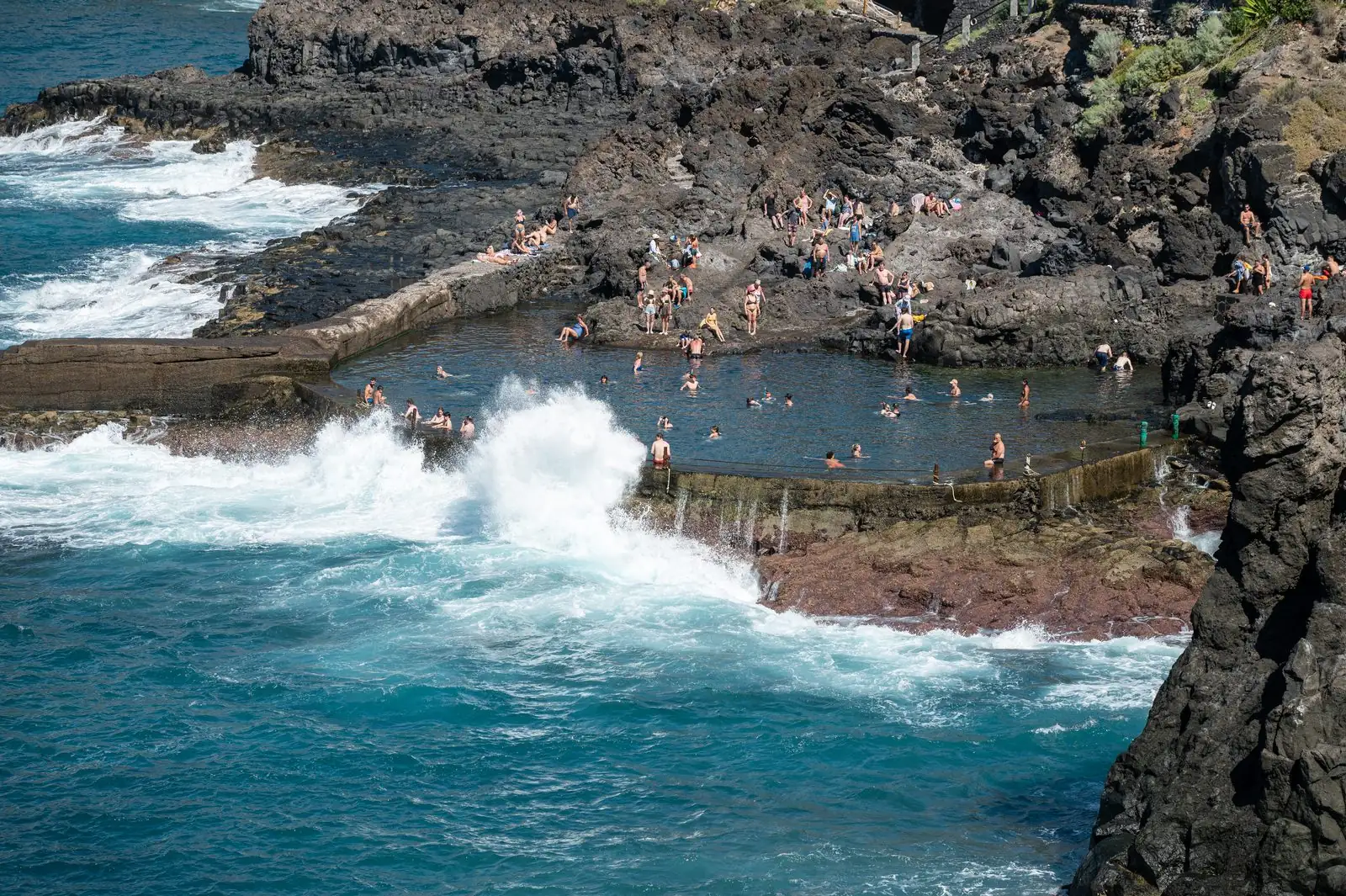
Photo: Tuxyso · CC BY-SA 4.0 · Wikimedia Commons · scaled
What to see and do
The heart of the town is Playa de la Arena, a compact, well-kept beach of dark volcanic sand tucked between rocky headlands, with a promenade of cafés behind it — read our full guide to Playa de la Arena. The gently shelving sand and lifeguard presence make it a reassuring family swim, though the Atlantic can throw up surf on breezy days.
Right next door rise the spectacular Acantilados de Los Gigantes ("Cliffs of the Giants"), sheer walls of rock that plunge hundreds of metres straight into the sea. The marina at Los Gigantes is the launch point for boat trips beneath them, and these sheltered waters are among the best places in the Canaries for whale and dolphin watching — resident pilot whales and dolphins are seen year-round. It's a highlight of any west-coast stay.
For whale and dolphin trips, choose a smaller, licensed boat that keeps a respectful distance from the animals — look for the blue "Barco Azul" flag, which marks operators following the official code of conduct.
Where to stay and eat
Accommodation ranges from apartments and aparthotels to a few larger hotels, generally more relaxed and lower-rise than the mega-resorts of the south. The area suits couples, families and quieter holidaymakers who want sun, sea and scenery with a car for exploring; our where to stay guide compares Tenerife's very different bases.
Given its fishing roots, this is a fine place to eat fresh fish and seafood — grilled catch of the day, limpets and octopus served simply at seafront restaurants, always with papas arrugadas and mojo. You'll also find plenty of international options along the promenade. Our Canarian food guide has more on what to try. Nightlife is low-key — a good dinner and a drink by the sea rather than clubs.
Getting there and around
Puerto de Santiago is on the west coast, around 40–50 minutes' drive from Tenerife South airport and the main southern resorts, along good roads. A hire car is very handy here for reaching beaches, cliffs and the mountains inland — see our guides to car hire and getting around. Regular buses (guaguas) also link the town with Los Cristianos and the south, and boat trips run from the neighbouring marina.
Nearby
Right on the doorstep are Los Gigantes and its dramatic cliffs, while up the coast lies the pretty town of Alcalá and its beach. Inland, mountain roads climb towards the pine forests and the great volcano of Mount Teide, and the remote hamlet of Masca hides in the hills above. Start with our Tenerife hub to build a west-coast trip around this sunny, easygoing base.