Where you should stay in Tenerife depends almost entirely on the holiday you want: the sunny, purpose-built south for beaches and nightlife, or the greener, more traditional north for character and cooler days. The big-hitting resorts all cluster on the reliably warm south-west coast, while the north around Puerto de la Cruz and La Laguna offers a different, more Spanish Tenerife. This guide maps out the main areas by who they suit best, then routes you onward to the detailed resort, beach and activity pages so you can pin down the perfect base.
The quick verdict
For upmarket family holidays with the best beaches, choose Costa Adeje. For a relaxed, walkable resort that suits couples and older travellers, pick Los Cristianos. For nightlife and a young crowd, it's Playa de las Americas. And for a leafy, characterful town with a real Canarian soul, head north to Puerto de la Cruz. Everything else is a variation on those four.
| Area | Best for | Vibe | Beaches |
|---|---|---|---|
| Costa Adeje | Upmarket families, couples | Polished, spacious, smart hotels | Excellent, groomed golden sand |
| Los Cristianos | Relaxed breaks, older travellers | Traditional resort-town, walkable | Two sheltered town beaches |
| Playa de las Americas | Nightlife, groups, young couples | Buzzy, brash, non-stop | Good, busy, man-made bays |
| Puerto de la Cruz | Culture, north, cooler summers | Traditional, Spanish, green | Black sand, lido complex |
| Los Gigantes | Quiet, scenery, whale watching | Low-key, dramatic cliffs | Small dark-sand coves |
| La Laguna & north | Explorers, walkers, city lovers | Historic, misty, authentic | Rely on a hire car |
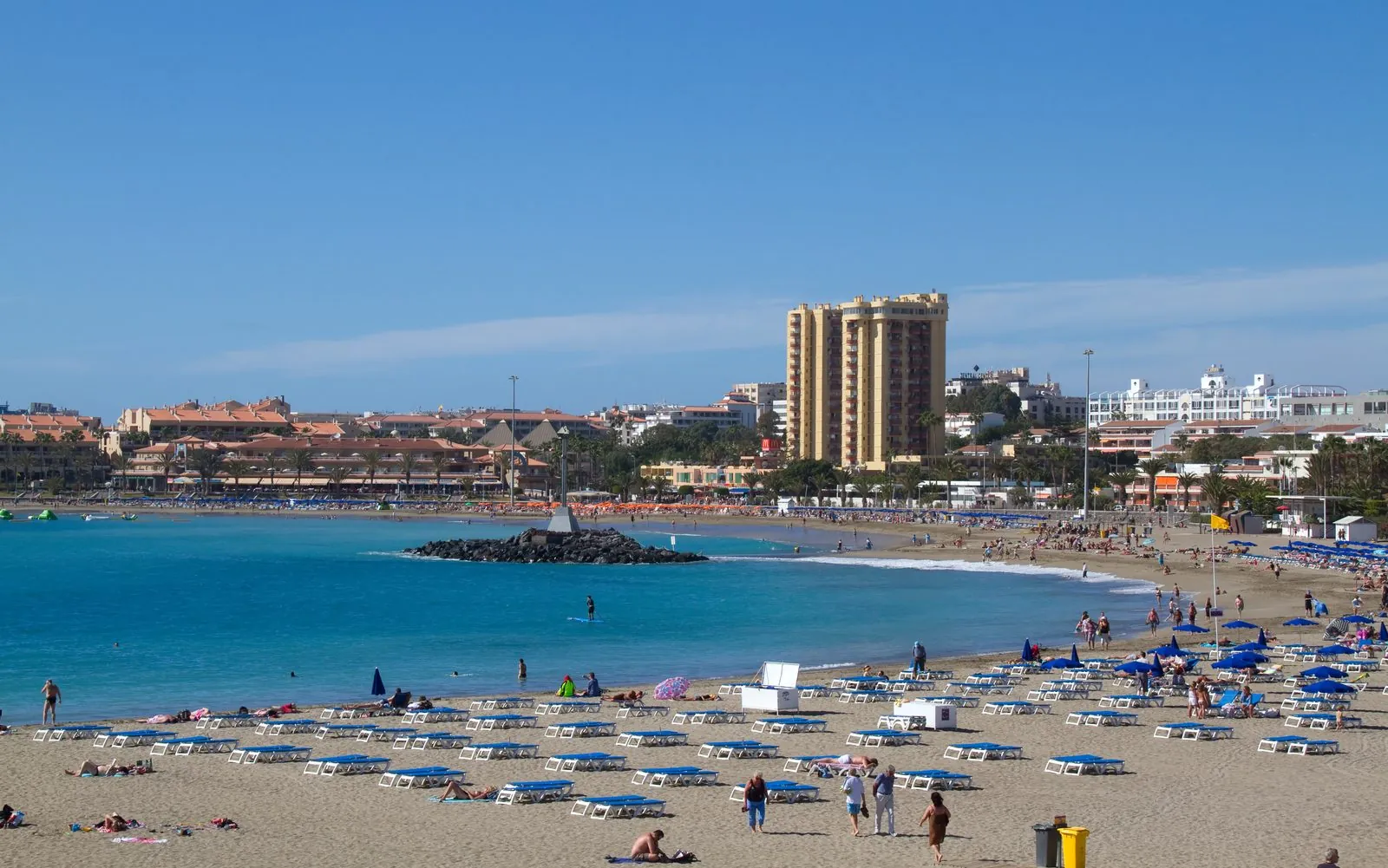
Photo: Tony Hisgett · CC BY 2.0 · Wikimedia Commons · scaled
Costa Adeje — upmarket families and couples
The smartest address on the island, Costa Adeje is where you'll find the four- and five-star hotels, the manicured promenades and the best-kept beaches on the south-west coast. It flows seamlessly out of Playa de las Americas but feels calmer, greener and more spacious, which is why it draws families who want quality without the rowdiness, and couples after a bit of polish. It's also the gateway to Siam Park, regularly rated the world's best water park, and within easy reach of whale- and dolphin-watching trips from Puerto Colon. If your budget stretches and you want the beaches sorted, this is the safe, excellent choice. See the full picture on our Costa Adeje guide.
Los Cristianos — relaxed and walkable
Just along the coast, Los Cristianos is the grown-up, gentler neighbour: an old fishing town that grew into a resort but kept its harbour, its plaza and its unhurried pace. It's flat, compact and easy to get around on foot, which makes it a firm favourite with older travellers, less mobile visitors and anyone who wants a real town rather than a strip of hotels. The two sheltered beaches are calm and sandy, the ferry port sends boats to La Gomera and El Hierro, and the restaurants lean local. It's the pick for a relaxed week that still has everything on the doorstep. Read more on the Los Cristianos guide.
Playa de las Americas — nightlife and buzz
If you've come for late nights, live music, bars and a party atmosphere, Playa de las Americas is Tenerife's engine room. This is the purpose-built resort that made the island's name in the package-holiday era, and its nightlife runs from family-friendly early evenings to full-throttle clubs around the notorious Veronicas strip. By day there are decent beaches, watersports and a lively promenade; by night it never really stops. Younger couples and groups love it — see our dedicated Playa de las Americas nightlife guide, and the full resort overview.
The three southern resorts — Costa Adeje, Los Cristianos and Playa de las Americas — run into one another along a single seafront. Stay at the boundary between them and you get the best of both: quiet nights and lively evenings within a short walk.
Puerto de la Cruz — traditional Tenerife in the north
For a completely different holiday, cross to the green northern coast and Puerto de la Cruz, the island's original tourist town and still its most characterful. Set beneath the banana slopes with Mount Teide as a backdrop, it's a handsome place of old squares, Canarian houses, black-sand beaches and the wonderful Lago Martianez lido complex designed by Cesar Manrique. The north is cooler and cloudier than the south — genuinely so in winter — but in summer that's a blessing, and the town's Spanish character, botanical gardens and proximity to Loro Parque win a lot of hearts. Ideal for couples, culture-lovers and repeat visitors. Full details on the Puerto de la Cruz guide.
Los Gigantes — quiet coves and dramatic cliffs
Tucked beneath the towering cliffs of the west coast, Los Gigantes is smaller, quieter and more scenic than the big resorts. It suits couples and anyone after a peaceful base with knockout views, small dark-sand beaches and some of the island's best whale-watching right offshore. It's also the launch point for boat trips towards the remote village of Masca. You'll want a hire car here to make the most of the surrounding countryside.
The green north and La Laguna — for explorers
Beyond the resorts, the north holds the Tenerife that many visitors never see: the UNESCO-listed old university city of La Laguna, the laurel forests of the Anaga hills, wine villages and hidden black-sand beaches. There's little in the way of beach-resort infrastructure here, so it's best for independent travellers with a car who prioritise scenery, food and authenticity over sunbeds. Pair a few nights north with time in the south for the fullest picture of the island. Start with the Tenerife island hub.
North versus south — the big decision
The defining choice on Tenerife is which coast. The south-west — Costa Adeje, Los Cristianos, Playa de las Americas — is dry, sunny and warm almost every day of the year, purpose-built for beach holidays and the reason most British and Irish visitors head there. The north around Puerto de la Cruz is greener, more traditional and noticeably cooler and cloudier, especially in winter, but far richer in character, food and everyday Spanish life. As a rule: go south for guaranteed sunbathing weather and family attractions, go north for atmosphere, culture and cooler summers. Unsure Tenerife is even the right island? See our Gran Canaria or Tenerife and Tenerife or Lanzarote comparisons.
Eating and value across the island
Wherever you base yourself, Tenerife eats well and cheaply by British standards, helped by the islands' low IGIC sales tax. The resorts are full of everything from British-style pubs to smart seafood, but venture a little off the strip and you'll find the real thing: guachinches serving home cooking and young wine in the northern hills, fresh fish in the harbours, and a plate of papas arrugadas with mojo almost everywhere. The north and the wine country around La Orotava reward foodies most, but even the big southern resorts hide excellent local restaurants a street or two back from the sea.
Getting around and getting there
Most beach holidays land at Tenerife South airport, a short transfer from the main resorts; the north is served by the smaller Tenerife North airport. A hire car transforms any stay, especially if you plan to reach Teide, Masca or the north — see our car hire guide and Tenerife South transfers. For inter-island hops and ferry logistics, Viamo is a useful planning tool.
The bottom line
Stay in Costa Adeje for upmarket family sun, Los Cristianos for a relaxed walkable base, Playa de las Americas for nightlife, and Puerto de la Cruz for traditional northern character. Whichever you choose, line up the beaches with our best beaches in Tenerife roundup and fill your days from the best things to do in Tenerife guide.