The sea around the Canary Islands is swimmable all year, sitting at roughly 18–19°C at its coolest in winter and early spring and rising to around 22–24°C in late summer and autumn. This is the open Atlantic, not the Mediterranean, so even at its warmest it feels fresh rather than bath-like — bracing between January and April, and at its most inviting from August to November. Pick a sheltered, south-facing beach and mind the flags, and you can swim in comfort whatever month you visit.
Sea temperature month by month
Because the Canaries sit in the Atlantic, the water lags well behind the air. The sea is slow to warm up in spring and slow to cool down in autumn, which is why the "warmest sea" months are not the same as the "hottest air" months. As a broad guide:
| Season | Typical sea temperature | How it feels |
|---|---|---|
| Winter (Jan–Mar) | around 18–19°C | Fresh and bracing; fine for a dip, brief for most |
| Spring (Apr–Jun) | around 19–21°C | Warming up, still cool on first contact |
| Summer (Jul–Sep) | around 22–23°C | Pleasant, the sweet spot begins |
| Autumn (Oct–Nov) | around 22–24°C | Warmest of the year, lovely for long swims |
These are typical ranges rather than guarantees, and they shift a little from island to island. For the full picture of what each month brings, see our Canary Islands weather guide and our advice on the best time to visit.
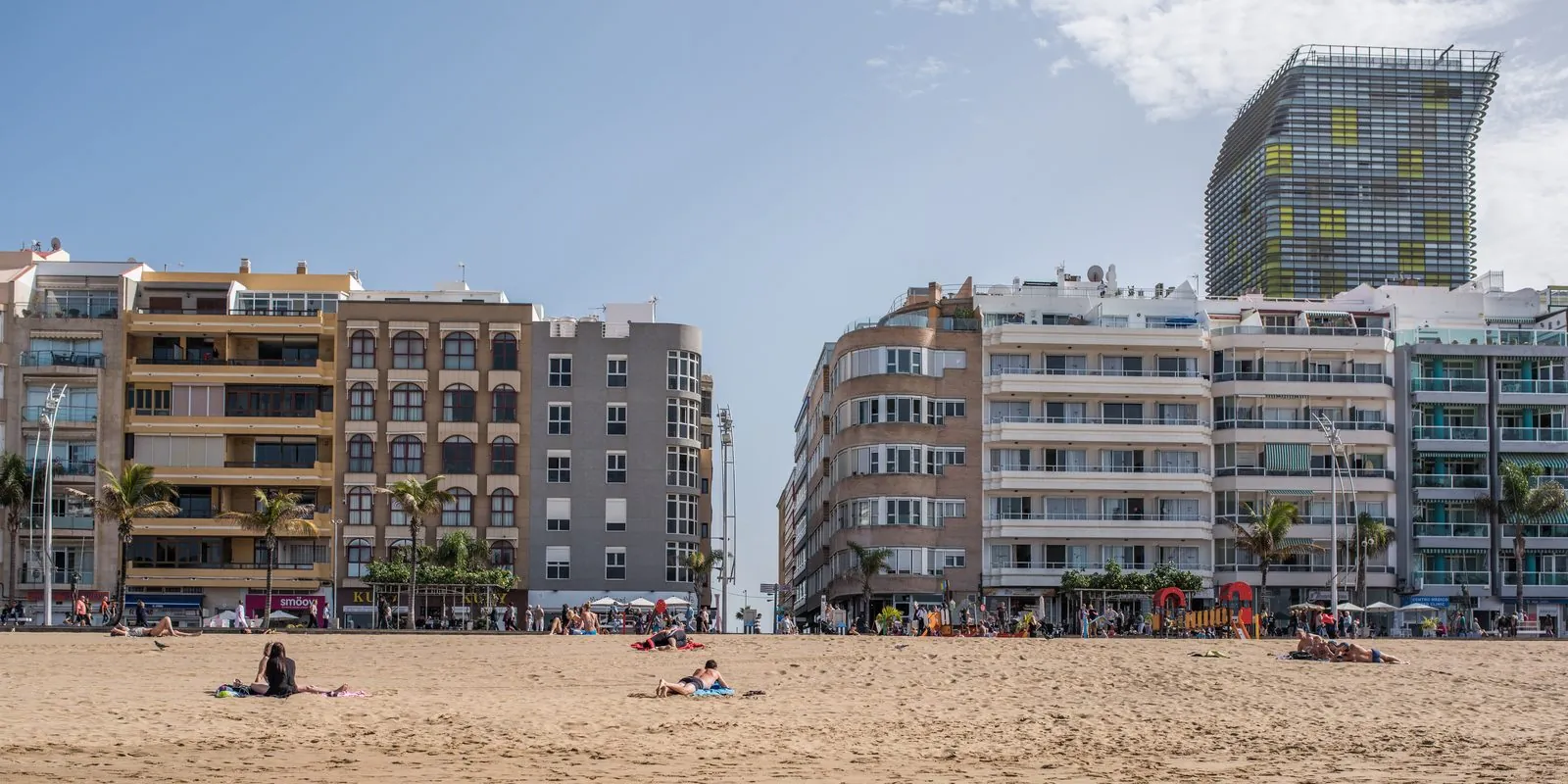
Photo: Bengt Nyman · CC BY 2.0 · Wikimedia Commons · scaled
Is it really warm enough to swim in winter?
Yes, though "warm" is relative. At 18–19°C the winter Atlantic is a good few degrees cooler than a heated pool, so the first few seconds take your breath away. Plenty of British and Irish visitors swim happily through the winter — after a UK January, this feels positively balmy — but many prefer to save proper swimming for the pool and dip their toes in the sea. Once you're in and moving, it's more comfortable than the initial shock suggests. This is a big part of why the islands are such a reliable winter-sun destination.
If you feel the cold, a rash vest or shorty wetsuit transforms winter and spring swimming, letting you stay in far longer. Snorkellers and anyone with children who won't get out of the water swear by them.
When is the sea at its warmest?
For the warmest water, come between August and November. The sea holds onto the summer's heat well into autumn, so October in particular can offer the best of both worlds — pleasantly warm water and slightly softer sun than high summer. Spring, by contrast, is when the sea is at its coolest even though the air feels lovely, so April swimmers should expect a chillier dip than the sunshine implies.
South and west coasts are warmer and calmer
Where you swim matters as much as when. The prevailing trade winds come from the north-east, so the north-facing coasts tend to be breezier with bigger swell, while the south- and west-facing (leeward) resort coasts are more sheltered, calmer and a touch warmer. That's exactly why the big holiday beaches cluster on the sunny southern sides — think Costa Adeje and Playa de las Américas in the south of Tenerife, or Maspalomas and Playa del Inglés in the south of Gran Canaria. For where to base yourself, our beaches hub breaks it down island by island.
Respect the Atlantic: swell and currents
This is the single most important thing to understand about swimming here. The Canaries face the open Atlantic, so waves, swell and currents can be stronger than the calm Mediterranean many holidaymakers picture. Even on a sunny, gentle-looking day there can be a surprising pull, and the wilder, more exposed beaches are for looking at rather than swimming. Rip currents are the main hazard — if you're ever caught in one, don't fight it straight back to shore; swim parallel to the beach until it releases you, then head in.
Never swim at an unpatrolled beach if the sea looks powerful, and keep a close eye on children even in shallow water. The waves that make the Canaries a surfing paradise are the same ones that catch swimmers out.
Learn the beach flag system
Spanish beaches use a simple flag system, flown at lifeguarded beaches, that tells you at a glance whether it's safe to swim. It's worth memorising before you get in:
- Green — safe to swim, conditions are calm.
- Yellow — caution; swim near the shore, conditions are choppy or there's a moderate current.
- Red — danger; do not enter the water.
- Purple — marine hazard, most often jellyfish or a Portuguese man o' war; see our page on jellyfish in the Canary Islands.
If the red flag is up, take it seriously no matter how confident a swimmer you are — it's flown because the lifeguards have judged the sea genuinely dangerous that day.
The bottom line
The Atlantic off the Canaries stays swimmable all year, cooling to about 18–19°C in the January-to-April stretch and warming to roughly 22–24°C from August through November — so autumn, not high summer, gives you the warmest water. Choose a sheltered south- or west-facing beach for the calmest, warmest swimming, treat the Atlantic swell and currents with respect, and always read the flags before you dive in. Do that and you'll get the gorgeous, refreshing sea that keeps British and Irish visitors coming back.