Yes — English is widely spoken across the Canary Islands' resorts, hotels, restaurants and shops, so British and Irish visitors get by very easily. The official language is Spanish, and once you head into local towns, villages and the smaller islands you will meet less English, but tourism runs deep here and you rarely hit a real language barrier. A few words of Spanish are appreciated and go a long way. Here is the honest picture.
In the resorts: English is everywhere
The main tourist areas — Playa de las Américas and Costa Adeje in Tenerife, Playa del Inglés and Puerto Rico in Gran Canaria, Puerto del Carmen in Lanzarote, Corralejo and Caleta de Fuste in Fuerteventura — have welcomed British and Irish visitors for decades. In these places English is genuinely the second language of the tourism trade: hotel reception, restaurant staff, bar workers, excursion sellers, car-hire desks and most shop assistants will speak it comfortably. Menus, signs and tour information routinely come in English, and you can plan a whole fortnight without a word of Spanish if you wish.
You will also hear plenty of other languages in the resorts — German, Scandinavian tongues, Dutch — reflecting the mix of European visitors. English is the common thread that ties the tourism industry together.
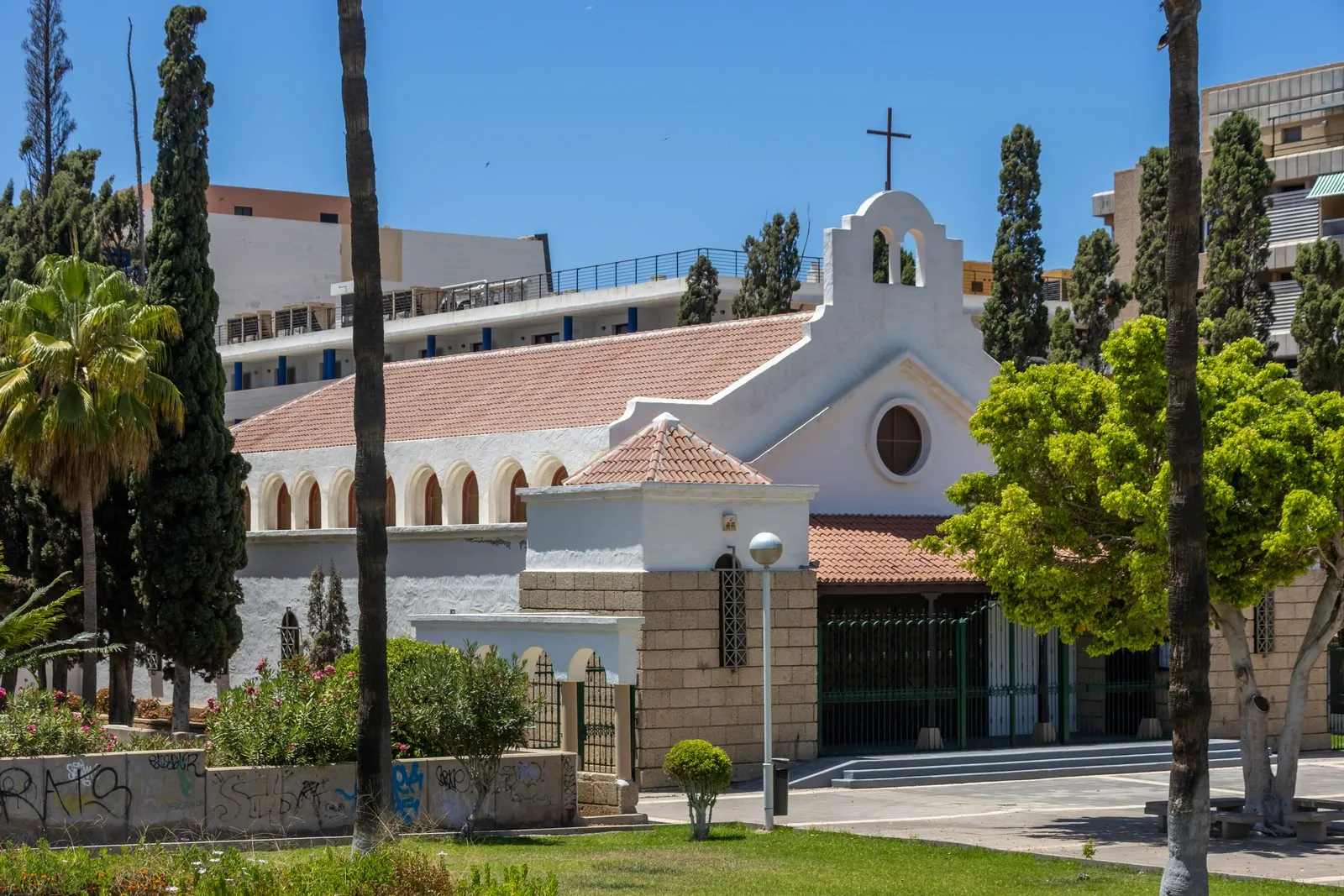
Photo: Mike Peel · CC BY-SA 4.0 · Wikimedia Commons · scaled
Off the beaten track: more Spanish, less English
Step away from the resort strips and the balance shifts. In the island capitals' back streets, inland villages, traditional markets and family-run guachinches (rustic country eateries), you will meet people whose English is limited or non-existent — and that is part of the charm. The same is true on the quieter islands: La Gomera, El Hierro and La Palma see fewer package tourists, so English is patchier and a little Spanish becomes genuinely useful. It is nothing to worry about — smiles, gestures and a translation app bridge any gap — but it is where knowing a few phrases pays off most.
A little Spanish goes a long way
You do not need to be fluent, but making an effort is warmly received and often changes the whole tone of an exchange. Canarians are friendly and appreciate visitors who try, even clumsily.
- Hola (hello) and adios (goodbye)
- Por favor (please) and gracias (thank you)
- Buenos dias / buenas tardes (good morning / good afternoon)
- La cuenta, por favor (the bill, please)
- Una cana (a small draught beer — very handy)
For a proper starter kit of useful expressions, ordering food and getting around, see our guide to Spanish phrases for travellers. Even a handful transforms a market visit or a village lunch.
Canarian Spanish has its own flavour
If you have learned "textbook" Spanish, the local dialect may surprise you at first — it is closer to Latin American Spanish than to the Spanish of Madrid. A few things to expect:
- Softer, faster pronunciation. The "s" at the end of syllables is often dropped or softened, so "los dos" can sound like "loh doh".
- Ustedes instead of vosotros. Canarians use ustedes for "you all", exactly as in Latin America, rather than the mainland's vosotros.
- Distinct local words. A bus is a guagua, not an autobus — a word you will see and hear constantly.
The dialect has deep historical roots in the islands' links with the Americas, which we explore in our piece on Canarian Spanish. None of it stops you being understood, but it explains why your school Spanish might sound a little different here.
Download an offline translation app before you travel and save a few key phrases. In a village restaurant with a handwritten Spanish menu and no English, it turns a moment of panic into a great meal — and often a friendly chat with the owner.
Which islands have the most English?
Broadly, the more established the tourism, the more English you will hear. It is a useful thing to weigh if a language barrier worries you.
- Tenerife and Gran Canaria — the two biggest islands have the largest resorts and the deepest tourism history, so English is spoken most widely here, particularly in the southern resort belts.
- Lanzarote and Fuerteventura — very popular with British and Irish visitors, so English is easy to find in the resorts, a little less so inland.
- La Palma, La Gomera, El Hierro and La Graciosa — the quieter western and northern islands see fewer package tourists, so English is patchier and a few words of Spanish are genuinely handy.
None of this should steer where you holiday — even the quietest islands are easy to visit with a translation app and a smile — but it is worth knowing when you choose. Our guide to which Canary Island you should choose weighs up all the other factors too.
The islands' most extraordinary language
The Canaries are also home to one of the world's most remarkable forms of communication: Silbo Gomero, a whistled language once used to send messages across La Gomera's deep ravines. It is not something you need for your holiday, but it is a wonderful bit of local culture, protected by UNESCO and still taught in schools. Read about it in our feature on the Silbo whistled language.
The bottom line
British and Irish visitors will have no trouble in the Canary Islands: English is spoken widely in the resorts, hotels and restaurants where tourists spend most of their time. Venture into local towns or the smaller islands and you will meet more Spanish and less English — so pack a few courtesy phrases, expect the softer Canarian accent, and enjoy the warmer welcome that trying a little Spanish always brings. Our phrases guide is the perfect place to start.