You can absolutely get by in the Canaries with English — but a handful of Spanish words will transform your trip. A cheerful hola and gracias, an attempt to order in the local language, a smile of recognition when a bus turns out to be a guagua: these small efforts open doors, earn warmer service and turn you from a tourist into a welcome guest. English is widely spoken in the resorts, so nobody expects fluency; they just appreciate the try. This friendly cheat-sheet covers the essentials plus the distinctive Canarian words and easy-going accent that make the islands' Spanish its own.
The basics: greetings and courtesy
Start here. These are the words you'll use twenty times a day, and a little politeness goes a long way.
| Spanish | Meaning |
|---|---|
| Hola | Hello / hi |
| Buenos días | Good morning |
| Buenas tardes | Good afternoon / evening |
| Buenas noches | Good night |
| Por favor | Please |
| Gracias / muchas gracias | Thank you / thanks a lot |
| De nada | You're welcome |
| Perdón / disculpe | Sorry / excuse me |
| Sí / no | Yes / no |
| ¿Habla inglés? | Do you speak English? |
| No entiendo | I don't understand |
| Adiós / hasta luego | Goodbye / see you later |
Canarians are famously friendly and often use the informal tú (tuteo) and the greeting ¿cómo estás? ("how are you?") more readily than mainland Spaniards, who lean on the formal usted. Don't overthink it — a warm hola, ¿cómo estás? fits right in.
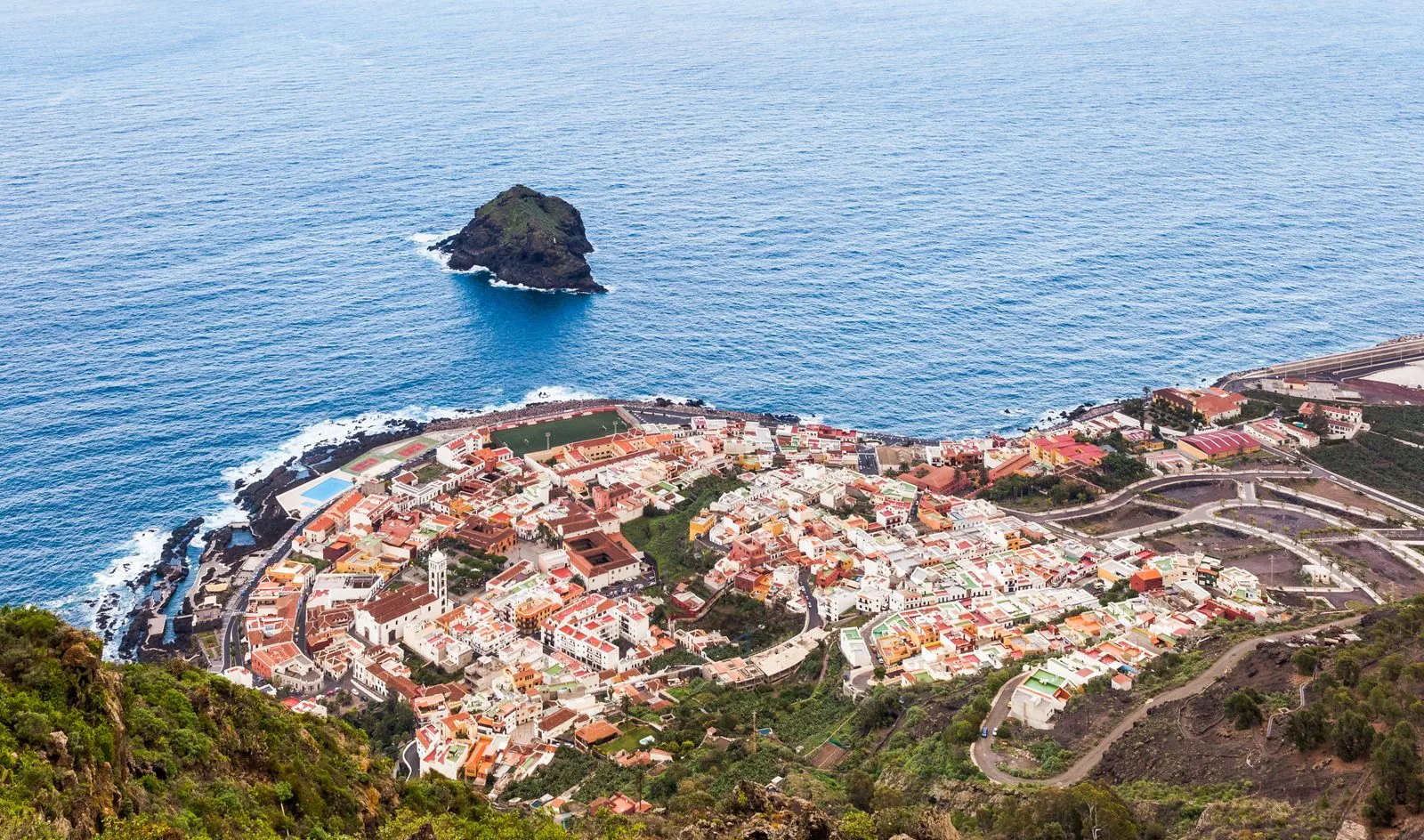
Photo: Diego Delso · CC BY-SA 3.0 · Wikimedia Commons · scaled
Numbers
Handy for prices, bus numbers, times and ordering. Prices are often just shown to you, but knowing these smooths things along.
| Spanish | Number | Spanish | Number |
|---|---|---|---|
| uno | 1 | siete | 7 |
| dos | 2 | ocho | 8 |
| tres | 3 | nueve | 9 |
| cuatro | 4 | diez | 10 |
| cinco | 5 | veinte | 20 |
| seis | 6 | cien | 100 |
Ordering food and drink
Half the joy of the islands is the eating, so these earn their keep at every terrace and guachinche. Pair them with our guide to Canarian food and you'll order like a regular.
| Spanish | Meaning |
|---|---|
| Una mesa para dos, por favor | A table for two, please |
| La carta, por favor | The menu, please |
| Una caña / una cerveza | A small draught beer / a beer |
| Un café con leche | A white coffee |
| Agua con / sin gas | Sparkling / still water |
| Un vino tinto / blanco | A red / white wine |
| ¿Qué recomienda? | What do you recommend? |
| La cuenta, por favor | The bill, please |
| Está buenísimo | It's delicious |
Directions and getting around
Useful when you leave the resort — and note the local word for bus below. For the practical detail, see getting around the Canary Islands.
| Spanish | Meaning |
|---|---|
| ¿Dónde está…? | Where is…? |
| la playa / el centro | the beach / the centre |
| la parada de guaguas | the bus stop |
| a la izquierda / a la derecha | left / right |
| todo recto | straight on |
| cerca / lejos | near / far |
| ¿Cuánto cuesta? | How much is it? |
Emergencies
Hopefully never needed, but worth knowing. The all-purpose emergency number across Spain and the EU is 112, where English-speaking operators are usually available.
| Spanish | Meaning |
|---|---|
| ¡Ayuda! / ¡Socorro! | Help! |
| Necesito un médico | I need a doctor |
| Llame a una ambulancia | Call an ambulance |
| la farmacia | the pharmacy |
| ¿Dónde está el hospital? | Where is the hospital? |
| He perdido mi pasaporte | I've lost my passport |
Speaking Canarian: the local flavour
Here's where it gets fun. Canarian Spanish has its own words and a soft, musical accent that will surprise anyone who learned Spanish in a mainland classroom. Learn a few of these and locals will beam.
| Canarian word | What it means |
|---|---|
| guagua | bus (not autobús — this one trips everyone up) |
| papas | potatoes (as in papas arrugadas, the wrinkly salt potatoes) |
| mojo | the classic Canarian sauce — red (spicy) or green (herby) |
| gofio | toasted milled grain, a Canarian staple food |
| chacho / chacha | mate, pal — a very Canarian filler, from muchacho |
| fisco | a little bit ("un fisco") |
| enyesque | a snack or nibble with drinks, like a tapa |
Try them on a plate of papas arrugadas with mojo and you'll be halfway to sounding local.
The Canarian accent
Islanders speak with a soft, warm accent that feels closer to Latin American Spanish than to the crisp lisped consonants of Madrid — no surprise given the islands' deep historic ties across the Atlantic. The s at the end of syllables often softens to a gentle h (so las playas sounds like "lah playah"), c and z are pronounced as an s rather than a "th", and the whole rhythm is unhurried and friendly. If you've studied European Spanish it can throw you at first, but you'll tune in within a day or two — and it's genuinely lovely to listen to.
Don't stress about grammar or accent. A mangled attempt with a smile beats perfect silence every time — Canarians are patient and encouraging, and most will happily switch to English if you're stuck.
Put it into practice
Print or screenshot the tables above, and give the local words a go the moment you land — order a caña, thank the driver on the guagua, ask for the cuenta with a smile. It costs nothing and pays back in warmth all holiday. When you're ready to eat your way around the islands, our guides to Canarian food and eating out in the Canaries will have you ordering the good stuff like a local.