Long before you arrive, you may already have seen the Canary Islands on screen — you just didn't know it. With their volcanic deserts, alien lava fields, ancient forests, golden dunes and reliable year-round sunshine, the islands have become one of Europe's busiest film locations, standing in for the Sahara, the American West, distant planets and prehistoric worlds. Directors love them for the sheer variety of landscapes packed into a short drive, and for skies that almost always cooperate.
This is your guide to the Canaries on film — why the cameras keep coming, the kinds of scenes these landscapes have doubled for, and the real places you can visit to walk through your own blockbuster.
Why film-makers love the islands
The appeal comes down to landscape, light and logistics. In a single day on one island you can film black volcanic badlands, rolling sand dunes, subtropical forest, dramatic cliffs and clear Atlantic water. The volcanic terrain in particular gives film-makers something hard to find elsewhere: ground that looks utterly unearthly, from the rippled black lava of Lanzarote to the pale craters around Teide. Add dependable sunshine, a mild climate that allows shooting through winter, modern airports and studios, generous regional filming incentives, and English widely spoken, and you have a location manager's dream. As a bonus, being on European soil keeps productions inside the EU while delivering scenery that looks like North Africa or another galaxy.
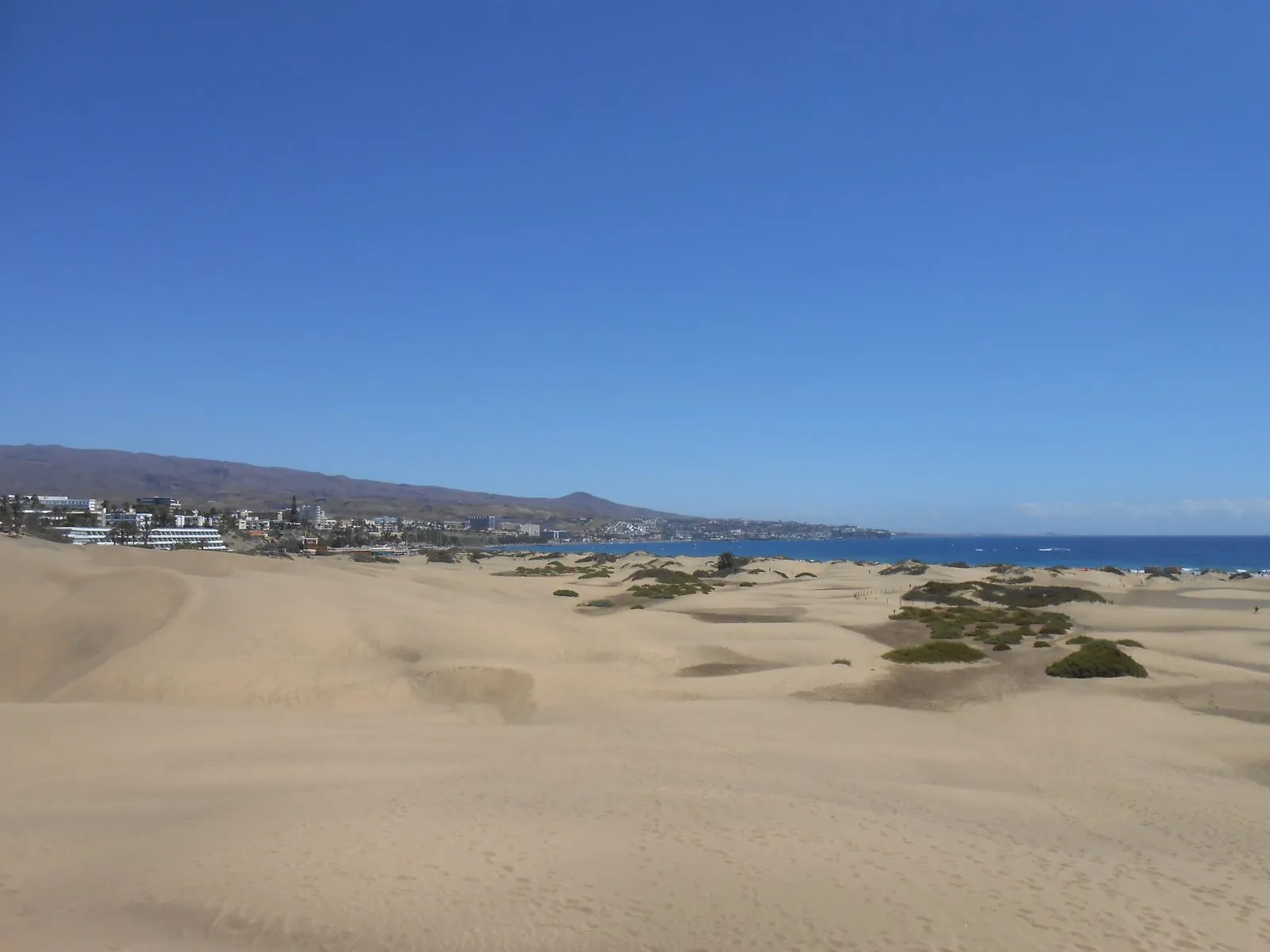
Photo: Handelsgeselschaft · CC BY-SA 4.0 · Wikimedia Commons · scaled
Deserts, dunes and alien worlds
The islands' great speciality is doubling for places that aren't of this world — or this continent.
The Maspalomas dunes
The rolling sand sea of the Maspalomas dunes on Gran Canaria is the islands' classic "instant desert". This protected expanse of wind-sculpted dunes at the island's southern tip has stood in for the Sahara and other deserts in countless productions, and its clean, wave-like sands are a favourite for adverts, fashion shoots and epic sweeping shots. It's genuinely evocative: stand in the middle of the dunes with no buildings in sight and you could be anywhere from Arabia to another planet.
Timanfaya and the lava fields
For sheer alien strangeness, nothing beats Timanfaya National Park on Lanzarote. Its fields of raw, contorted lava, ochre-and-black craters and steaming ground look so much like the surface of Mars or the Moon that the whole island has long been prized as a stand-in for other planets and post-apocalyptic worlds. Lanzarote's wider volcanic badlands, salt pans and stark white-and-black villages have featured in science-fiction and fantasy productions for decades.
Teide's high desert
Up in the caldera around Mount Teide on Tenerife, the pale pumice plains, twisted rock and total absence of vegetation give another otherworldly palette — high-altitude, brilliantly lit and unmistakably not-of-this-earth. It's a natural fit for space and desert scenes.
Many of the most-filmed spots are protected national or natural parks. That's exactly why they look so pristine on screen — and why access is carefully managed. Enjoy them as a visitor and you're seeing them just as the cameras do.
Forests, cliffs and coasts
It's not all desert. The islands' misty laurel forests — dense, dripping and primeval — make ready-made prehistoric jungles, while the sheer sea-cliffs, black-sand beaches and hidden coves of the northern coasts have doubled for wild shorelines the world over. The variety is the point: a production can film a "jungle", a "desert" and a "clifftop" within an hour of each other, then wrap in time for dinner. Fuerteventura's endless pale beaches and open plains add yet another look, standing in for everything from the American Southwest to windswept nowheres.
A long tradition on screen
The Canaries' film career is not new. Their landscapes have drawn international productions for well over half a century — from mid-twentieth-century adventure and desert epics that used the dunes and volcanic country, through decades of science-fiction and fantasy that exploited the lunar terrain, to today's big-budget blockbusters, series and streaming dramas tempted by both the scenery and the region's filming incentives. Spanish cinema and television have used the islands throughout, and the local industry — with studios, crews and film commissions on the main islands — now supports major international shoots year-round.
Plenty of "which film was shot here?" claims circulate online, and not all are accurate. If a specific credit matters to you, check it against a reliable source before repeating it — the landscapes are the real star, and they don't need embellishing.
Visiting the locations
The best part is that most of these places are open to anyone. You don't need a film permit to walk the Maspalomas dunes at sunset, ride the coach route through Timanfaya, or gaze across Teide's caldera.
| Location | Island | The look it gives |
|---|---|---|
| Maspalomas dunes | Gran Canaria | Sahara-style desert and dune seas |
| Timanfaya & lava fields | Lanzarote | Mars, the Moon, post-apocalyptic worlds |
| Teide caldera | Tenerife | High desert, space and planet surfaces |
| Laurel forests | Tenerife, La Gomera, La Palma | Prehistoric jungle and fairy-tale woods |
A little imagination turns a normal day out into a location tour. Some operators even run themed excursions, and the parks' visitor centres often mention their screen history. Wherever you go, you'll understand the appeal the moment you look around.
Your own establishing shot
Part of the fun of a Canary holiday is realising how cinematic the islands really are. Stand on a dune ridge as the sun drops, or on the rim of a Timanfaya crater with steam curling from the ground, and you'll see exactly why the cameras keep coming. To plan your own tour of the star locations, dive into our guides to the Maspalomas dunes and Timanfaya National Park — then bring a camera of your own.