On the volcanic plains of Lanzarote you'll still see them: neat rows of prickly-pear cactus, their fleshy pads dusted with a strange white bloom. Scrape that bloom and your fingers turn a deep, astonishing crimson. This is cochineal — a tiny insect that, for a few dazzling decades in the nineteenth century, made the Canary Islands rich as the source of the finest natural red dye on earth. It was the archipelago's "red gold", and its rise, sudden collapse and quiet modern revival make one of the most curious stories in the islands' history.
Here's the tale of cochineal — what it is, how it built and then broke fortunes, and where you can still see this living dye being harvested today.
What is cochineal?
Cochineal (cochinilla in Spanish) is a small scale insect, Dactylopius coccus, that lives on the pads of the prickly-pear cactus. The females spend their lives fixed to the plant beneath a protective white waxy coating, feeding on its sap. Inside their bodies they produce carminic acid, a brilliant red compound that deters predators — and that, once the insects are dried and crushed, yields a vivid, colourfast crimson dye called carmine. It takes many thousands of the tiny creatures to make a small quantity of dye, which is exactly why it was once worth so much.
Neither the insect nor its cactus host is native to the Canaries. Both come from Central America, where the Aztecs and their neighbours had prized cochineal red for centuries. The Spanish brought the secret across the Atlantic, and eventually the whole operation — cactus and insect together — was established on the islands.
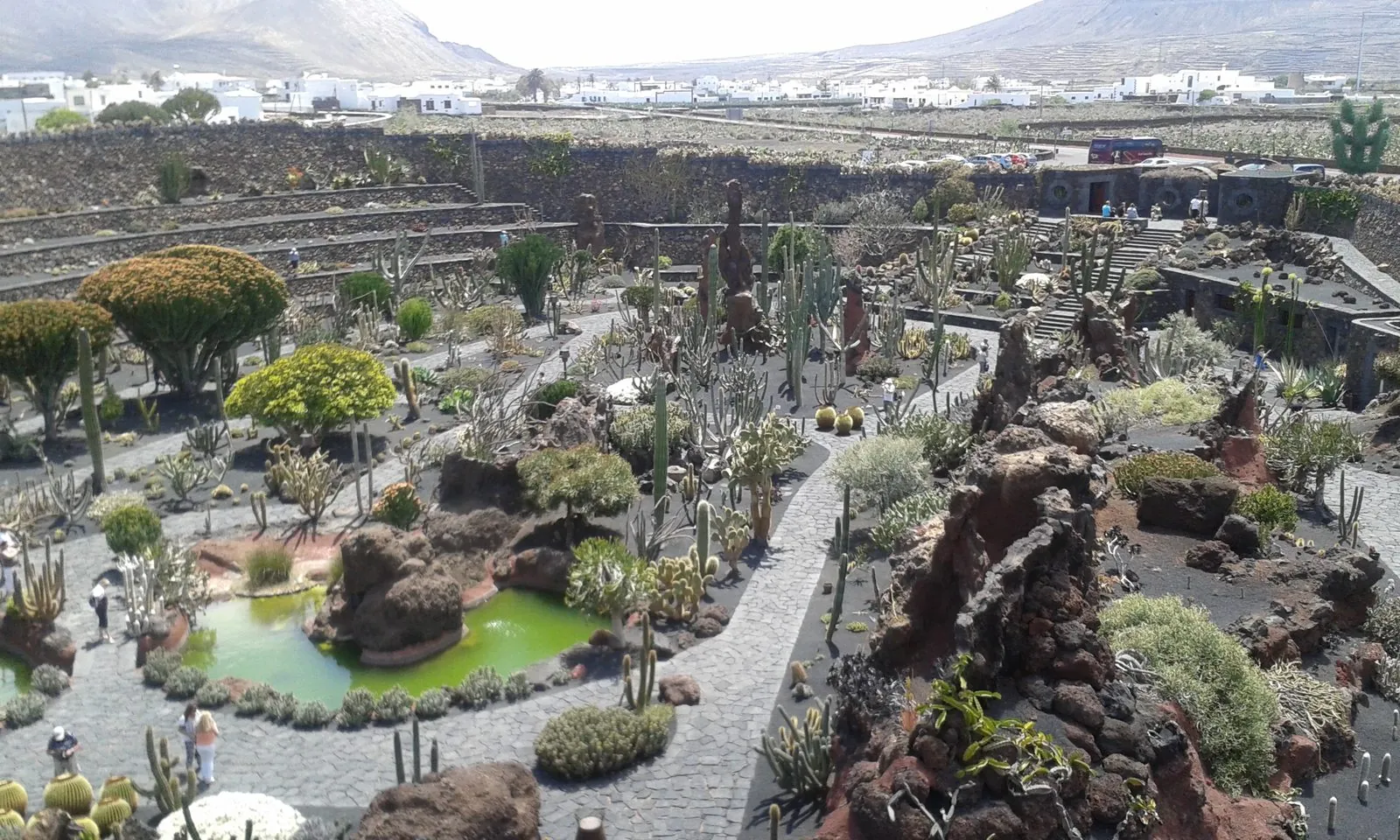
Photo: Axel Cotón Gutiérrez · CC BY-SA 4.0 · Wikimedia Commons · scaled
The boom — red gold
The timing was perfect. In the early nineteenth century the Canaries' old economic mainstays were failing, and the islands badly needed a new cash crop. Cochineal arrived just in time. The dry, sunny volcanic islands turned out to suit the cactus and its insect beautifully, and demand from Europe's booming textile mills seemed bottomless — carmine coloured the red coats of soldiers, the robes of cardinals, luxury fabrics, cosmetics and paints.
Through the middle decades of the century, cochineal became the islands' overwhelming export. Whole landscapes were replanted with prickly pear, especially on Lanzarote, Gran Canaria and parts of Tenerife, and fortunes were made. For a time the Canaries were one of the world's leading suppliers of this precious red, and the little insect underpinned the entire island economy — a genuine monoculture of dye. Learn how this fits the wider arc of island fortunes in our guide to a short history of the Canary Islands.
Carmine from cochineal is still used today as a natural food and cosmetic colouring, often listed as E120, carmine or carminic acid. Next time you see a naturally deep-red yoghurt, sweet or lipstick, it may owe its colour to this very insect.
The bust
The fall was as swift as the rise. In the 1850s and 1860s chemists in Europe learned to make bright synthetic dyes from coal tar — the first aniline colours. These artificial dyes were cheaper, easier to produce in any quantity and every shade imaginable. Almost overnight, the bottom dropped out of the natural-carmine market. Prices collapsed, the great cochineal fortunes evaporated, and the islands were plunged into hardship. Many islanders, facing ruin, emigrated to the Americas in search of work — a wave of departure that shaped Canarian society for generations.
The prickly-pear plantations were largely abandoned, and the cactus, needing no care, spread wild across the islands. To this day you'll see prickly pear growing untended on old terraces and roadsides everywhere — a green, spiny monument to a vanished boom.
Prickly-pear fruit (the tuno or higo pico) is edible and sold at island markets in late summer, but the pads and fruit are covered in tiny, near-invisible barbed hairs that lodge painfully in skin. Never pick or handle them bare-handed — leave it to those who know how.
A quiet revival on Lanzarote
Cochineal never quite died out. In the arid Mala and Guatiza area of northeast Lanzarote, a handful of growers kept the tradition alive through all the lean years, tending cactus fields and harvesting the insects by hand as their grandparents had. Their patch of Lanzarote remains one of the very few places on earth where cochineal is still cultivated in the old way, and the striped cactus plantations are a distinctive part of the island's landscape.
In recent years the tide has turned back in their favour. As shoppers grow wary of synthetic additives and demand natural colourings for food and cosmetics, prized, non-toxic carmine has found new buyers. There's fresh interest, too, from artisans and designers who dye textiles with authentic island cochineal. It's a modest revival, not a new boom — but after a century and a half, the red gold is quietly worth something again.
Seeing it for yourself
Around Mala and Guatiza on Lanzarote you can visit growers and workshops that explain the whole process, from the insect on the pad to the finished crimson powder, and buy dyed goods coloured the traditional way — a genuinely unusual and meaningful island souvenir. Fittingly, this same corner of Lanzarote is home to the artist César Manrique's Jardín de Cactus, a beautiful garden built in an old cactus quarry that celebrates the very plant cochineal depends on.
Cochineal sits alongside the islands' other homegrown products — the aloe, the wine, the palm honey and the crafts — as proof of how much these small volcanic islands have coaxed from difficult land. Explore that living tradition further in our guides to aloe vera and Canarian produce and to Canarian crafts and what to buy. From the humblest of insects, on the spiniest of plants, the Canaries once dressed the world in red — and, on one dry corner of Lanzarote, they still do.