A vast checkerboard of shimmering salt pans framed by black lava and a turquoise lagoon — the Salinas de Janubio are the largest working salt flats in the Canary Islands and one of Lanzarote's quietest, most photogenic surprises. Spread across the floor of an old coastal lagoon on the island's southwest coast, this patchwork of shallow ponds has been harvesting sea salt by hand for well over a century. At the right time of year the pools glow in bands of pink, rust, white and blue, and at sunset the whole scene turns to liquid gold. It's an easy, free stop that fits neatly into a west-coast tour of Lanzarote.
How the salt is made
The Salinas de Janubio work much as they have for generations. Atlantic seawater is let into a large lagoon, then guided through a maze of shallow evaporation ponds. As the water creeps from pool to pool under the strong Canarian sun and wind, it grows saltier and saltier until, in the final pans, only glittering crystals of sea salt are left to be raked up by hand. It's slow, low-tech and beautifully geometric — a living piece of the island's history that still produces salt for the kitchen and for the fishing trade.
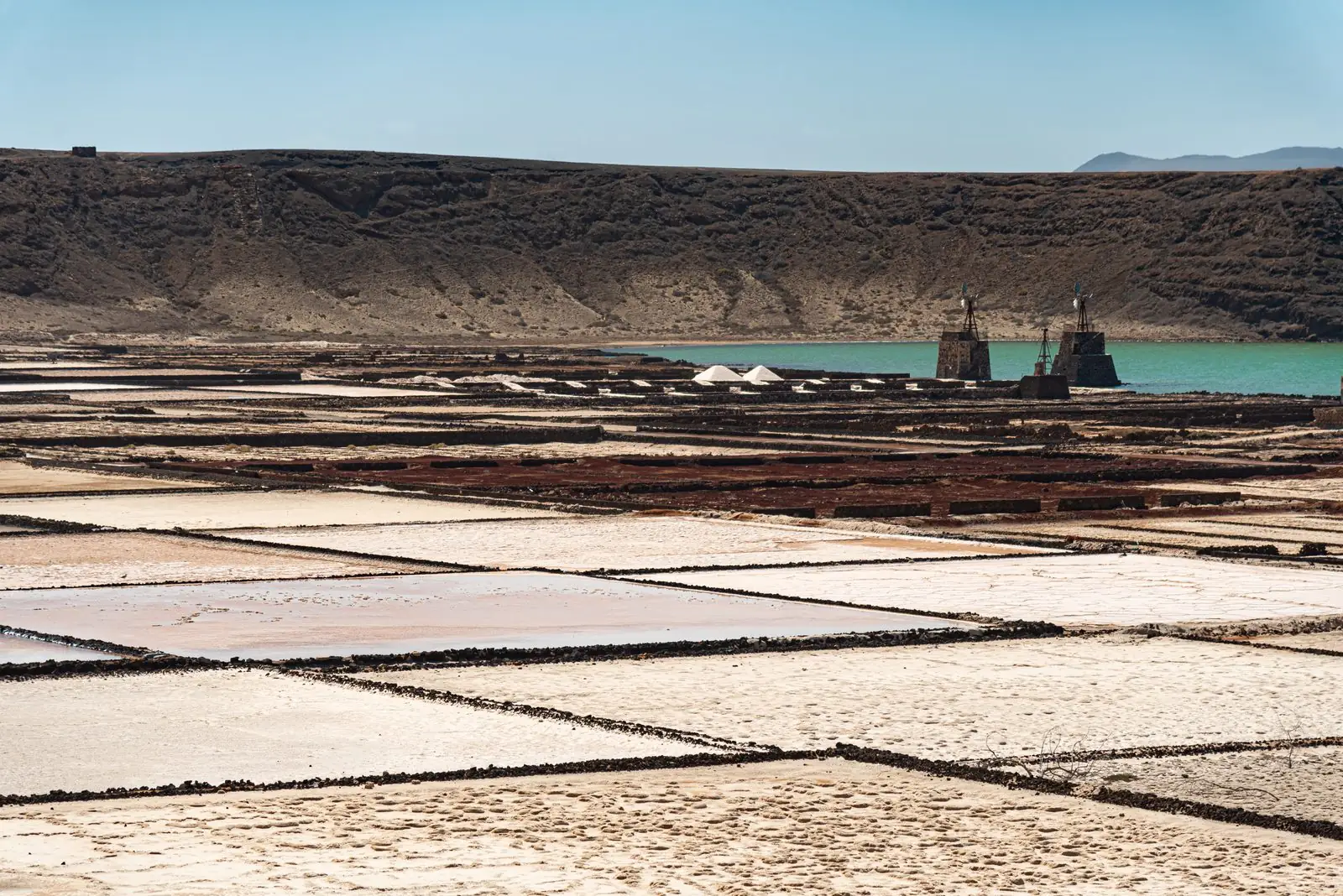
Photo: Jorge Franganillo · CC BY 2.0 · Wikimedia Commons · scaled
The colours: why the pools turn pink
Part of the magic is the colour. The shallow ponds shift through white, ochre, rust-red and, most strikingly, deep pink — a shade that comes from salt-loving micro-organisms and algae that thrive in the ultra-salty water, together with the minerals in the volcanic ground. The intensity changes with the season, the light and how far each pond is through the evaporation cycle, so no two visits look quite the same. Ringed by black lava rock and set against the blue of the lagoon and the sea beyond, it's a genuinely painterly landscape.
Come for sunset. Janubio faces west, and the low evening light setting the pink and white pans aglow is the single best reason to visit. There's a lay-by and viewpoint on the main road above the salinas where you can take it all in from above — arrive 30–40 minutes before sundown, and bring a zoom lens or just your eyes for the patterns below.
A haven for birds
Beyond the salt itself, the lagoon and pans are an important refuge for wildlife on an otherwise dry island. The still, shallow water and rich supply of tiny creatures draw wading birds, gulls, egrets and migrating species that stop off here — so it's a rewarding spot for anyone who travels with binoculars. Because it's a protected site, the ponds and their banks are kept undisturbed, which is exactly why the birds keep coming back.
Stay on the viewpoints and paths. The salinas are a working operation and a protected natural area, not a walk-through attraction — the pond walls are narrow and fragile and the mud is deep. Admire the geometry from the roadside viewpoint and marked areas rather than wandering out among the pans, and leave the salt and the birds undisturbed.
Combine it with the west coast
The Salinas de Janubio sit on one of the most scenic stretches of the island, so they slot easily into a bigger day out. Just up the road is El Golfo and the green lagoon, with its sliced-open crater and famous seafood restaurants, while inland lies the astonishing Timanfaya National Park, the "Mountains of Fire" left by the eruptions of the 1730s. Close by too is Los Hervideros, where the Atlantic thunders through caverns in the black lava cliffs. Together they make a classic southwest circuit, and the salinas are the calm, colourful counterpoint to all that raw volcanic drama.
Getting there and practicalities
Janubio lies on the LZ-2 coast road in the southwest, roughly a 15-minute drive from Playa Blanca and around half an hour from Puerto del Carmen or the capital Arrecife. A hire car is by far the easiest way to see it, letting you link it with El Golfo and Timanfaya on your own schedule; there's a roadside pull-in and viewpoint with space to park. Public transport to this quiet corner is sparse, so most visitors without a car come as part of an organised island tour.
The site is free to visit — there's no entrance fee for the viewpoint — which makes it a perfect low-key add-on rather than a main event. Half an hour is enough to take in the view and the colours, longer if you're waiting for the light or watching birds. Bring sun cover, water and a windproof layer, as this exposed stretch of coast catches the trade winds. It's the sort of unhurried, uncrowded sight that shows a gentler, more industrious side of Lanzarote, far from the resorts.
Pink pools, white crystals and black lava under an evening sky — Janubio turns the simple business of making salt into pure Lanzarote colour.