Roque Bentayga is Gran Canaria's other great rock — a soaring volcanic monolith in the heart of the Tejeda caldera that was one of the most sacred places of the island's aboriginal people. Less famous than its neighbour Roque Nublo but arguably more atmospheric, Bentayga rises like a stone prow above a sea of ridges and barrancos, ringed by carved altars, grain stores and a spiritual weight you can still feel today. For anyone curious about who lived here before the Spanish came, this is one of the most rewarding stops in the mountainous centre of Gran Canaria.
A holy mountain of the ancient Canarians
Long before the 15th-century conquest, the pre-Hispanic islanders — the aboriginal Canarians often grouped with the wider Guanche peoples — treated Bentayga as sacred ground. The rock and its surroundings formed a ceremonial and defensive stronghold in the last years before Castilian rule, a natural fortress that was among the final points of native resistance. Standing at its base, hemmed in by the walls of the vast Tejeda caldera, it's easy to understand why: this is a landscape of drama and altitude, a place that feels closer to the sky than the sea.
What makes Bentayga special is not just the rock itself but everything etched into and around it. Archaeologists have identified an almogarén here — an open-air ritual site where the ancient Canarians made offerings and, most likely, read the seasons from the movement of the sun. Nearby are cup-shaped hollows, channels cut into the stone, caves used as dwellings and granaries, and traces of a settlement that clung to these slopes. It is one of the richest aboriginal sites on the island.
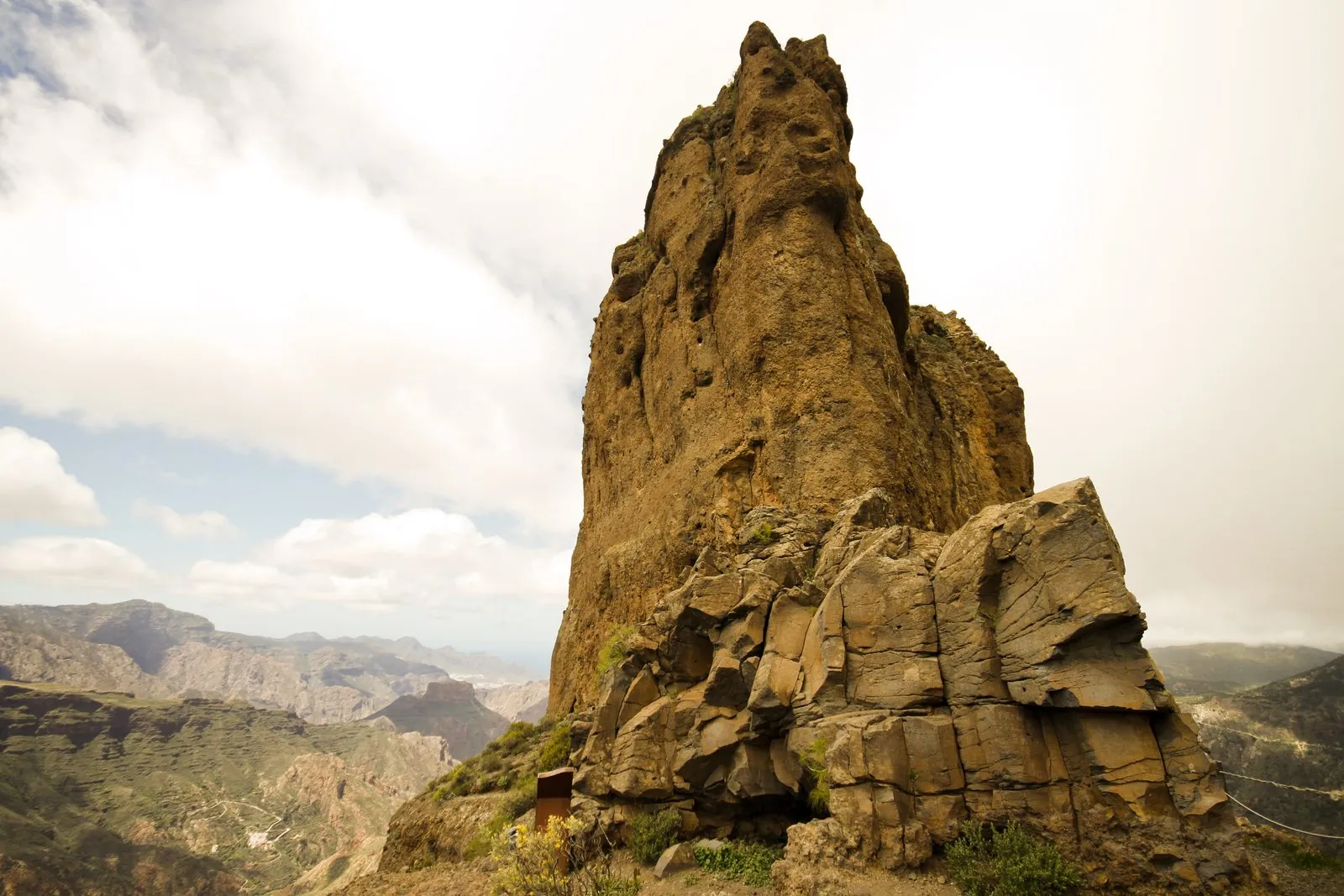
Photo: Tito Pullo · CC BY 4.0 · Wikimedia Commons · scaled
Rock carvings and the solar calendar
The most intriguing feature is an alignment of carved basins and a distinctive triangular marking that researchers link to a kind of solar calendar — the ancient Canarians appear to have used the interplay of light, shadow and the shape of the mountains to mark equinoxes and important dates in the farming year. Whether or not you follow the archaeoastronomy, the carvings are a moving reminder that people watched these same peaks and skies for centuries, ordering their lives by them.
Look, don't touch. The engravings and altars are fragile and legally protected. Stay on the marked paths, keep off the carved surfaces, and take only photos — this is an archaeological monument, not a climbing frame.
The interpretation centre
Set a little below the rock is the Roque Bentayga interpretation centre (Centro de Interpretación), a small, thoughtfully done visitor centre that puts the site in context before you walk up. Displays explain the geology of the caldera, how the aboriginal Canarians lived, farmed and worshipped, and what the carvings around Bentayga may have meant. It's modest in scale but genuinely useful, and a good place to get your bearings and check the current path conditions.
From the centre, a walking trail leads out towards the base of the monolith. It's a short but properly mountainous walk on uneven, stony ground, with steep drops nearby, so wear real shoes and take care. You don't scale the rock itself — the reward is reaching its foot, seeing the almogarén and the caves, and drinking in a 360-degree panorama over the folds of the interior.
Opening times and free entry can vary. The interpretation centre keeps limited hours and is generally closed some days each week; entry to the site has often been free, but this can change. As of 2026, check the current schedule with the Gran Canaria cabildo before making a special trip up the mountain.
Where it sits: the Tejeda caldera
Roque Bentayga stands within the great erosion caldera above Tejeda, one of the prettiest villages in Spain and the obvious base for a visit. From the village you look straight across at Bentayga and, beyond it, the finger of Roque Nublo — the two rocks that define the island's rugged rooftop. It's the writer Miguel de Unamuno's "petrified storm" made real: a bowl of pinnacles, pine forest and terraced slopes that feels a world away from the southern beaches.
Because the two great rocks sit so close together, most visitors pair them. A classic day combines the easy walk to Roque Nublo, lunch in Tejeda with its almond sweets and honey, and the quieter, more archaeological experience of Bentayga — a fuller, deeper portrait of the island than any resort can offer.
Getting there and making a day of it
You'll need a hire car: Bentayga is reached by a narrow mountain road branching off near Tejeda, and there is no easy public transport to the trailhead. From the southern resorts around Maspalomas allow roughly 75–90 minutes each way through Fataga and San Bartolomé; from Las Palmas in the north, a similar time over the summit roads. The passes are scenic but twisting, so drive gently and allow extra time.
Come prepared for the mountains. You're well above 1,000 m here. Bring water, sun protection and a windproof layer even when the coast is hot, start early to beat both cloud and crowds, and don't underestimate how quickly the weather turns over the summits.
Roque Nublo gets the postcards, but Bentayga holds the island's oldest secrets.
For anyone who wants to understand Gran Canaria beyond the beach — its ancient people, its sacred mountains, its jaw-dropping interior — Roque Bentayga is essential. Pair it with a slow lunch in the caldera and a browse through the island's other sights, and you'll leave with a completely different sense of where you've been.