At the far north-western tip of Tenerife, where the towering Teno cliffs finally meet the sea, Punta de Teno is one of the island's most dramatic and unspoilt corners — a wild volcanic cape crowned by a red-and-white lighthouse, with the island of La Gomera floating across the water. Reached by a spectacular cliff-hugging road, it is a place of black lava, crashing surf and huge open skies, far from the resorts and beautifully undeveloped. It is one of the great scenic pilgrimages on Tenerife, and a favourite spot to watch the sun go down.
Land's end on Tenerife
Punta de Teno marks the westernmost point of the island, a rugged headland of old lava flows and volcanic rock pushing out into the Atlantic below the sheer walls of the Teno massif. There is no resort here, no rows of sunbeds — just the elements, a couple of small lighthouses (an old one and the working modern tower), a scrap of pebbly shore and enormous views. On a clear day the cliffs glow gold in the late light and the whole place feels gloriously remote, which is exactly its appeal.
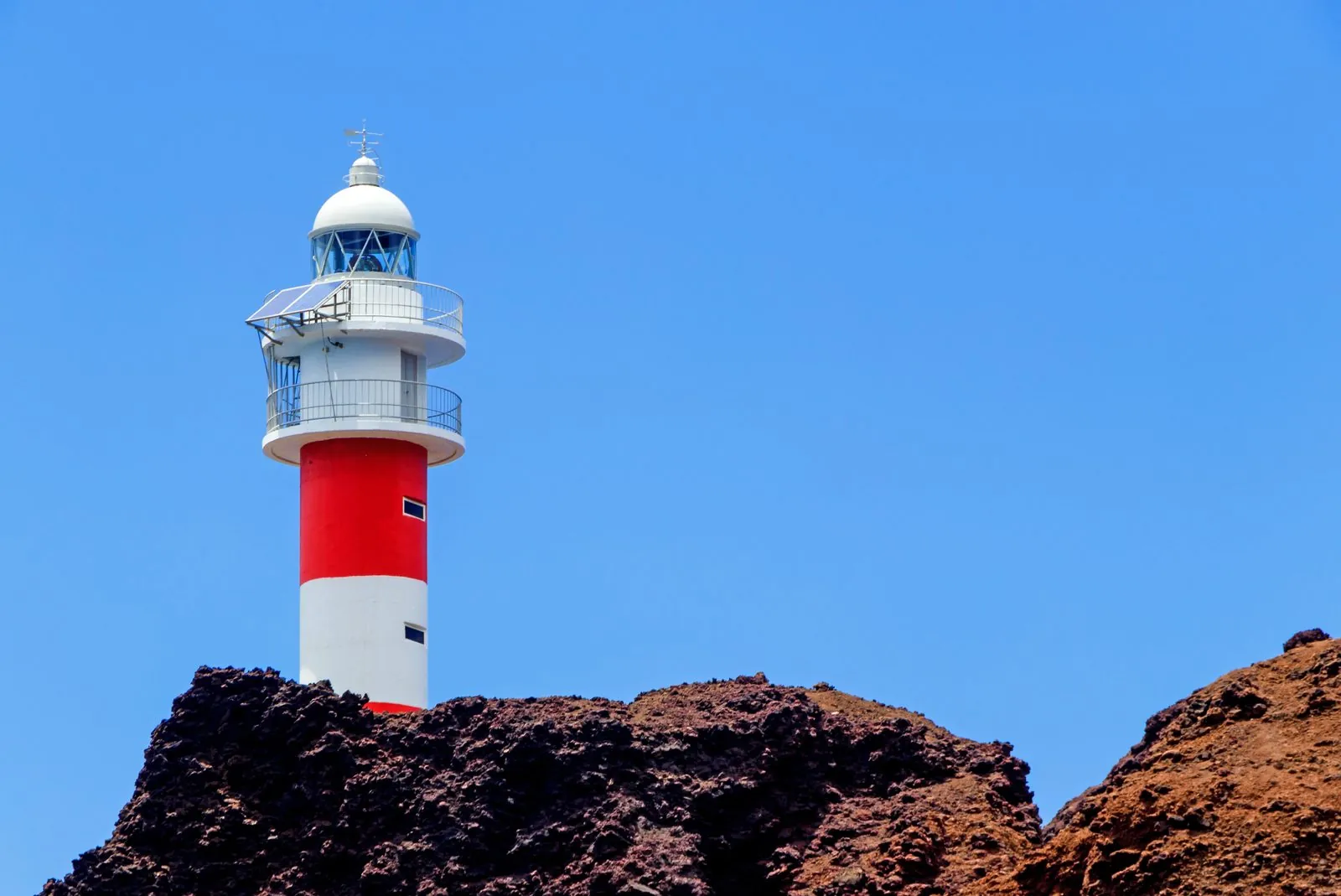
Photo: H. Zell · CC BY-SA 3.0 · Wikimedia Commons · scaled
Views to La Gomera and the Teno cliffs
The panoramas are the reason to come. Look one way and the immense cliffs of Los Gigantes and the Teno mountains rear up behind you; look the other and the neighbouring island of La Gomera sits on the horizon, often crisp and close across the strait. It is a wonderful spot for photographs, for watching the Atlantic swell break on the rocks, and — for many visitors — for a memorable sunset, with the sky and sea turning to fire beyond the lighthouse.
Time it for late afternoon. Punta de Teno is famous as a sunset spot, and the low light on the cliffs and towards La Gomera is magical. Bring a jacket — the exposed cape can be breezy and noticeably cooler than the sheltered resorts.
Getting there: the shuttle bus
Access is the catch — and the thing to plan for. The narrow road out to the cape runs beneath unstable cliffs prone to rockfalls, so to protect visitors and the environment private cars are usually barred during the day, especially at weekends and in peak periods. Instead, a shuttle bus ferries visitors out to the point from Buenavista del Norte, running to a timetable for a small fare.
Check the access rules before you set off. When and how you can reach Punta de Teno changes with the seasons and the weather, and the road may close entirely after rain or rockfalls. As of 2026 the usual arrangement is a shuttle bus from Buenavista during restricted hours, with cars sometimes allowed early morning or evening. Always check the current situation locally before driving out, and never ignore a closed barrier — the rockfall risk is real.
If you are allowed to drive, a hire car lets you linger for sunset, but the shuttle is the reliable way in during the day. Either way the approach — a slender road clinging to the base of the cliffs, with the sea on one side and towering rock on the other — is an experience in itself.
Combine with north-west Tenerife
Punta de Teno sits at the end of one of the island's most rewarding touring areas, so build it into a day exploring the green, older north-west. The vertiginous mountain village of Masca, hidden in the same Teno hills, is an obvious pairing, as is the historic harbour town of Garachico with its lava rock pools. Down the coast, the mighty cliffs are seen at their best from the water on a boat trip out of Los Gigantes.
Together these make a superb loop through the wildest side of Tenerife — a complete change of pace from the southern beach resorts, and a reminder of how spectacular the island's raw volcanic scenery can be. The lighthouse at the very tip is simply the full stop at the end of the journey.
A lighthouse at the end of the world, black cliffs plunging into the Atlantic and La Gomera on the skyline — Punta de Teno is Tenerife at its wildest and most beautiful.
Check the access arrangements, aim for late afternoon, and bring a camera and a windproof layer. For more ideas across the island, browse our full list of things to do.