Steady thermals, soaring cliffs and deep volcanic ravines make the Canary Islands one of Europe's finest adventure-sports playgrounds — and the year-round warm, dry weather means you can chase them in January as easily as August. Whether you dream of floating silently over the coast on a tandem paraglider, abseiling down a hidden canyon, clipping into a via ferrata bolted to a cliff face, or gripping a rope on a volcanic crag, the islands deliver in a way few winter-sun destinations can. And because most of it is guided, you don't need years of experience — just a head for a bit of height and a reputable operator to keep you safe.
Here's an honest look at the main adrenaline activities, where the islands do each one best, and how to do them safely.
Tandem paragliding
This is the showstopper. On a tandem flight you're strapped in front of a qualified pilot who handles everything — you simply run a few steps off the launch, then sit back and soar. No experience is needed, flights typically last from a gentle ten-minute glide to a longer thermic flight, and the views over the volcanic coastline are unforgettable.
Best launch sites
- Tenerife is the paragliding capital. The launch above Playa de las Américas and Costa Adeje, plus sites in the north around La Laguna and Taucho, benefit from reliable thermals and a soft landing near the beach — it's one of the most popular tandem-flight spots in Europe.
- La Palma offers spectacular, quieter flying over a green, mountainous island — the launches high above the west coast near Puerto Naos give long, scenic descents to the sea. A wonderful choice if you want the flight without the resort crowds.
- Gran Canaria and Fuerteventura also have active clubs and tandem operators, with coastal and mountain launches to suit the day's wind.
Book a morning flight if you're nervous — the air is usually calmest early, giving a smoother, gentler ride. And ask for photos and video: most tandem pilots carry a camera on a pole and the footage of you soaring over the coast is worth every euro.
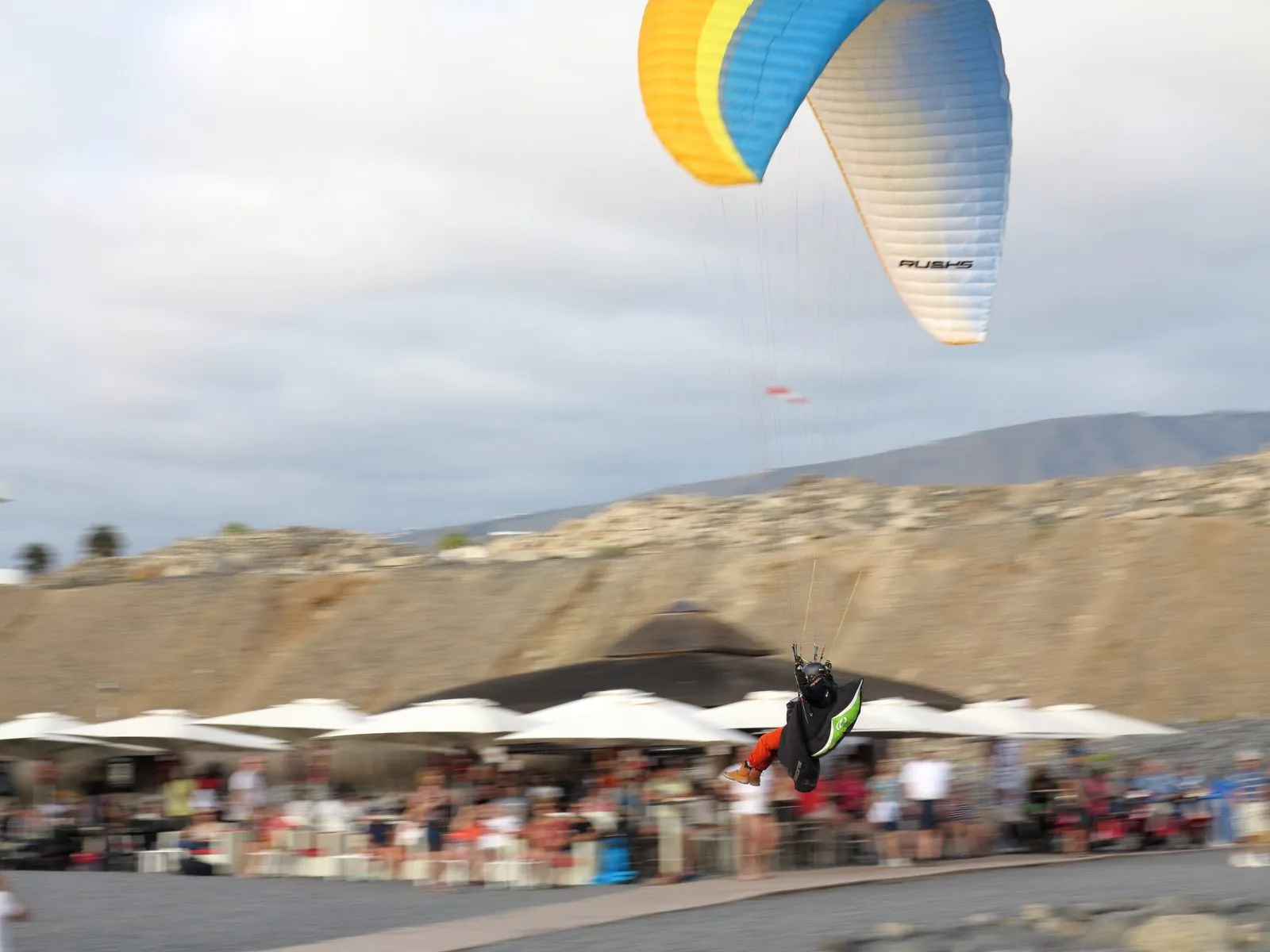
Photo: TeWeBs · CC BY-SA 4.0 · Wikimedia Commons · scaled
Canyoning
The islands' deep volcanic barrancos (ravines) are made for canyoning — descending a gorge on foot, by scrambling, sliding down natural water chutes, swimming through pools and abseiling over drops. Gran Canaria is the star, with famous routes like the Barranco de las Vacas and gorges in the wet, green north offering everything from gentle dry canyons for beginners to committing aquatic descents for the experienced. Tenerife and La Palma also have good canyoning, some of it through laurel forest. Trips are always guided, kit (wetsuit, harness, helmet) is provided, and there are routes graded for every ability.
Rock climbing and via ferrata
The volcanic rock gives grippy, sun-warmed climbing that draws climbers all winter. Gran Canaria's interior — around Roque Nublo, Tamadaba and Ayacata — has hundreds of bolted sport routes on solid basalt and conglomerate, and Tenerife's Arico gorge is another well-known crag. For non-climbers who still want the vertical thrill, a via ferrata is the answer: a protected route where you clip your harness to a steel cable and climb ladders and rungs fixed to the cliff. Several islands have installed via ferratas suitable for beginners with a guide — an exhilarating way to get high on a rock face without technical climbing skills.
Zip lines and high-adventure parks
For family-friendly adrenaline, several forest and adventure parks across the islands run zip lines (tirolinas), rope courses and tree-top circuits — a fun half-day for older children and teenagers, with harnesses and full supervision. They're a gentler introduction to heights than paragliding, and a good rainy-... well, cloudy-day option in the greener north.
Combine it with the outdoors
Adventure sports pair naturally with the islands' superb walking. Many operators run trips that blend a bit of scrambling or a via ferrata with a proper mountain route, and a canyoning day is essentially adventurous hiking with ropes. If you're building an active holiday, our guide to hiking in the Canary Islands pairs perfectly with these, and the islands' diving and surfing round out an adrenaline-packed week.
Safety and choosing an operator
These are genuine adventure activities with real risk if done badly. Only ever go with a licensed, insured, professionally qualified operator — for paragliding that means a certified tandem pilot; for canyoning, climbing and via ferrata a qualified mountain or canyoning guide with proper, well-maintained equipment. Don't be tempted by the cheapest deal on a beach flyer. Check recent reviews, confirm insurance is included, and be honest about your fitness and any medical conditions (heart problems, recent surgery, pregnancy, a fear of heights). Weather rules everything: a good operator will postpone or cancel if the wind or conditions aren't right — take that as a sign of professionalism, not an inconvenience.
Quick guide: which island for what
| Activity | Best islands |
|---|---|
| Tandem paragliding | Tenerife, La Palma, Gran Canaria |
| Canyoning | Gran Canaria, Tenerife, La Palma |
| Rock climbing | Gran Canaria, Tenerife |
| Via ferrata | Several islands (guided) |
| Zip lines / adventure parks | Tenerife, Gran Canaria |
Add a splash of adrenaline to your trip and you'll remember it long after the tan fades. Pick a reputable guide, respect the mountain and the wind, and soak up the view — there aren't many places you can paraglide over a volcano in shirtsleeves in midwinter. Explore more things to do to plan your active days.