Draped down a green ravine just outside Las Palmas, the Jardín Botánico Canario Viera y Clavijo is the largest botanical garden in Spain — and a free, shady, beautiful escape from the city. Dedicated to the unique plant life of the Canaries and the wider Macaronesian region, it gathers dragon trees, laurel forest and hundreds of endemic species across terraces, paths and viewpoints. It is one of the most rewarding — and best-value — half-days on Gran Canaria.
Spain's biggest botanical garden
Spread over some 27 hectares in the leafy hills of Tafira, above the capital, the garden was founded in the mid-20th century by the Swedish botanist Eric Sventenius, who devoted his life to the flora of these islands. It's named after José de Viera y Clavijo, an 18th-century Canarian scholar and naturalist. Today it is a serious scientific institution — a centre for research and conservation of the archipelago's plants — but also simply a gorgeous place to spend a morning, with paths winding down and around a steep, green barranco.
Because it tumbles across a ravine, the garden is a place of levels and viewpoints: you can look out over a canopy of palms and laurels, follow shady paths beside streams, and turn a corner to find a whole hillside of flowering endemics. Allow a couple of hours to do it justice, more if you love your plants.
Entry is free — a rare treat. As of 2026 the garden is free to visit, which makes it one of the best-value outings on the island. There is a car park by the entrance and a café; check the official garden site for current opening hours, which vary by season and can change. Wear comfortable shoes, as the paths are sloping.
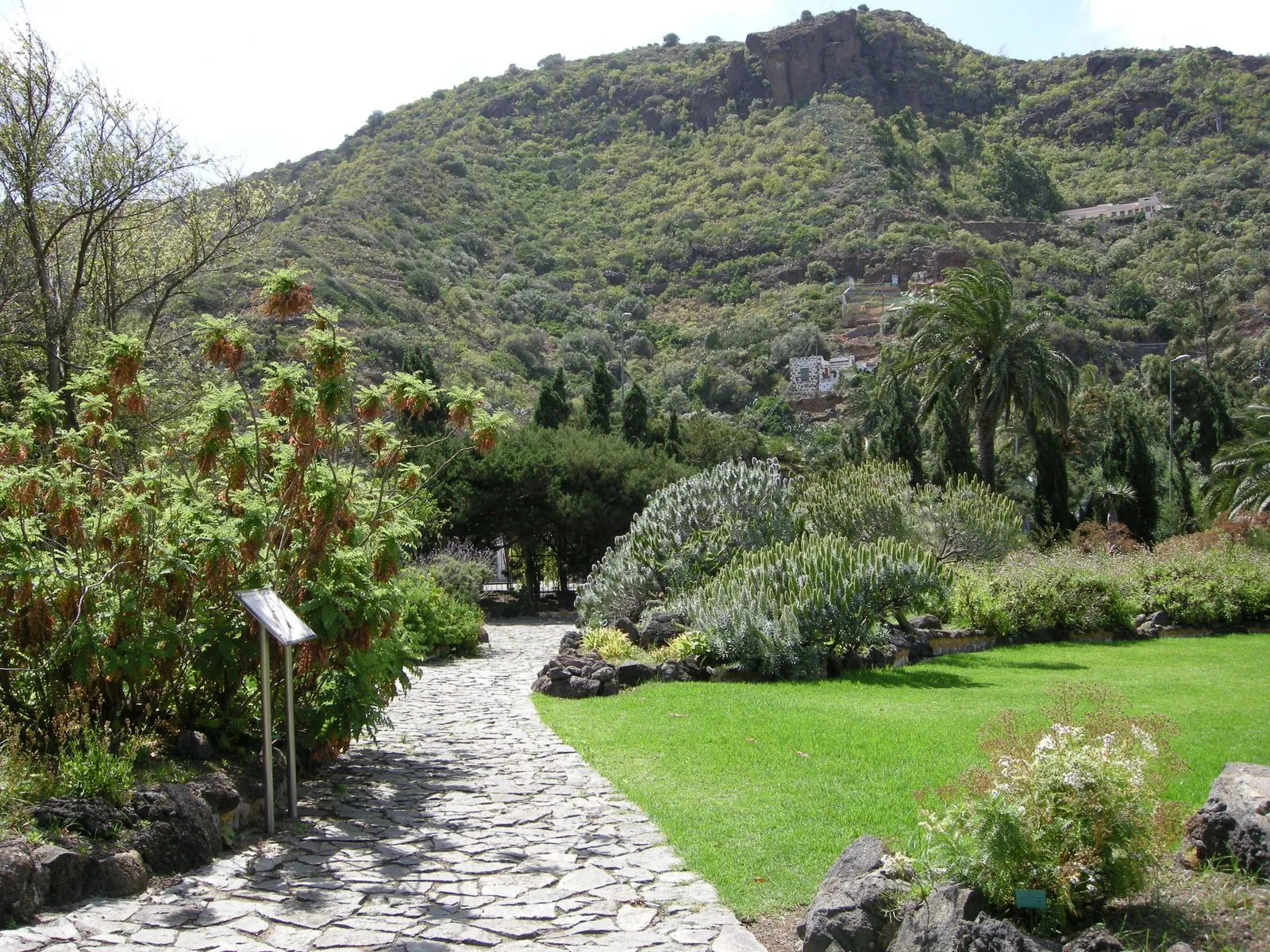
Photo: sailko · CC BY-SA 3.0 · Wikimedia Commons · scaled
The living treasury of Canarian flora
What makes this garden special is its focus. Rather than showing off tropical exotica from around the world, it is devoted to the plants of the Canaries and Macaronesia — the Atlantic island groups (the Canaries, Madeira, the Azores and Cape Verde) whose isolation has produced an extraordinary number of species found nowhere else. It holds the world's largest living collection of these endemic plants, a genuine ark for species that are rare or endangered in the wild.
Highlights to look out for as you wander include:
- Dragon trees (drago) — the strange, umbrella-shaped icon of the Canaries, with its distinctive "dragon's blood" red sap, gathered here in fine specimens.
- A laurel forest (laurisilva) section — a taste of the ancient cloud-forest that once covered much of the region, damp and green and full of ferns.
- Canarian palms, spurges and succulents — the sculptural, drought-hardy plants that give the islands' hillsides their unmistakable look.
- Beds of rare endemic flowers, many of them clinging on in only a few wild spots across the archipelago.
If the laurel forest here whets your appetite for the real thing, it survives in wilder form on the greener islands — most famously in places like Los Tilos on La Palma and the misty ridges of Tenerife's north.
An easy trip from Las Palmas
The garden sits in Tafira Alta, only a short drive inland and uphill from Las Palmas — roughly 15–20 minutes by car or taxi from the city centre, and easy to fold into a day exploring the capital. City buses also run up this way, though a hire car gives you the most freedom, especially if you want to combine it with other stops in the north.
Go early or late on hot days. The ravine offers plenty of shade, but the paths are open in places and midday sun can be strong. Mornings are cooler, quieter and best for photography — and you'll have the birdsong of the barranco largely to yourself.
Making a day of it
The botanical garden combines well with the historic delights of Las Palmas — the atmospheric old quarter of Vegueta, the Columbus house, the cathedral and, of course, the long golden sweep of Playa de las Canteras. A morning among the plants followed by an afternoon in the old town and on the beach makes a lovely, gentle day, and a fine antidote to a holiday spent solely in the southern resorts.
It is also a genuinely enriching stop for anyone curious about why the Canaries look the way they do — the same volcanic isolation that shaped the islands' landscapes produced this remarkable, one-of-a-kind flora, and here it is all gathered in one green, peaceful place.
Dragon trees, cloud forest and a whole hillside of plants that grow nowhere else on Earth — and it won't cost you a cent.
Free, beautiful and quietly fascinating, the Jardín Botánico Canario is one of Gran Canaria's best-kept secrets. Add it to your list of things to do and give yourself a cool, green pause from the sunshine.