Gran Tarajal is Fuerteventura's second town and one of the most genuinely Canarian places on the island — a real working port with a palm-lined promenade and a long, dark-sand beach, entirely free of the resort crowds. There are no high-rise hotels or international bar strips here; instead you'll find fishing boats, local families, a tree-shaded seafront and the everyday rhythm of an island town going about its business. For travellers who want the real Fuerteventura rather than a holiday bubble, it's a refreshing find.
Set on the sheltered east coast of Fuerteventura, roughly midway down the island, Gran Tarajal is the commercial heart of the south and a window onto local life. It offers an unusual, unhurried, distinctly local seaside experience — and a swim from a black-sand beach that most visitors never even see.
What it's like
Gran Tarajal grew up around its harbour and still feels like a proper town rather than a resort. A broad, palm-lined promenade runs behind the beach, dotted with cafés, local shops and street art, and the town spreads back in ordinary Canarian streets full of everyday life. The dark volcanic sand — a striking contrast to the pale beaches of the north — sits in a sheltered bay that keeps the water calm and swimming-friendly.
The atmosphere is unmistakably local: this is where island families come for a weekend by the sea, where the fishing and ferry trade tick over, and where you'll hear far more Spanish than English. It's low-key, friendly and completely unpolished in the best way — a place to slow down, join in and see how the island really lives.
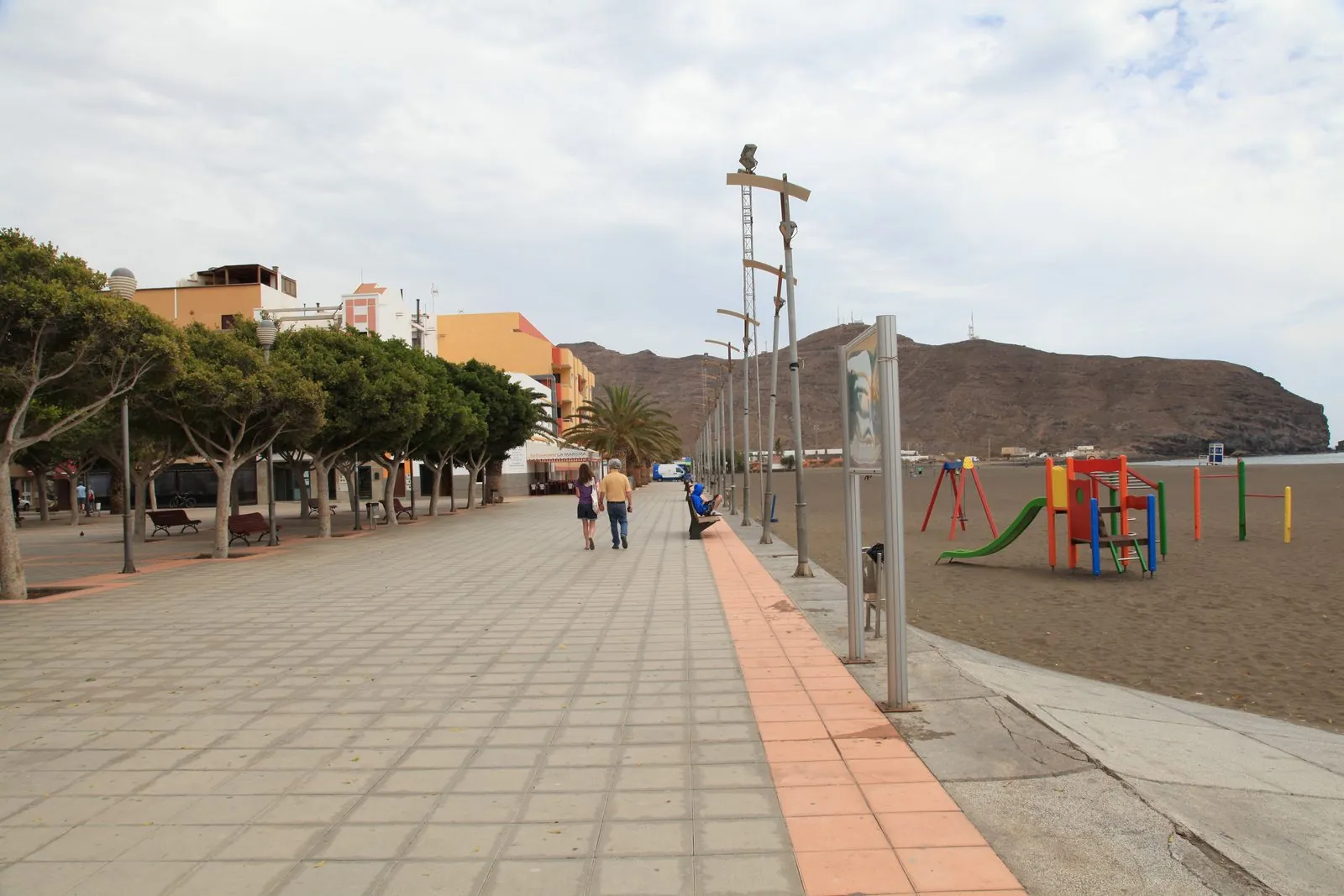
Photo: Frank Vincentz · CC BY-SA 3.0 · Wikimedia Commons · scaled
What to see and do
The main pleasure here is simply the beach and the promenade: a swim in the calm bay, a stroll beneath the palms, and a long lunch watching harbour life. The dark sand and sheltered water make it a relaxed, family-friendly spot, and the seafront's murals and sculptures give it a splash of colour and character.
Gran Tarajal is also a lively spot when the town celebrates — its carnival is one of the biggest and most spirited in the south of the island, spilling music and colour along the seafront. At other times, the appeal is quieter: good local seafood, a genuine sense of place, and easy access to the wilder landscapes inland. For beach-hunters, our island beaches guide puts the coast in context.
The dark, volcanic sand here soaks up the sun and gets hot underfoot on bright days — bring sandals or flip-flops for crossing the beach, and the usual strong sun protection.
Where to stay and eat
Food is a real reason to visit. As a working fishing port, Gran Tarajal serves excellent fresh fish and seafood at unfussy local restaurants along the front — grilled catch of the day, limpets, octopus, always with papas arrugadas and mojo alongside. It's honest, seasonal, well-priced island cooking of the kind our Canarian food guide champions, and a world away from resort menus.
Accommodation is modest and local — small hotels, guesthouses and apartments aimed at Spanish visitors and business travellers rather than package tourists. That makes Gran Tarajal a genuine, good-value base for independent travellers, though many people visit as a day trip from the bigger resorts. Our where to stay guide weighs up Fuerteventura's options.
Getting there and around
Gran Tarajal sits on the FV-2 coast road that runs down the east of the island, well connected to the airport and the resorts to the north and south. A hire car is the easiest way to reach it and to explore the empty landscapes and beaches inland — see our guides to getting around and car hire. Fuerteventura's buses (guaguas) do serve the town, and viamo's route planning can help you piece together longer island journeys. The town centre and seafront are easily walkable once you arrive.
Nearby
From Gran Tarajal the whole south of the island opens up. The road continues down to the long golden beaches of the Sotavento and the resort of Morro Jable on the Jandía peninsula, while inland lie the volcanic hills and the historic villages of the interior. Start with our Fuerteventura hub to pair this authentic port town with the island's famous sands.