Firgas is a small, green town in the hills of northern Gran Canaria, famous across Spain for its bottled mineral water and for a remarkable stepped street that pours a ribbon of water down through the village. Cool, leafy and refreshingly free of resorts, it sits on the fertile, cloud-catching side of the island where springs bubble up and terraces climb the slopes. It's a lovely half-day stop for anyone exploring the north — a proper Canarian town going about its business, with a couple of genuine surprises.
Perched above a patchwork of valleys on the greener, wetter northern flank of Gran Canaria, Firgas is the kind of place package tourism forgets. That's exactly why it's worth the short drive up from the coast: a whitewashed hill town, big views out to the Atlantic and, at its heart, one of the most photographed streets on the island.
What it's like
Firgas is compact and easy to stroll. Whitewashed houses line steep, narrow lanes, a handsome church anchors the main square, and everywhere you feel the altitude — the air is fresher and cooler here than on the baking southern beaches, and low cloud often drifts in off the sea to keep the surrounding hills green. It's a working town, not a resort: you'll hear far more Spanish than English, and the rhythm is unhurried and local.
The name Firgas is known to every Spaniard as a brand of natural mineral water, drawn from springs in these hills and sold nationwide. That heritage gives the town a quiet pride, and water — flowing, splashing, celebrated — is the theme that ties the whole visit together.
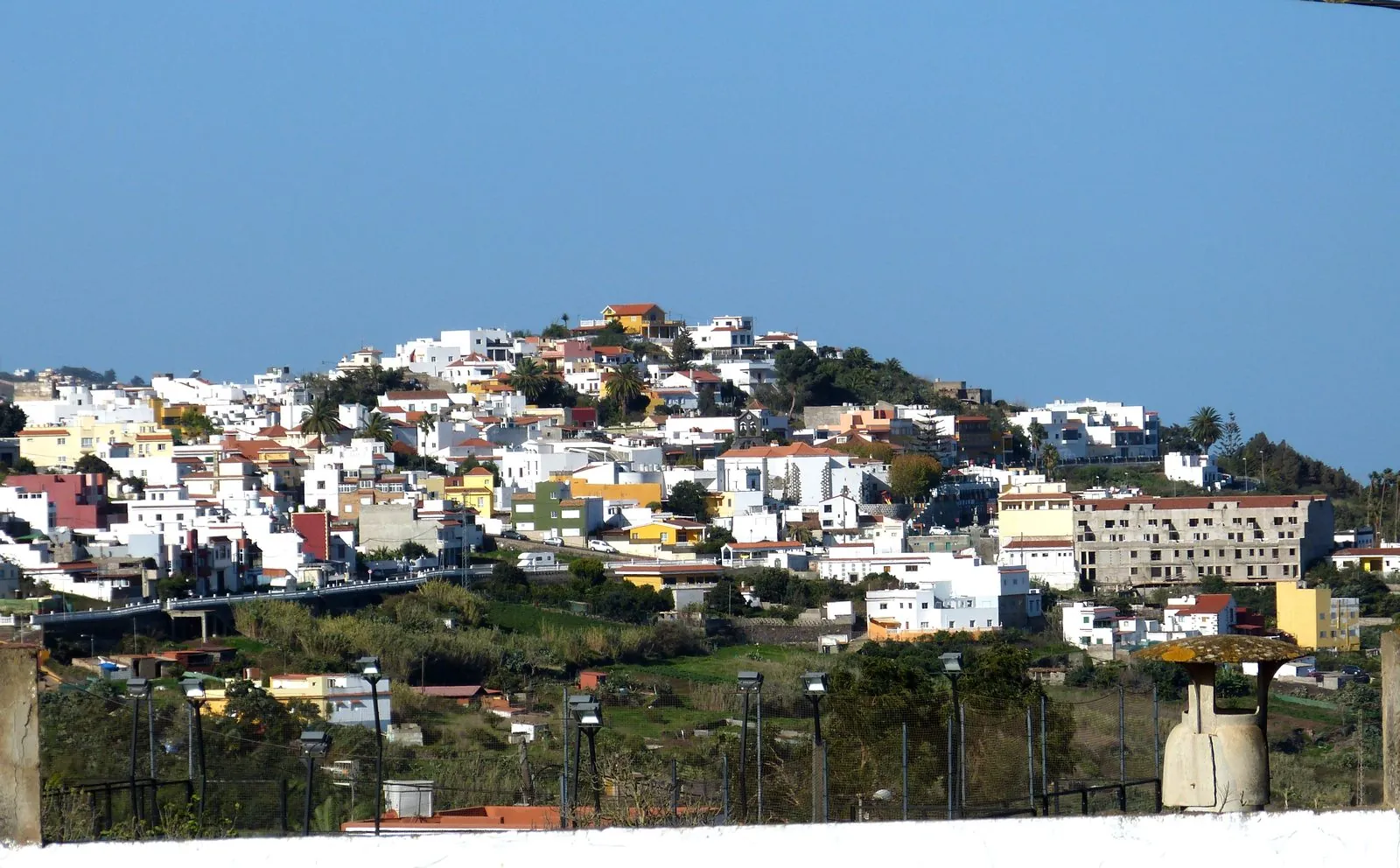
Photo: Wolfgang Sauber · CC BY-SA 4.0 · Wikimedia Commons · scaled
What to see and do
The star attraction is the Paseo de Gran Canaria, a short, steep pedestrian street built as a monumental water staircase. A channel of spring water cascades down its centre past tiled benches and colourful ceramics, while the walls are decorated with mosaics representing each municipality of the island. It's a genuinely charming piece of civic design and takes only a few minutes to walk, but it's the image most people carry away from Firgas.
Nearby, the linked Paseo de Canarias celebrates all seven main Canary Islands with more tilework and a relief map, and from the top of the town the viewpoints open out over the valleys towards the coast. Wander the main square, step into the church, and browse for the local bottled water and simple crafts. It's a small place — an hour or two does it justice — best paired with other stops on the green north.
Firgas is at its prettiest in the morning light before any midday cloud rolls in. Bring a light layer: up here it's noticeably cooler than the southern resorts, and a passing shower is always possible on this side of the island.
Where to stay and eat
Firgas is a day-trip town rather than a holiday base — accommodation is limited to a handful of rural guesthouses and casas rurales (traditional country cottages) in and around the hills, which suit walkers and travellers wanting a quiet, authentic corner. Most visitors stay on the coast and drive up; our where to stay guide compares the island's very different bases.
For food, this is hearty highland cooking: rich stews and potaje vegetable soups, grilled meats, watercress soup and, of course, plenty of local produce grown on the surrounding terraces. Simple bars and restaurants around the centre serve honest Canarian fare with the mandatory papas arrugadas and mojo. It's a fine place to try authentic island cooking away from the tourist menus — our Canarian food guide has more.
Getting there and around
Firgas sits in the hills a short drive inland from the north coast, roughly half an hour from the capital, Las Palmas, and around an hour and a half from the southern resorts on winding but scenic roads. A hire car is easily the best way to reach it and to link it with other northern villages — see our guides to car hire and getting around. Buses (guaguas) do serve the town from Las Palmas, but a car gives you the freedom the green north deserves.
Nearby
Firgas pairs perfectly with its neighbour Moya, the cheese town on its cliff above the laurel woods, just a few minutes further along the hills. The wider green north also holds the pilgrimage town of Teror and, down at the coast, the volcanic natural pools of Gran Canaria where the Atlantic fills sheltered rock basins for safe swimming. Start with our Gran Canaria hub to weave Firgas into a day exploring the lush, less-visited side of the island.