The Canaries are one of the better-value warm-weather holidays in Europe — not the cheapest place on earth, but a destination where a low local sales tax, plentiful competition and year-round season keep prices gentler than much of the mainland Mediterranean. The islands run on the euro, cards are accepted almost everywhere, and how much you spend is largely in your hands: eat where the locals eat and you'll pay a fraction of the resort-strip prices. This guide covers the tax that makes things cheaper, realistic everyday costs, tipping, cards versus cash, and how the budget shifts from island to island.
The IGIC advantage
Here's a pleasant quirk: the Canary Islands are outside the EU's VAT area and levy their own low sales tax, IGIC, at a general rate of just 7% in 2026 — a third of mainland Spain's 21% IVA. You won't see it itemised on a coffee, but it feeds through into lower prices on many goods and services, from restaurant bills to electronics, perfume and spirits. It's part of why the islands feel good value and why duty-free-style shopping has long been a draw. Don't expect miracles on every item, but the underlying tax burden here is genuinely lighter than almost anywhere else in the EU.
The low IGIC tax means bigger-ticket buys — sunglasses, electronics, fragrances, spirits — can be noticeably cheaper than at home. If you were going to buy something anyway, the islands are a reasonable place to do it.
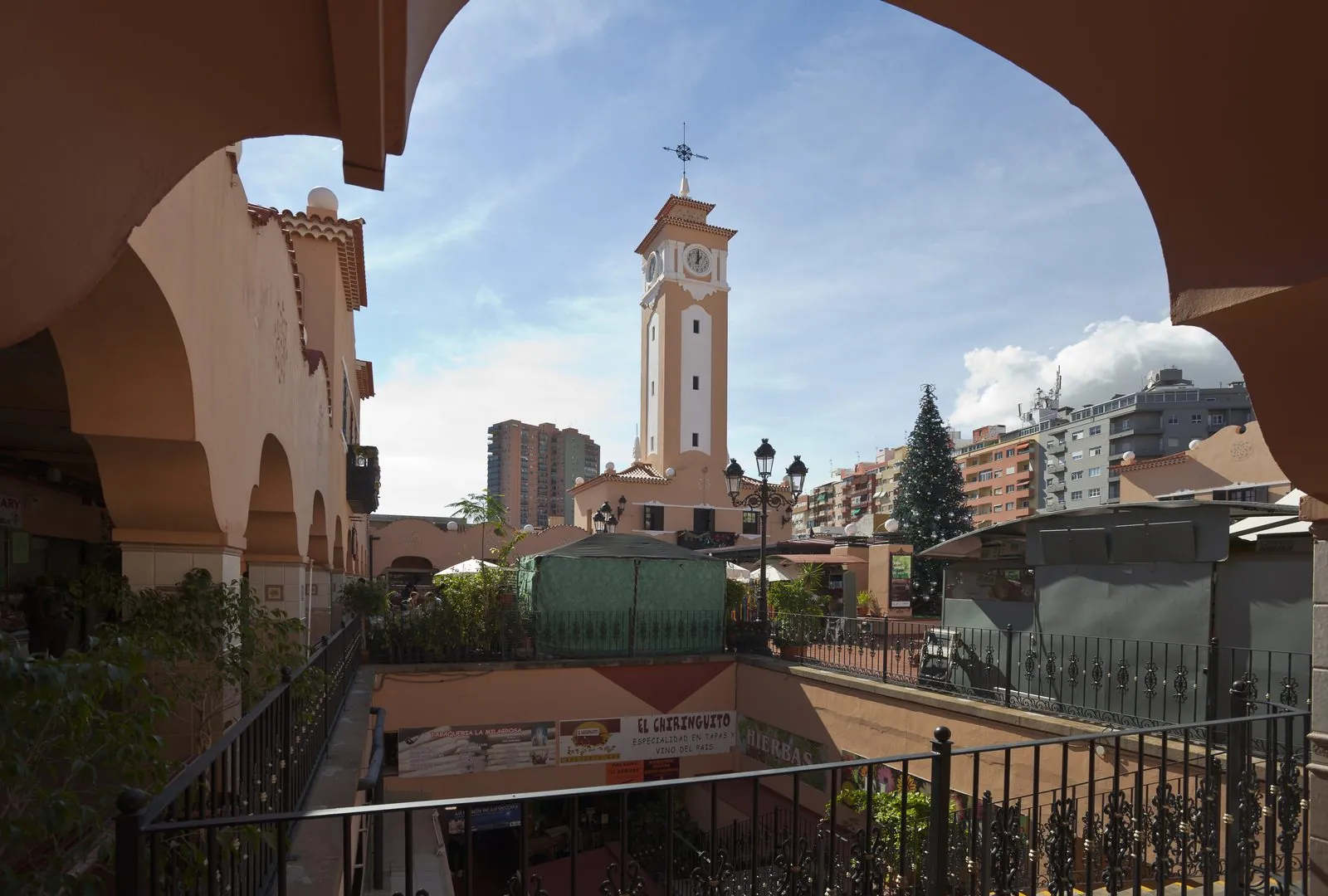
Photo: Diego Delso · CC BY-SA 3.0 · Wikimedia Commons · scaled
What everyday things cost
Prices vary with where you are — a beachfront terrace in a package resort charges far more than a backstreet café used by locals — so treat these as typical ranges, not fixed prices, and expect the tourist strips to sit at the top end. As of 2026 you'll generally find:
| Item | Typical range | Notes |
|---|---|---|
| Coffee (café solo / con leche) | Low single-digit euros | Cheaper away from the seafront |
| Small beer (caña) | A couple of euros | Local Dorada or Tropical brands are cheapest |
| Menú del día (set lunch) | Modest — often the day's best value | Several courses plus a drink; a local institution |
| Casual dinner for two | Mid-range | Local guachinche/tapas far cheaper than resort restaurants |
| Short local taxi hop | Low | Metered and regulated |
| Bottled water / soft drink | Very low from a shop | Much dearer bought on the beach |
The headline lesson: your daily spend depends far more on where you eat and drink than on the islands being expensive. A holiday built around local menús del día, supermarket breakfasts and neighbourhood bars costs a great deal less than one spent entirely on the promenade.
The menú del día: your best-value friend
The menú del día — a fixed-price lunchtime menu of two or three courses with bread and a drink — is the single best way to eat well and cheaply. Offered by countless everyday restaurants on weekdays, it's what local workers eat, and it routinely delivers a proper hot meal for less than a light lunch on the tourist strip. Seek out the places a street or two back from the beach; they're where the value and often the best cooking hide. For what to order, see our Canarian food guide and the island staples papas arrugadas and mojo.
Tipping
Tipping in the Canaries is modest and optional, not the expected ritual it is in some countries. Service isn't automatically added, and locals typically just round up the bill or leave a little loose change for good service — a euro or two on a casual meal, a bit more for something special in a nicer restaurant. There's no obligation to tip a set percentage, and no one will chase you for it. Tip because you want to, keep it small, and cash is best so it reaches the staff.
Cards, cash and ATMs
Cards — including contactless and phone payments — are accepted almost everywhere: hotels, restaurants, supermarkets, taxis and attractions. You can run most of a holiday on plastic. That said, it's worth carrying some cash for small cafés, market stalls, tips, local buses and the odd rural spot that's card-shy. ATMs are plentiful in the resorts and towns; withdraw from a bank's own machine where you can.
When a card machine or ATM offers to charge you "in your home currency" (dynamic currency conversion), always decline and pay in euros. Choosing your home currency lets the machine set a poor exchange rate and quietly costs you more. Let your own bank do the conversion instead.
Cheap eats versus resort markups
The gap between the two is the biggest lever on your budget. On the resort strip you pay a premium for the sea view and the English menu; a few streets inland, family-run bars, bakeries and market stalls serve the same island for much less. Supermarkets are cheap for breakfast supplies, snacks, water and picnic lunches — and stocking a self-catering apartment slashes costs. Buy water and drinks from a shop rather than the beach vendor, and save the seafront terrace for a treat rather than every meal.
Budgeting by island
Broadly, the well-developed tourist islands — Gran Canaria, Tenerife, Lanzarote and Fuerteventura — offer the widest spread of prices, from budget package deals to smart resorts, so you can pitch your spend high or low. The quieter western islands — La Palma, La Gomera and El Hierro — have fewer luxury options and a more low-key, rural economy, which can mean simpler, cheaper holidays but sometimes pricier or scarcer specialist services. Everywhere, self-catering apartments undercut hotels, and travelling outside the Christmas and Carnival peaks saves on both flights and rooms — see best time to visit for the cheaper windows.
Keeping it affordable
Put simply: eat like a local, decline currency conversion, carry a little cash, self-cater some meals, and travel off-peak. Do that and the Canaries deliver a warm, well-organised holiday for a very reasonable outlay. Plan the rest of the trip with our guides to where to stay and getting around — spending wisely on transport and rooms leaves more for the fun stuff.