Few places suit older travellers as beautifully as the Canary Islands — gentle warmth all year, flat seafront promenades, short flights and a relaxed pace of life. Generations of retirees and older holidaymakers have made the islands their winter bolthole, swapping cold, dark months at home for mild sunshine, easy walking and good, affordable food. Whether you want a fortnight of sun, a long winter stay of several months, or simply a comfortable, low-effort holiday, the Canaries deliver in spades. This guide covers the climate, the easiest resorts, healthcare, long winter stays and getting around, with the older traveller in mind.
A gentle climate, all year round
The islands' greatest gift to older visitors is the weather: subtropical, warm and remarkably steady, with none of the extremes that make travel hard work. Winters are mild — think spring-like days rather than tropical heat — which is far kinder to older bodies than a fierce Mediterranean summer. The sunny, drier south of each island is warmest and most reliable, while the greener north is a touch cooler and cloudier. That "eternal spring" is exactly why the Canaries are Europe's favourite winter-sun escape; our winter sun guide explains where and when to find the best of it.
The winter sun is gentle but still strong enough to burn and to cause dehydration. Use sun cream, wear a hat, drink plenty of water and rest in the shade in the middle of the day — sensible habits that matter more as we get older.
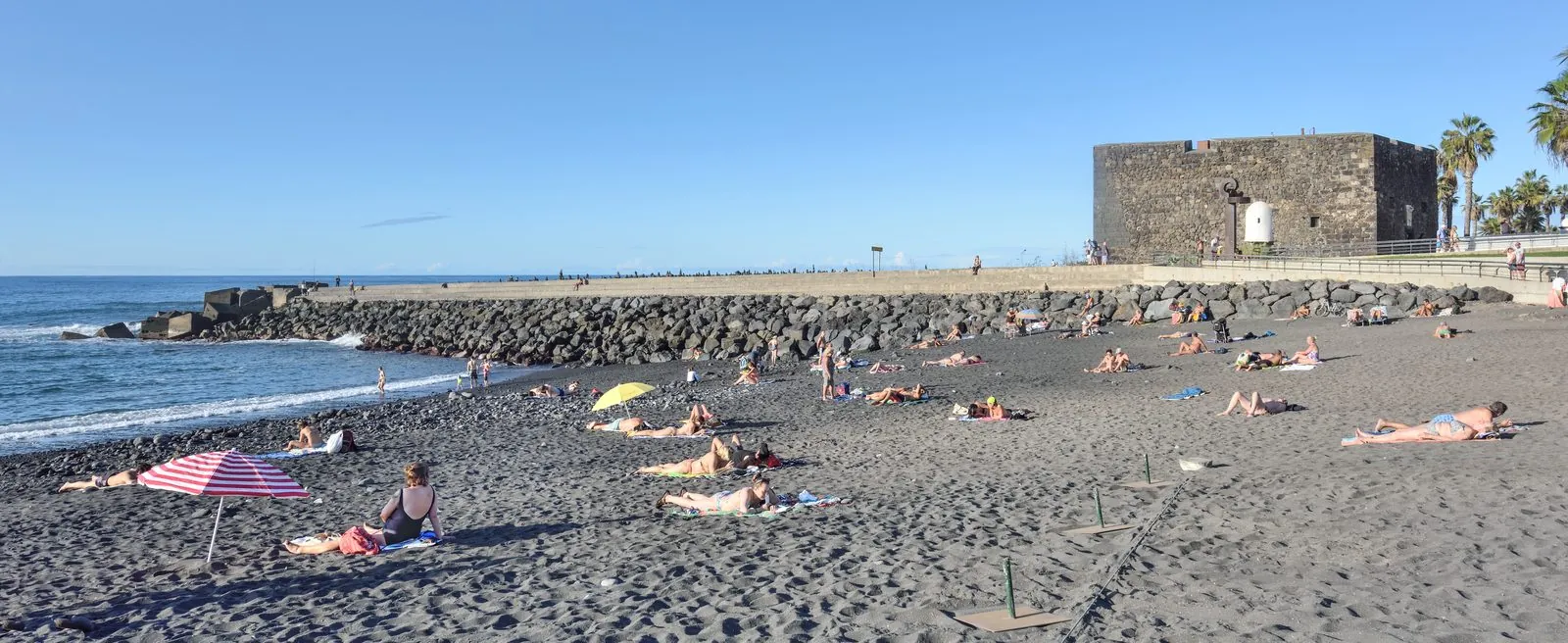
Photo: Cayambe · CC BY-SA 4.0 · Wikimedia Commons · scaled
Flat promenades and easy resorts
Many of the purpose-built southern resorts are wonderfully easy to get around on foot, with long, flat, well-surfaced seafront promenades linking the beaches, shops and restaurants. You can stroll for miles beside the sea without a single hill, stop for a coffee, and be back at your apartment in minutes. That flat, walkable layout is a real boon for anyone who prefers to avoid steps and steep streets.
- Caleta de Fuste (Fuerteventura) — one of the flattest, calmest, most accessible resorts of all, built around a gentle bay with a level promenade; our Caleta de Fuste guide has the detail.
- Costa Adeje and Los Cristianos (Tenerife) — smart, well-kept resorts with long flat seafronts, easy beaches and every convenience close by.
- Playa Blanca (Lanzarote) — low-rise, tidy and relaxed, with a beautiful level promenade linking several beaches.
- Maspalomas and Meloneras (Gran Canaria) — grand seafront promenades, gentle gradients and plenty of shady spots to pause.
These calmer, flatter resorts generally suit older travellers better than the hillier, nightlife-heavy spots. If mobility is a particular concern, our dedicated accessible Canary Islands guide covers step-free beaches, adapted facilities and more.
Healthcare, GHIC and EHIC
The Canaries have good hospitals and clinics, pharmacies are plentiful and helpful, and the resort areas are well used to caring for older visitors. As part of Spain, the islands are covered by the reciprocal EU healthcare arrangements, so an in-date EHIC (for EU visitors) or GHIC (for UK visitors) entitles you to state healthcare on the same terms as a Spanish resident. Carry the card with you.
An EHIC or GHIC is not a substitute for travel insurance. It won't cover everything — private treatment, repatriation or an ambulance flight home — and older travellers should take out comprehensive travel insurance that covers any pre-existing conditions and the full length of the trip. Bring enough of any regular medication, in its original packaging, plus a copy of your prescription. See our health and safety guide for more.
Pharmacies (farmacias, marked with a green cross) can advise on minor ailments and dispense many things over the counter, and English is widely understood in the resort ones. For anything more serious, the emergency number across the islands is 112.
Long winter stays: the "swallows"
A great Canarian tradition is the long winter stay — older visitors, sometimes called "swallows", who fly south for a month, two months or the whole winter to escape the cold. It is a well-trodden path, and the islands cater for it beautifully: many apartments and aparthotels offer discounted long-stay rates, communities of regular winter residents form around the resorts, and everything from bowls clubs to social groups springs up to keep long-stayers busy.
- Rates drop for longer bookings. Ask about monthly or seasonal prices, which are far cheaper than nightly rates.
- Self-catering suits long stays — an apartment with a kitchen gives you independence and keeps costs down; local markets and supermarkets are affordable, helped by the islands' low IGIC sales tax.
- You'll find a ready-made community. Long-stay resorts have a sociable, familiar feel, with clubs, church groups and regulars who return year after year.
Our guide on where to stay weighs up apartments, aparthotels and hotels for different lengths of trip.
Getting around comfortably
You do not need to drive to enjoy the islands. Within the flat resorts, everything is walkable, and taxis are reasonably priced for longer trips. Public buses (guaguas) are cheap, clean and reach most places, with discounts and travel cards available, and modern coaches on the main routes. If you do want to explore the wider island, gentle guided coach excursions take the effort out of sightseeing, and hiring a car for the odd day gives you flexibility without the daily grind of driving — see our getting around guide. Between the islands, the ferries are a relaxed, scenic alternative to flying for those with time to spare.
Choose accommodation close to a flat promenade, a supermarket and a pharmacy, and you may barely need transport at all — many long-stayers happily spend a whole winter within walking distance of everything they need.
The bottom line
For older travellers the Canaries tick every box: a gentle year-round climate, flat and easy resorts, good healthcare backed by the EHIC/GHIC, affordable long stays and stress-free ways to get around — all just a few hours' flight from northern Europe. Pick a calm, flat resort like Caleta de Fuste, sort your insurance and medication, and settle in for as long as you like. Many who come for a fortnight end up returning every winter — and it is easy to see why.