Camping in the Canary Islands is a wonderful way to wake up beside a volcano or under a forest canopy — but it comes with more rules than in most of Europe. Much of the islands' finest scenery lies within national and rural parks where camping is tightly controlled, and free wild camping is largely off-limits. The upside is a network of official campsites and, on several islands, free or low-cost designated camping areas in beautiful spots — you just need the right permit and a bit of forward planning. This guide explains the official campsites, the permit system, the wild-camping rules and what to expect if you want to sleep out under those famously clear Canarian skies.
Camping the Canarian way: expect rules
The first thing to understand is that you cannot simply pitch a tent wherever you fancy. The islands protect their landscapes fiercely — several are UNESCO Biosphere Reserves and hold national parks such as Teide and Timanfaya — and unregulated camping is banned across most of that land. Instead, camping happens either at proper campsites or at official recreational areas (zonas recreativas / áreas de acampada) run by each island's council, usually with a permit. It is a system that rewards planning and punishes turning up on spec.
Rules, permits, opening periods and even whether camping is allowed at all vary from island to island — and change from season to season, often closing during high fire risk in summer. Always check the current rules with the relevant island council (cabildo) or park authority before you travel, and don't assume what applies on one island applies on the next.
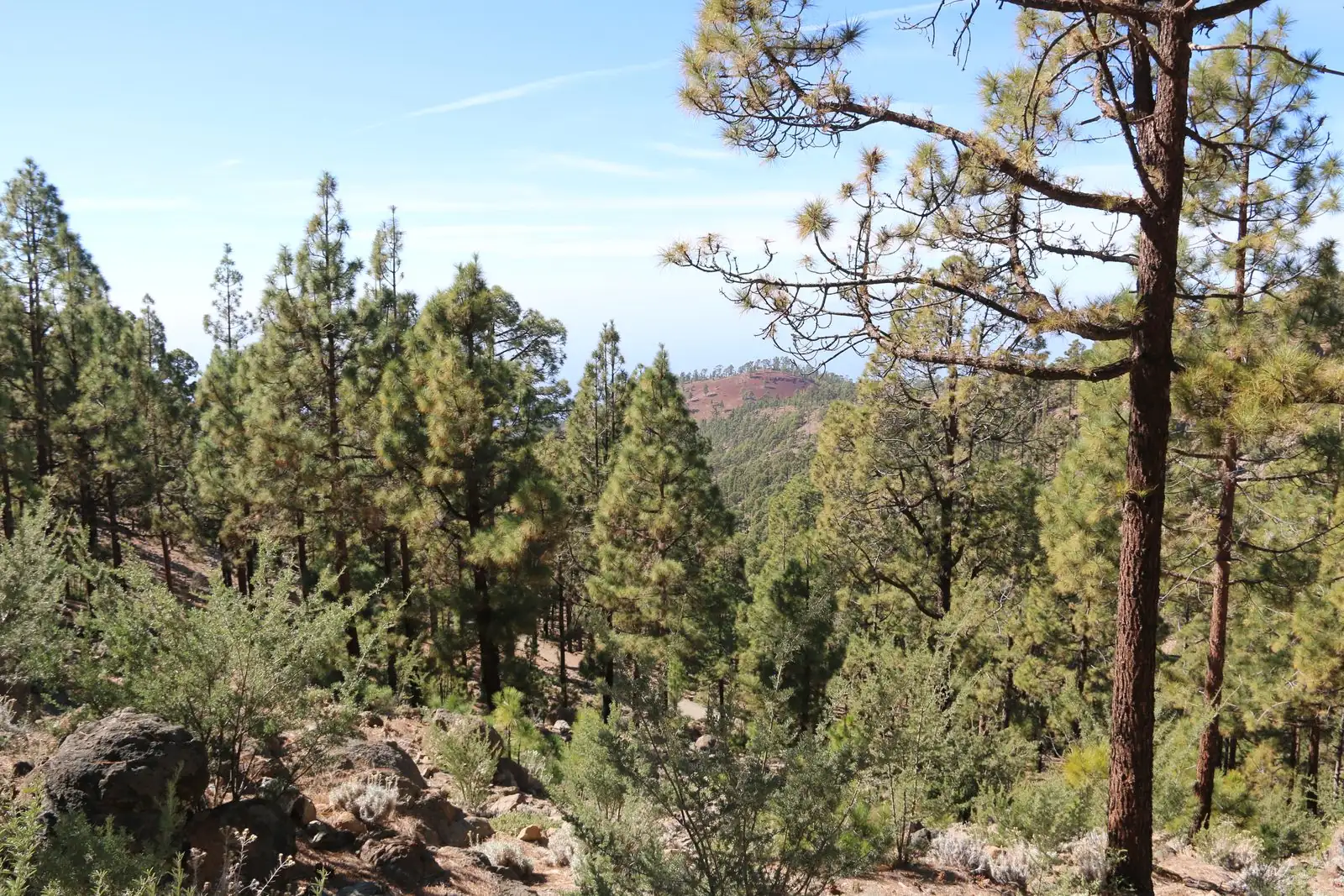
Photo: FrDr · CC BY 4.0 · Wikimedia Commons · scaled
Official campsites
Every populated island has at least a few organised campsites, though there are fewer than you might expect for such a popular destination. These range from simple sites with basic toilets and a water tap to more developed campgrounds with electricity, showers, a shop and even cabins or bungalows. You will find them dotted through the pine forests, near some beaches and in the rural interior. Because there are relatively few, the good ones fill up in school holidays and at weekends, so book ahead where booking is possible. Facilities are generally modest rather than the resort-style campsites of mainland Spain, so bring what you need.
The permit system for recreational and park areas
Alongside commercial campsites, most islands maintain a network of free or very cheap designated camping areas within their rural parks and forests — often in gorgeous spots you would never otherwise get to spend the night. The catch is that nearly all of them require a free permit obtained in advance from the island council, and each island runs its own system.
- Apply in advance. Permits are typically requested online or in person from the cabildo, sometimes days or weeks ahead, and numbers are capped to protect the site.
- Fixed dates and areas. A permit usually names a specific area and specific nights; you cannot roam. Some areas are weekends-only or seasonal.
- Facilities vary wildly. Some designated areas have toilets, water, fire pits and picnic tables; others are little more than a cleared patch of ground. Check before you go.
- Fire restrictions bite. Barbecue and fire areas are often closed entirely in the dry, high-risk summer months.
Because each island's permit process differs and the paperwork is usually in Spanish, allow plenty of time to sort it out, and have a backup plan (a campsite or a room) in case the designated area you want is fully booked or closed. A little Spanish helps enormously when dealing with the cabildo.
Wild camping: mostly not allowed
Genuine free-roaming wild camping — pitching anywhere in the countryside or on a beach — is essentially prohibited across the Canaries, and it is taken seriously inside the protected parks, on the dunes and along sensitive coastline where fines can follow. The safe and legal way to sleep in nature here is through the permit and campsite systems above. That said, the network of designated areas means you can still enjoy something very close to wild camping — a night in a forest clearing or beside a barranco — perfectly legally, just with a permit and in a set spot.
If you would rather travel with a vehicle, the rules around sleeping in a campervan are different again and equally particular; our guide to campervan and motorhome travel covers where you can and can't stay overnight on four wheels.
What to expect and what to bring
Camping here is less about facilities and more about extraordinary settings — pine-scented forests, volcanic moonscapes and clifftop coves. A few practicalities to plan for:
- Cool nights at altitude. The coast may be warm, but the high forests and the areas near Teide get genuinely cold after dark and can freeze in winter. Pack a proper sleeping bag and warm layers.
- Wind and sun. Exposed sites catch the trade winds; bring solid pegs and guy lines, plus serious sun protection for the daytime.
- Carry water. Many designated areas have limited or no drinking water — check, and bring plenty.
- Leave no trace. Take every scrap of litter out with you, respect fire bans absolutely, and keep to the marked areas. The privilege of camping in these landscapes depends on people looking after them.
Combining camping with hiking
Camping pairs perfectly with the islands' superb walking. Many designated areas sit on or near the great trail networks, so you can build a walking trip around a night or two under canvas — waking in the forest and setting off on foot at dawn. Our hiking guide covers the routes, and the overview of the Canary Islands' national parks explains which protected areas you will be walking through and their particular rules.
The bottom line
Camping in the Canaries is thoroughly rewarding but never spontaneous: the landscapes are protected, wild camping is off the table, and the good spots need a permit sorted well in advance. Do the homework with the relevant island council, book your site or permit early, pack for cool nights and strong sun, and tread lightly — and you will earn some of the most memorable nights the islands can offer, beneath skies most campers only dream of.