Some of the best food in the Canary Islands never sees a tablecloth. It's the sizzling skewer handed over a market counter, the fat filled roll wolfed down between beach and bus, the pastry stuffed with tuna and eaten warm from a paper bag, the ring of hot churros bought at a fiesta. Canarian street food is cheap, quick, unpretentious and utterly delicious — and grazing your way through it is one of the tastiest, most sociable ways to eat like a local.
You won't find sprawling street-food night markets here as you might in Asia, but wherever Canarians gather — markets, ferias, festivals, kiosks and beach bars — there's brilliant handheld food to be had. Here's what to look for and where to find it.
Pinchos: the island skewer
The pincho (or pincho moruno) is the Canarian street-food staple — chunks of marinated meat, usually pork or chicken, threaded on a skewer and grilled over charcoal until smoky and charred at the edges. Rubbed with garlic, paprika and cumin, they're juicy, spiced and irresistible, served simply with a hunk of bread and maybe a dab of mojo. You'll smell the grills before you see them at festivals, markets and roadside kiosks, and a couple of pinchos make a perfect cheap lunch on the move.
Follow your nose to the charcoal grill and order pinchos fresh off the heat — they're best eaten hot and smoky, with a squeeze of lemon or a spoonful of mojo. A cold local beer or a soft drink is the classic partner.
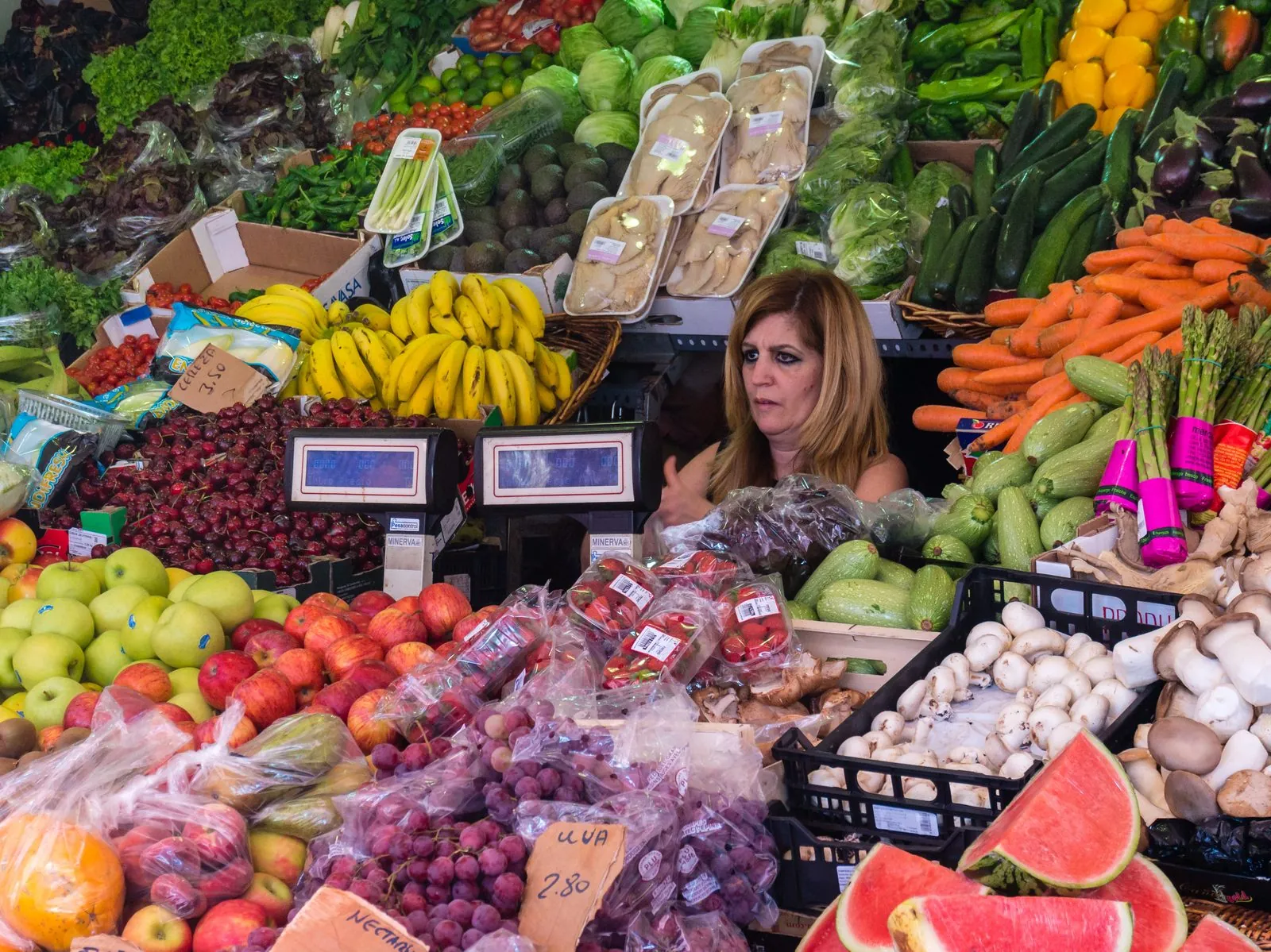
Photo: Tuxyso · CC BY-SA 3.0 · Wikimedia Commons · scaled
Bocadillos: the mighty filled roll
The bocadillo — a filled roll or baguette — is the everyday hero of Canarian eating on the go. Made with good crusty island bread and stuffed generously, it turns up filled with Serrano ham, cheese, tortilla (Spanish omelette), grilled pork, squid or the beloved lomo (marinated pork loin). A well-made bocadillo de calamares (fried squid roll) or a warm pepito of grilled meat is street food at its most satisfying, and costs a fraction of a sit-down meal. Every bar, kiosk and beach chiringuito does its own.
Empanadillas and savoury pastries
For something to eat with one hand, look for empanadillas — small, crimped pastry turnovers filled with tuna and tomato, spiced meat, or cheese, then baked or fried until golden. Their bigger cousin, the empanada, is sold by the slice from a large tray, the fish or meat filling encased in soft, savoury pastry. On La Palma and elsewhere you'll also find sweet-savoury baked goods and local pastries. These handheld pastries are perfect market and picnic food, and travel well for a day out or a ferry crossing.
Churros: the sweet street classic
No round-up of Canarian street food is complete without churros — lengths of piped dough, deep-fried until crisp and golden, dusted with sugar and made for dunking in thick hot chocolate. You'll find them at fairground stalls, festival churrerías and weekend markets, often first thing in the morning or late at night after a fiesta. The thicker, looser version known as porras turns up too. Hot, crunchy and sweet, they're a joyful end to a session of savoury grazing; our guide to Canarian desserts has more sweet treats worth hunting down.
Market and festival bites
The best hunting grounds for street food are the islands' markets and festivals. In the big towns, the covered food markets — like those of Las Palmas, Santa Cruz and La Laguna — have counters and stalls serving fresh juice, coffee, croquetas, grilled fish, ham and cheese by the plate, and every kind of snack. Weekend farmers' markets (mercadillos) add homemade cheeses, sweets, honey and warm pastries.
Even better are the ferias and fiestas: at any town's saint's-day celebration or the great festivals and Carnival, food stalls line the streets with pinchos, bocadillos, churros, roasted corn, papas and toasted almonds. Eating your way along a fiesta is one of the most fun — and most authentic — food experiences the islands offer.
- Croquetas — creamy breadcrumbed croquettes (ham, cheese or fish), sold hot by the piece.
- Pata asada / lomo — roast pork or marinated loin, carved into rolls at festival stalls.
- Papas with mojo — a cup of little potatoes with the islands' famous sauce, handheld-friendly.
- Toasted almonds and roasted corn — classic fairground nibbles.
- Fresh juice and agua de coco — for cooling off between bites.
Street stalls are usually cash-only and busiest — and freshest — during festivals and market mornings. Carry small change, and at fiestas eat where the queue of locals is longest; it's the surest sign of the best stall.
Graze like a local
The charm of Canarian street food is its ease and honesty: good ingredients, cooked simply, eaten in the sun with your hands. Skip a formal lunch now and then, and instead work your way along a market or fiesta — a couple of pinchos here, a bocadillo there, churros to finish. It's cheap, delicious and full of local life. For the sit-down side of island eating, see our guide to eating out in the Canaries, and browse the bigger picture in our guide to Canarian food.