No single person shaped a Canary Island the way César Manrique shaped Lanzarote. Artist, architect, sculptor and tireless campaigner, he spent the last decades of his life turning his home island into a work of art — and, crucially, fighting to stop it becoming another wall of concrete high-rises. The low white houses, the green shutters, the absence of billboards, the extraordinary visitor sites built into volcanic caves and craters: all of it bears his fingerprint. To understand Lanzarote, you have to understand Manrique.
His genius was a simple, radical idea — that art and nature should not compete but merge — and he had the charisma and stubbornness to make an entire island live by it.
A life between two worlds
César Manrique was born in Arrecife in 1919 and grew up on a Lanzarote that was poor, remote and overlooked. He trained as a painter and, after the Spanish Civil War, became part of Spain's avant-garde, exhibiting abstract work in Madrid. In the 1960s he spent time in New York, immersed in the pop-art and modern-art scene and encouraged by the likes of Nelson Rockefeller.
But New York's forest of skyscrapers repelled as much as it fascinated him. He returned to Lanzarote around 1966 with a mission: to prove that a place could develop and welcome visitors without destroying the very landscape that made it special. The barren, black volcanic island others saw as ugly, he saw as sublime — and set about revealing its beauty to the world.
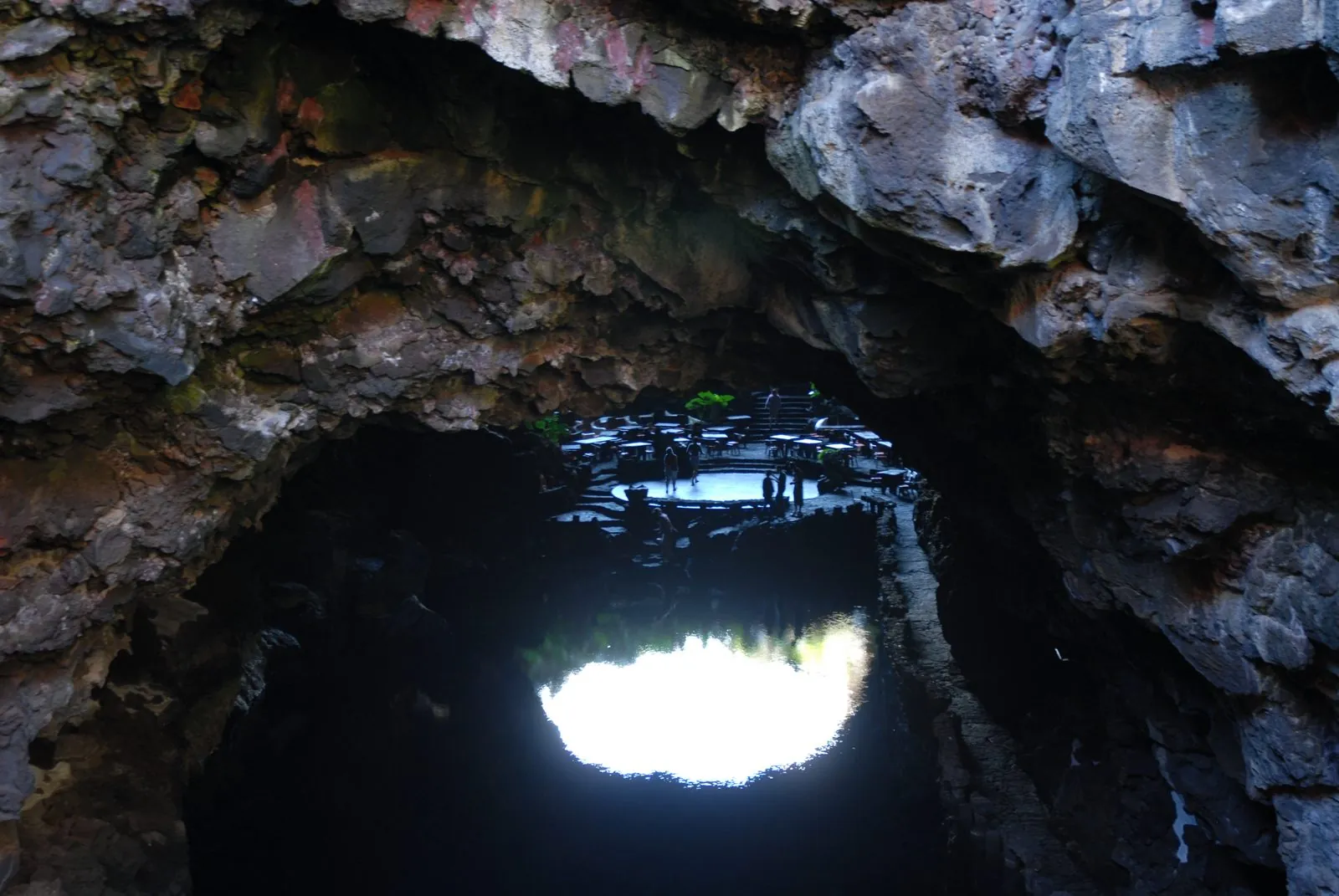
Photo: Enric · CC BY-SA 4.0 · Wikimedia Commons · scaled
The philosophy: art in nature
Manrique's guiding belief was that human creativity should work with the volcanic landscape, never against it. He called for an "art-nature / nature-art" fusion in which a building did not impose on its surroundings but grew out of them — hidden in a lava tube, sunk into a crater, painted the colours of the earth and sky. Nothing should shout; everything should belong.
From this came a set of principles he pressed on the island authorities and largely persuaded them to adopt: build low, not high; paint houses white with green woodwork inland and blue by the sea; ban roadside advertising hoardings; keep overhead cables and clutter to a minimum. The result is that Lanzarote, alone among the busy Canaries, still feels calm, uncluttered and strangely timeless — an island-wide aesthetic that is itself his greatest artwork.
You'll notice the "Manrique effect" the moment you land: whitewashed cube houses, no billboards, no towering hotels away from the resorts. It's not an accident of poverty but the result of a deliberate design vision — one reason Lanzarote is a UNESCO Biosphere Reserve.
The fight against high-rise tourism
Manrique's crusade was not only artistic — it was political, and often lonely. As mass tourism arrived in the Canaries in the 1960s and 70s, developers wanted the same thing on Lanzarote that was rising on Gran Canaria and Tenerife: tall concrete hotels packed along every good beach. Manrique fought them fiercely.
He lobbied politicians, shamed developers in the press, and used his growing international fame to insist on height limits and design controls. He didn't win everywhere — the resort strips of Puerto del Carmen and Playa Blanca show where commerce pushed back — but he won far more than anyone expected. Thanks largely to his influence, Lanzarote avoided the high-rise fate of its neighbours and kept a human scale. In his final years he campaigned against the sheer volume of visitors too, warning that even low-rise tourism could overwhelm a small island — a debate that continues today.
Manrique died in 1992 in a car accident near his foundation, at the height of his powers. His campaign against overdevelopment was unfinished, and the tension he identified — between welcoming visitors and protecting the island — is one Lanzarote still wrestles with.
The works you can visit
Manrique's ideas are not just theory — they are a chain of unforgettable visitor attractions, most of them created for the island's tourism board and now its biggest draws.
- Jameos del Agua. A collapsed volcanic tube turned into a surreal auditorium, restaurant and turquoise lagoon home to tiny blind albino crabs — perhaps his masterpiece. See Jameos del Agua.
- His own house, now the foundation. Built over five volcanic bubbles in a lava field, Manrique's former home is a jaw-dropping fusion of living rooms and molten rock — now the Fundación César Manrique, the best place to grasp his whole vision.
- Mirador del Río, Jardín de Cactus, Cueva de los Verdes and more — clifftop viewpoints, a sculpted cactus garden and lava-tube galleries scattered across the island.
Together these sites are explored in our overview of César Manrique's Lanzarote, which is the ideal way to plan a day — or two — around his work.
The wind toys and public art
Look out, too, for his playful side. At major roundabouts and gateways stand his juguetes del viento — brightly painted kinetic "wind toys" that spin and clatter in the trade winds, turning ordinary junctions into open-air sculpture. His giant wind-toy at the island's northern entrance and the mobile above Arrecife's harbour are beloved local landmarks.
Why he still matters
Manrique's legacy is bigger than any one building. He proved that a small, seemingly barren island could become world-famous not by copying the concrete resorts of the mainland, but by defending its own strange beauty. Every traveller who arrives on Lanzarote expecting a party island and leaves moved by its stark volcanic calm is, whether they know it or not, experiencing his vision. Start at the Fundación, add Jameos del Agua, and you'll never look at the island — or at the relationship between tourism and landscape — quite the same way again.