Scattered along the wildest, most windswept tips of the archipelago stand some of its most photogenic landmarks: the lighthouses, or faros, that have guided ships around these Atlantic islands for well over a century. Once vital beacons on a busy ocean crossroads between Europe, Africa and the Americas, the Canary Islands' lighthouses now double as spectacular viewpoints, quirky museums and pilgrimage points for sunset-chasers. From the twin towers rising over the Maspalomas dunes to the lonely faro at the westernmost edge of the old known world, they mark the islands' most dramatic edges. Here's a tour of the finest and most scenic to visit.
Why the Canaries needed lighthouses
The islands sit astride historic shipping lanes — the stepping-stone between Europe and the New World, and a key refuelling point on the Atlantic. As sea traffic grew through the 19th and 20th centuries, so did the wrecks, and a network of lighthouses was built to guard the treacherous headlands, reefs and shoals around each island. Many are handsome works of engineering in their own right, and several of the oldest now house small museums or visitor centres telling the story of the sea, the keepers and the islands' maritime past.
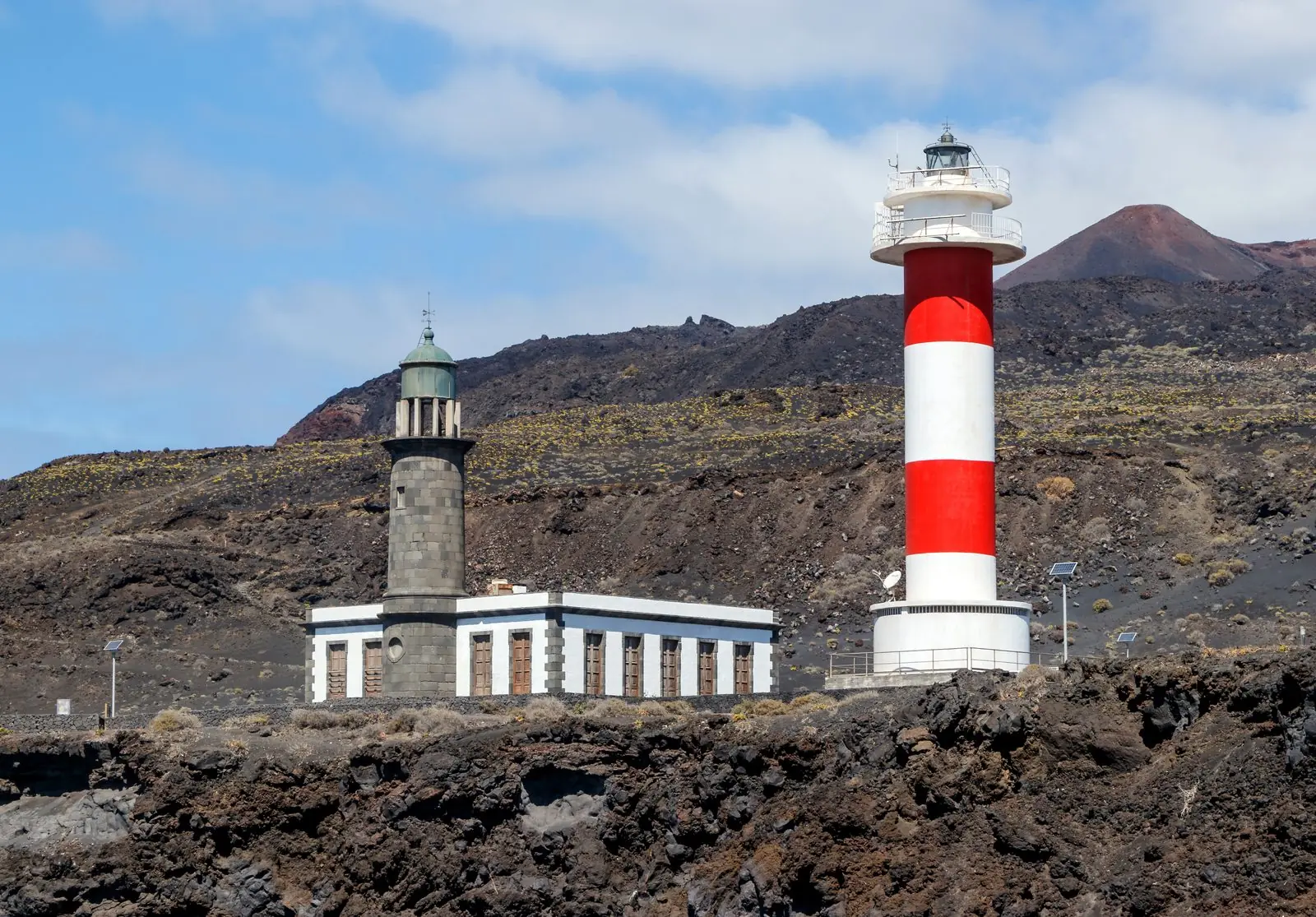
Photo: H. Zell · CC BY-SA 3.0 · Wikimedia Commons · scaled
Faro de Maspalomas — Gran Canaria's landmark
The most familiar of all is the Faro de Maspalomas, the elegant 19th-century tower standing where the golden Maspalomas dunes meet the sea at the southern tip of Gran Canaria. It's one of the island's defining images, presiding over a smart promenade lined with restaurants and shops. Walk out to it at dusk, when the light softens over the dunes and the tower glows against the sky — it's a favourite end to a beach day, and an easy stroll from the resorts of Maspalomas and Meloneras.
The area around the Faro de Maspalomas is one of the south's best spots for a sunset drink. Time a walk along the boardwalk from the dunes to arrive at the lighthouse as the sun goes down, then settle in at one of the seafront terraces.
Faro de Fuencaliente — La Palma's volcanic south
At the southern point of La Palma stand not one but two lighthouses side by side — an older 19th-century tower and its taller modern successor — on a starkly beautiful headland of black volcanic rock. This is Faro de Fuencaliente, and it's one of the most rewarding to visit, because it sits beside the shimmering Salinas de Fuencaliente, the island's working sea-salt pans, whose white pyramids and pink pools glow against the dark lava. Together they make an unforgettable landscape at the foot of the young volcanoes of the island's south.
Punta de Teno — Tenerife's wild western cape
Out at the far northwestern tip of Tenerife, beyond the towering cliffs of the Teno massif, the road runs to a lonely, wind-battered headland crowned by a lighthouse. Punta de Teno is one of the island's most spectacular spots — waves crashing on the rocks, the cliffs of Los Gigantes rising to the south, and often the outline of La Gomera on the horizon. It's a magnificent place to feel the raw power of the Atlantic.
Access to Punta de Teno is often restricted to a shuttle bus or limited hours to protect the fragile road and headland — private cars may be barred at busy times. Check the current arrangements locally before setting out, and never linger on the rocks when the sea is rough.
Faro de Orchilla — the edge of the old world
Perhaps the most evocative of all stands at the southwestern tip of El Hierro, the smallest and most far-flung of the main islands. The Faro de Orchilla marks a place of extraordinary significance: before the Americas were charted, this was considered the westernmost point of the known world, and for centuries the zero meridian — the line from which longitude was measured — was drawn through here, long before Greenwich took the honour. Reaching it means a drive across El Hierro's raw volcanic badlands to a remote, elemental coast where the land simply runs out into the ocean.
| Lighthouse | Island | Why visit |
|---|---|---|
| Faro de Maspalomas | Gran Canaria | Iconic tower beside the dunes; sunset strolls |
| Faro de Fuencaliente | La Palma | Twin faros beside the volcanic salt pans |
| Punta de Teno | Tenerife | Wild cape with cliff and island views |
| Faro de Orchilla | El Hierro | The historic "edge of the world" and old prime meridian |
More faros worth seeking out
The four above are the headline acts, but keen lighthouse-hunters will find plenty more. Lanzarote has striking beacons at its northern and southern tips; Fuerteventura's rugged capes carry their own; and El Hierro's La Restinga and other islands' harbour lights all add to the collection. Because lighthouses by definition occupy the most exposed, scenic corners of each island, simply making for a faro is a reliable way to find a dramatic viewpoint and escape the crowds.
Most Canary lighthouses are still working navigational aids and aren't generally open to climb, but the headlands around them are the real draw. Bring a windproof layer — these capes are breezy even on warm days — and stout shoes for the rocky ground.
Building a lighthouse tour
Chasing the islands' faros is a brilliant excuse to reach their wildest edges — the places where the volcanoes meet the Atlantic and the crowds thin to nothing. Pair the Faro de Fuencaliente with the salt pans of La Palma, work the Maspalomas tower into a day around the dunes and Meloneras, or make the pilgrimage to remote Punta de Teno. Each one rewards you with a landmark, a view and a slice of the islands' seafaring history — and, more often than not, one of the best sunsets you'll see anywhere in the archipelago.