Playa de la Zamora is La Palma's wild south in one beach — a striking stretch of black sand and shingle set beneath tall cliffs near Fuencaliente, in the raw volcanic landscape at the southern tip of La Palma. Remote, dramatic and largely undeveloped, it comes framed by dark rock, backed by cliffs and dotted with natural rock pools, close to the island's southern volcanoes. This is a beach for lovers of scenery and solitude rather than sunbeds — one of the most atmospheric corners of "the beautiful island".
How to get there
La Zamora lies below the cliffs on the southwest coast, near the village of Fuencaliente at the southern end of La Palma. From the main road a narrow, steep track drops toward the shore, with limited parking above the beach and a walk down to the sand — it's the kind of place that rewards a little effort. It's an easy pairing with a visit to the nearby southern volcanoes, and the descent to the coast is itself part of the adventure.
The access road is narrow and steep and parking is tight — go carefully, arrive early, and wear proper footwear for the walk down to the sand and over the shingle.
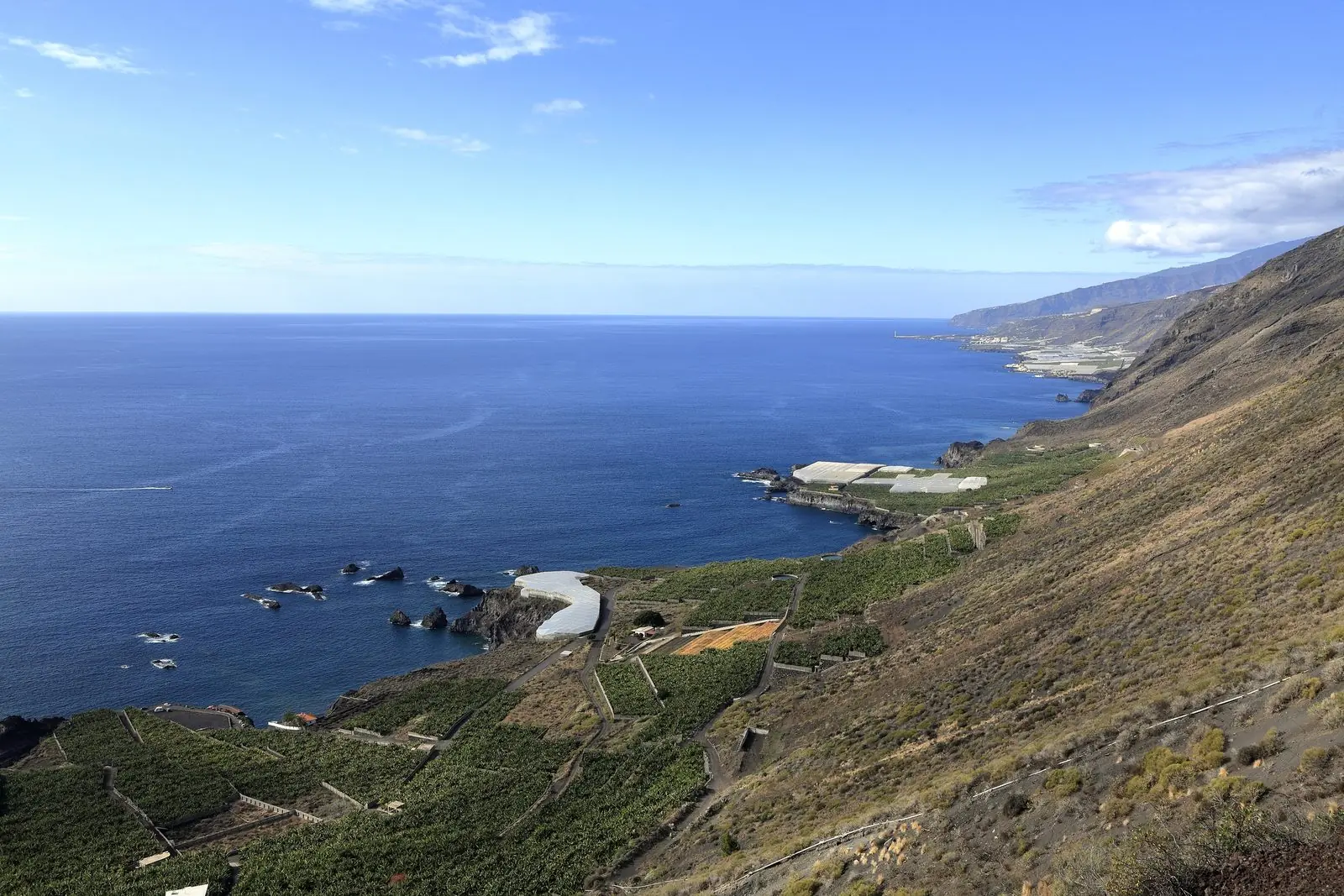
Photo: Falk2 · CC BY-SA 4.0 · Wikimedia Commons · scaled
What it's like
La Zamora is dramatic and elemental. Dark black sand and shingle meet the Atlantic beneath imposing cliffs, with volcanic rock formations and natural rock pools adding to the scene. It's really two adjoining coves, and the whole spot feels remote and untamed, with the arid, black-earth landscape of the south rising all around. There's little development and few crowds, which is exactly the appeal: a genuinely wild beach in one of the island's most geologically striking regions.
Black sand beneath dark cliffs, with rock pools at your feet and volcanoes at your back — this is the raw south of La Palma.
Swimming and safety
Treat the sea here with real respect. This is an exposed, open-Atlantic beach where waves and currents can be strong, the shingle underfoot makes entry awkward, and lifeguard cover is not to be relied upon. On a calm day the sheltered corner and rock pools can be lovely for a careful dip, but conditions change quickly and the remoteness means help is far away. This is not a beach for casual, unwary swimming or for young children in anything but the calmest sea.
Remote and exposed — take care. Playa de la Zamora has strong Atlantic waves and currents, awkward shingle and no reliable lifeguard cover, and it's a fair way from help. Only strong swimmers should go in, and only when the sea is genuinely calm; keep children close, never swim alone, and if the swell is up, stay on the sand or enjoy the rock pools instead.
Facilities
Come self-sufficient. La Zamora is a wild, natural beach with minimal services — expect little more than the odd simple facility, if that, and no sunbed hire or shops on the sand. There's limited shade and patchy phone signal, so bring water, food, sun cover and everything else you'll need for the day. The lack of development is precisely what gives this beach its remote, unspoilt character.
Best for whom
La Zamora is for lovers of wild scenery, photographers, walkers and confident, self-reliant travellers who value drama and solitude over comfort. It pairs beautifully with a day exploring the island's volcanic south. It is not for families wanting safe, easy paddling, anyone needing step-free access, or those after a serviced beach with amenities — for a calmer swim on La Palma, the sheltered cove of Charco Azul or a west-coast beach is a better bet.
Nearby
The village of Fuencaliente and the striking volcanoes of Fuencaliente — with their craters, the historic lighthouse and the salt pans by the sea — are the obvious companions to a visit here, making a memorable day in the island's south. To plan the wider trip and how La Palma's coasts and landscapes vary, see our full guide to La Palma.