Playa de La Laja is Las Palmas' everyday beach — a long, broad sweep of dark volcanic sand just south of the city centre, where local families spread out at weekends and the promenade fills with joggers, dog-walkers and grandparents taking the evening air. It has none of the tourist gloss of the famous Las Canteras to the north; instead it offers space, a genuine city-life atmosphere and an easy, unpretentious day by the sea. For anyone wanting to see how the capital of Gran Canaria actually relaxes, La Laja is the answer.
How to get there
La Laja stretches along the coast on the southern edge of Las Palmas de Gran Canaria, just off the main GC-1 motorway as it leaves the city. It's a short hop from the centre by car, with parking along the seafront, and city buses run frequently down this way, dropping you close to the promenade. A seafront path links it toward the historic Vegueta district, so it's easy to combine a beach afternoon with a wander through the old town.
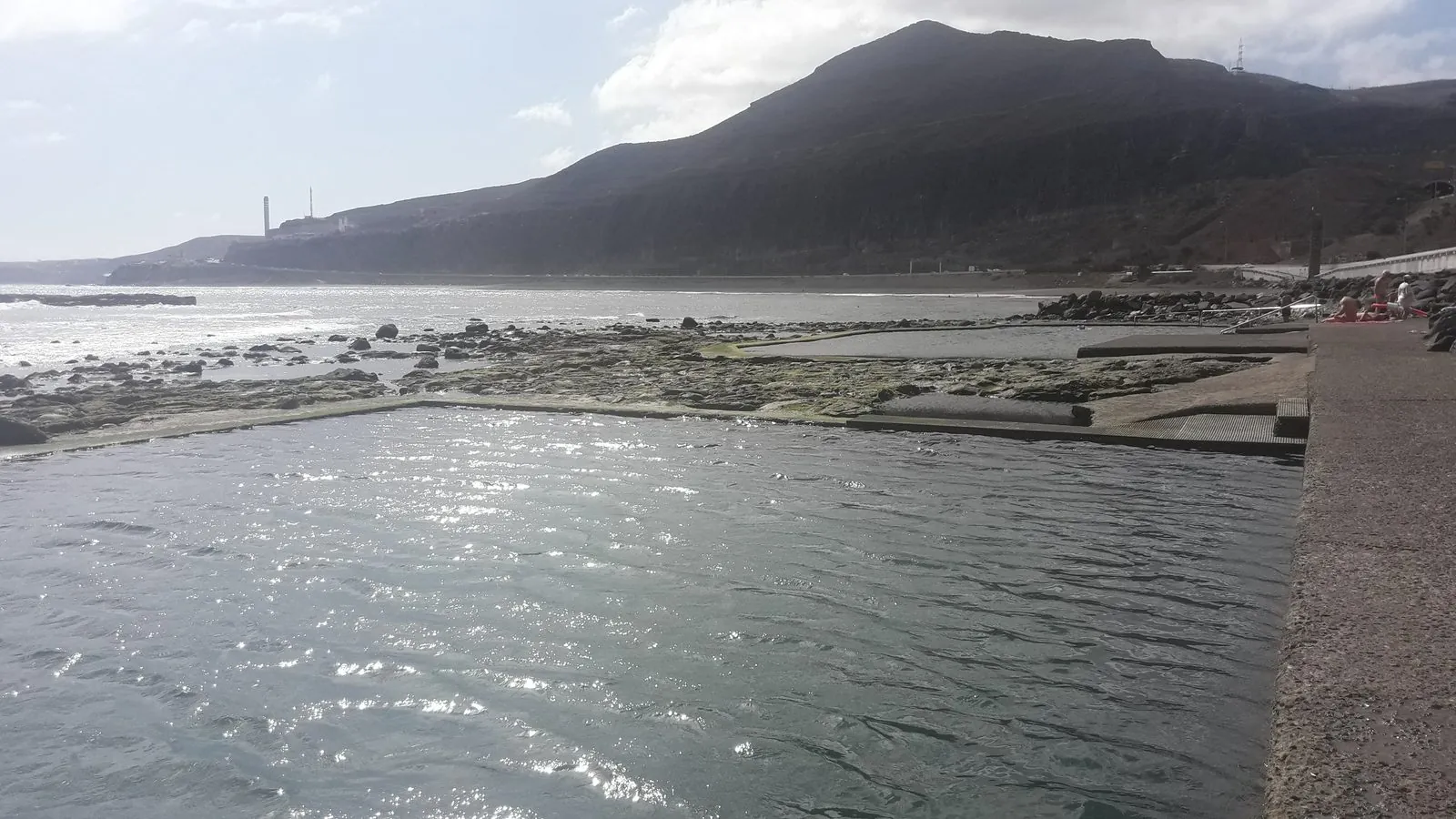
Photo: Beta15 · CC BY-SA 4.0 · Wikimedia Commons · scaled
What it's like
La Laja is generous and open — a wide expanse of grey-black sand that gives everyone room to breathe, backed by a long, pleasant promenade dotted with palms and benches. At its northern end stands a striking bronze sculpture that has become a local landmark. This is a working city beach, so expect a genuinely Canarian crowd of families, kids and locals rather than package tourists, especially at weekends and on warm evenings. The mood is relaxed, friendly and unmistakably local. Because it runs so long, even a busy Sunday rarely feels crowded — there's always a quieter stretch of sand a little further along if you want space to yourself, and the wide promenade behind it is a favourite for an evening walk once the heat of the day has eased.
Come at sunset and you'll see the real Las Palmas — families strolling the promenade, kids on the sand, the city winding down by the sea.
Swimming and safety
La Laja is generally a good, straightforward city swimming beach, and part of it is protected by artificial breakwaters that create calmer, more sheltered water — handy for families and less confident swimmers. That said, it faces the open Atlantic, so conditions vary with the swell: outside the protected sections there can be waves and some current. Swim within the sheltered zones when the sea is up, follow any flags, and keep an eye on children as you would on any ocean beach.
Head for the breakwater-protected stretch for the calmest water, especially with children. On breezier days the open sections can get a lively shore break.
Facilities
As a city beach, La Laja is reasonably well served without being a resort. The long promenade offers walking and space, and you'll find showers, some parking and a scattering of cafés and kiosks nearby for a drink or a snack. It's an easy beach to reach with public transport and to fit around a day in the city. Don't expect the wall-to-wall sunbed hire and tourist bars of the southern resorts — this is a place locals use, with a more low-key set of amenities. Because it's a working-city beach rather than a tourist honeypot, prices at the nearby bars tend to be gentler too, and you'll hear far more Spanish than English around you. Sun cover is worth bringing, as natural shade is thin along the open sand.
Best for whom
La Laja suits travellers based in the city who want a spacious, authentic local beach without the crowds and prices of the tourist strips. It's good for families, walkers and anyone who enjoys people-watching and a real neighbourhood feel. It is less suited to those after a polished, palm-fringed resort scene or guaranteed flat-calm water throughout — for a livelier tourist beach in the same city, the golden sands of Las Canteras are the obvious pick.
Nearby
Just up the coast lies the historic heart of the capital — the cobbled streets, cathedral and museums of Vegueta and the shopping of Triana — while Las Palmas as a whole makes an appealing city base with its own airport links and ferry connections. The famous city beach of Las Canteras sits at the northern end of town for a complete contrast. To plan the wider island, see our full guide to Gran Canaria.