The Salinas del Carmen are Fuerteventura's beautifully restored salt pans — a geometric patchwork of shallow evaporation ponds beside a quiet cove, with a small, excellent salt museum explaining a craft that shaped the island's history. Set on the arid east coast near Caleta de Fuste, this is the last working saltworks on Fuerteventura and one of its most photogenic corners: white salt mounds, glinting brine pools and the blue Atlantic all in one frame. It's a short, low-key visit that tells a surprisingly big story about how islanders once made a living from the sea.
Salt from the sea
Before refrigeration, salt was precious — the way people preserved fish and meat through long voyages and lean seasons. On sun-baked, wind-swept Fuerteventura, with its endless sunshine and steady trade winds, evaporating seawater to harvest salt made perfect sense, and saltworks like these were once vital to the island's economy and its fishing trade. The Salinas del Carmen, laid out in the early 20th century right on the shoreline, are the only ones still producing salt today, keeping a fading craft alive.
The process is elegantly simple and entirely natural. Seawater is channelled into large holding tanks, then moved through a sequence of shallow ponds where the sun and wind gradually evaporate the water, concentrating the brine until crystals of salt form and can be raked up by hand. No machinery, no chemicals — just sea, sun and patience, exactly as it has been done for generations.
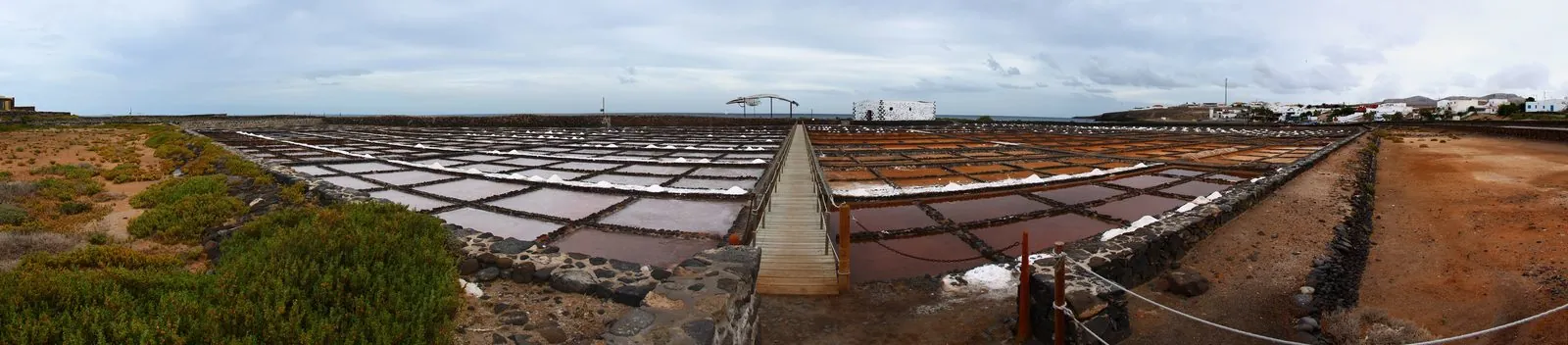
Photo: H. Zell · CC BY-SA 3.0 · Wikimedia Commons · scaled
The salt museum
Anchoring the site is the Museo de la Sal, a compact museum that turns what could be an obscure subject into a genuinely interesting half-hour. Inside, displays walk you through the geology and chemistry of salt, the history of the saltworks, the marine ecosystems that live in the salty ponds, and the many uses of salt down the centuries. Then you head outside to see the real thing: a marked route through the working pans themselves, where you can watch the different stages of evaporation and see the glistening white harvest up close.
Do both routes — inside and out. The indoor exhibition gives you the story, but it's walking among the actual ponds, with the salt crusting white in the sun and the sea just beyond, that makes the visit memorable. Bring sun protection: the site is open and there's little shade.
Check opening times and prices first. As of 2026 the museum opens on set days with a modest entrance fee, and salt is actively harvested mainly in the warmer, drier months. Hours and days change, so confirm on the official site — museosalinasdelcarmen.es — before making a special trip.
The cove and the coast
Part of the appeal is the setting. The saltworks sit in a sheltered little bay in the small village of Salinas del Carmen, where a handful of houses, a couple of restaurants and a stony beach cluster around the water. It's a peaceful, distinctly local spot to pause for fresh fish after your visit, watching the Atlantic roll in against a coastline that feels a world away from the big resorts. The east coast's characteristic calm, dry, sunny weather makes it an easy stop almost any day of the year.
An easy trip from Caleta de Fuste
The Salinas are just a few minutes' drive from Caleta de Fuste, making them one of the simplest and most rewarding excursions from that resort — ideal for a half-day when you fancy something more than the beach. Many visitors combine the saltworks with a wider loop of the island's cultural sights and quiet villages, or with the long golden beaches further south.
It also pairs neatly with Fuerteventura's other traditional-produce experiences. The island is famous for its sun-loving crops and cottage industries, from aloe vera and local produce to its prized goat's cheese — and, like the salt here, they all draw on the same generous sunshine and dry, breezy climate.
Getting there
You'll want a hire car to reach the Salinas easily, though they're close enough to Caleta de Fuste for a taxi or even an energetic walk or cycle along the coast. The site is well signposted from the main FV-2 coast road, with parking by the cove.
Sun, wind and seawater — the Salinas del Carmen show how Fuerteventura turned its harshest assets into white gold.
Small, atmospheric and quietly fascinating, the salt pans are a lovely change of pace from sand and sunbeds — a glimpse of the older, working Fuerteventura. Fold them into a day exploring the island and you'll come away with a real feel for how people lived on this beautiful, arid outpost of the Canaries.