Some of the loveliest swimming in the Canary Islands isn't on a beach at all — it's in the piscinas naturales, the natural sea pools carved into the volcanic coast. These sheltered basins of clear Atlantic water, ringed by dark lava rock and topped up by the waves, let you float in calm, glassy water while the open ocean crashes just metres away. They range from wild, unspoilt charcos you scramble down to, to tidy pools with ladders, sunbathing terraces and a lifeguard in high season. For many islanders they're the swim of choice — and once you've tried one, you'll understand why.
What are natural pools — and why so many?
A piscina natural (natural pool) or charco (literally "puddle") is a pocket of seawater trapped among the rocks along the shore. When molten lava met the ocean, it cooled into jagged reefs, hollows and low walls; the sea fills these depressions at high tide and through gaps in the rock, leaving pools that stay topped up, clear and — crucially — far calmer than the surf beyond. On many islands the natural rock has been gently improved with a little concrete, steps and railings to make it safer and easier to enter, but the water itself is pure Atlantic, refreshed with every set of waves.
The Canaries have so many of them for one simple reason: geology. Every island is volcanic, and much of the coastline is rugged black rock rather than soft sand — especially in the greener, wetter north of each island, where the classic golden beaches are scarcer. Where there's little sand, islanders have always turned to the rocks to swim, and generations of use have turned the best charcos into much-loved local institutions. They're free, they're beautiful, and they offer a very different experience from the busy resort beaches of the south.
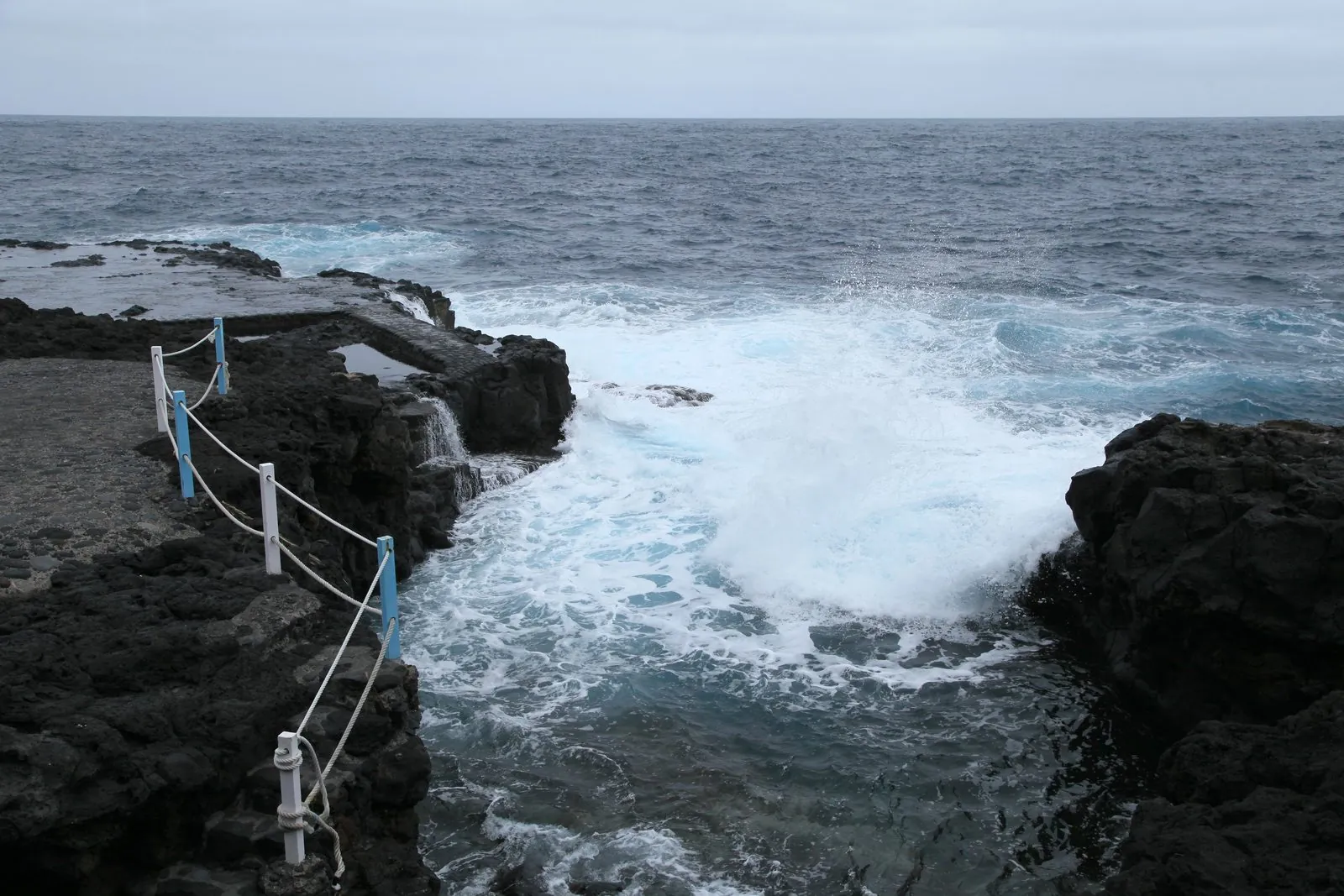
Photo: Frank Vincentz · CC BY-SA 3.0 · Wikimedia Commons · scaled
Safety first: read the sea before you swim
Natural pools are wonderful, but they sit on an exposed ocean coast, and that demands respect. The same waves that keep the water fresh can turn dangerous fast when there's a big Atlantic swell running — and the north coasts, where most pools are found, catch the brunt of it. People are hurt every year being swept off rocks or dashed against them.
Never swim when the sea is rough. If big waves are breaking over the pool walls, the surface is churning, or the water is cloudy with sand and foam, stay out — no swim is worth it. Watch the water for a few minutes before deciding. Take real care crossing wet, slippery rocks; reef shoes save cut feet and help your grip. Keep well back from the ocean-facing edges, never turn your back on the waves, and don't let children near the outer walls. If there's a red flag or a lifeguard's warning, that's final — obey it.
The calmest, safest conditions are usually around low to mid tide on a day with little swell, often best in the more sheltered months. Check the surf and swell forecast before you set out, and if in doubt, choose a supervised pool or head for a protected south-coast beach instead.
The best natural pools, island by island
Almost every island has its own beloved charcos. Here's where to start, with a dedicated guide for each.
| Island | Star pools | Good to know |
|---|---|---|
| Tenerife | Garachico (El Caletón), Bajamar, Punta del Hidalgo | Dramatic lava pools born of an eruption; mostly north coast |
| Lanzarote | Los Charcones, Caletón Blanco | Turquoise water; some wild and unmarked |
| La Palma | La Fajana, Charco Azul | Well-kept pools with terraces and ladders |
| Gran Canaria | Los Charcones, Roque Prieto, Agaete | North-coast classics near pretty villages |
Over on El Hierro, the sculpted pools of La Maceta and the wild coast around Tacorón are among the finest of all, while Fuerteventura — famous for its endless sand — has quieter rock pools at Aguas Verdes on its west coast. Wherever you are, ask locally: the best charco is often the one the neighbours use, tucked just off the main road.
What to bring and how to enjoy them
Natural pools reward a little preparation. Most have no shops or cafés, and the wilder ones have no facilities at all, so pack what you need for the day.
- Reef shoes or old trainers — the single most useful item, for grip on rock and protection from sharp lava and the odd sea urchin.
- A mask and snorkel — the clear, sheltered water is often full of little fish.
- Sun protection and water — shade is rare and the black rock radiates heat.
- A towel you don't mind getting gritty, plus something soft to sit on the rocks.
Time it with the tide. Many pools are at their calmest and clearest around low to mid tide, when the walls hold back the sea but waves aren't crashing over the top. A quick check of a tide table transforms the experience — and often means you'll have the water to yourself in the early morning.
A gentler side of island swimming
Where a resort beach is about sun loungers and sand between your toes, a piscina natural is about wild beauty and calm, buoyant salt water. They're a brilliant way to explore the greener, less-touristed coasts — combine a swim with a village lunch, a coastal walk or a drive along the north shore, and you'll see a side of the Canaries that most sun-seekers miss. Just pick a calm day, watch the sea, and let the Atlantic do the rest.
Float in glassy water while the ocean roars over the wall behind you — the natural pools are the Canaries at their wild, beautiful best.
Ready to dive in? Choose your island — Tenerife, Lanzarote, La Palma or Gran Canaria — and find your perfect charco.