Between the town of Güímar and the sea on Tenerife's eastern coast lies a raw, black expanse of hardened lava known as the Malpaís de Güímar — literally the "badland" of Güímar. It looks, at first glance, like a lifeless moonscape: jagged volcanic rock, twin extinct cones and not a hotel or sunbed in sight. Yet this protected natural reserve is one of the finest examples of its kind in the Canaries, home to rare plants that grow nowhere else and threaded with flat, easy trails that make it a wonderfully accessible slice of wild, volcanic Tenerife.
What is a "malpaís"?
In the Canaries, malpaís — "bad land" — is the name for the rough, broken terrain left behind when fresh lava cools into a chaos of clinker and sharp rock, too stony to farm or build on. The Malpaís de Güímar formed from eruptions long ago, and its very hostility has been its salvation: because it was useless to farmers and developers, it survived intact while gentler land nearby was cultivated and built over. Today it's a Special Nature Reserve covering the coastal plain below town, dominated by two low volcanic cones and the black rivers of rock that flowed from them to the sea.
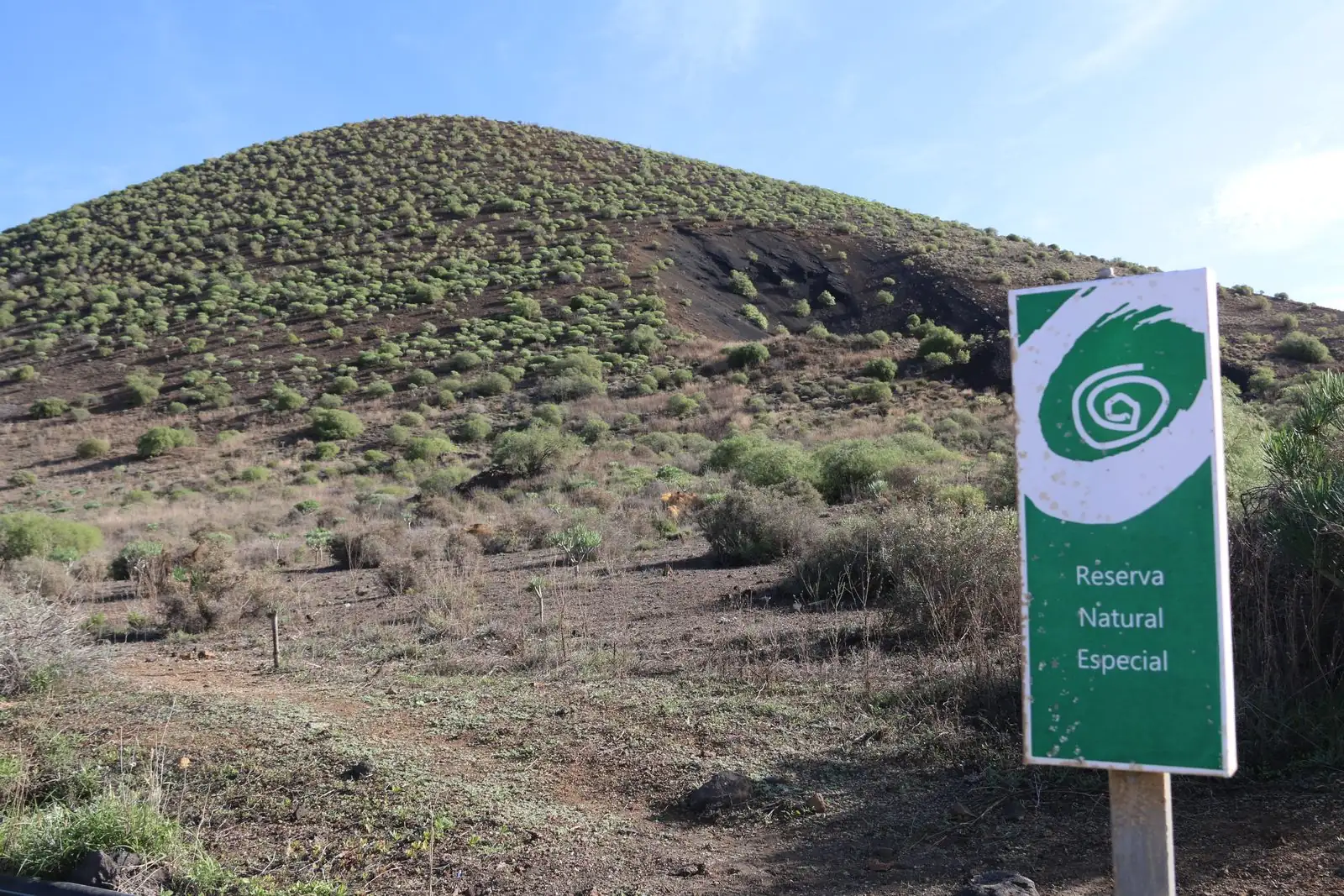
Photo: FrDr · CC BY 4.0 · Wikimedia Commons · scaled
A refuge for rare plants
What looks barren is in fact quietly alive. The Malpaís is one of the best-preserved lowland volcanic habitats in the archipelago, and botanists prize it: it shelters an unusually rich community of Canarian plants specially adapted to the dry, salty, sun-baked conditions, including cardón (the Canary Islands' candelabra spurge), tabaiba and other succulents, plus several rare and endemic species found only in this region. In spring, after any winter rain, patches of the badland surprise visitors by bursting into flower. It's a living lesson in how life colonises even the harshest ground — and a reminder of why the reserve is so carefully protected.
Look closely and tread lightly. The reward here is in the detail — the strange sculptural forms of the cardón, lichens crusting the black rock, lizards darting between stones. Keep strictly to the marked paths: the plants and the fragile crust of the lava are easily damaged and slow to recover, and staying on the trail also keeps you safe from the razor-sharp rock either side.
Flat, easy trails
One of the great things about the Malpaís de Güímar is how gentle it is to explore. Unlike the island's mountain hikes, the reserve is essentially flat, laid out across the coastal plain, with well-marked walking routes that loop through the lava fields and out towards the shore. You can tailor the distance to suit you — a short stroll to get a feel for the landscape, or a longer circuit taking in both cones and the coast. Because there's so little climbing, it suits families, older walkers and anyone who wants a proper nature walk without a strenuous ascent.
The paths run over and around the old lava flows, and the surface is stony in places, so decent shoes help. Interpretive signs explain the geology and plant life along the way, turning a walk into a mini natural-history lesson.
No shade, and sharp rock. The badland is completely exposed, dark rock soaks up the heat, and there's no café or shop inside the reserve, so carry plenty of water, wear a hat and sun cream, and avoid the middle of a hot day. The volcanic rock is genuinely sharp — sturdy footwear is a must, and this is no place for sandals or bare feet.
Two sights in one visit
The Malpaís sits right beside one of Tenerife's most talked-about attractions, the Pirámides de Güímar — the intriguing stepped stone terraces, part ethnographic park, part archaeological curiosity, made famous by the explorer Thor Heyerdahl. The two make a natural pairing: you can wander the lava fields of the reserve and then dive into the story and gardens of the pyramids, or vice versa, filling an easy and varied half-day. Güímar town itself, up the hill, is a pleasant traditional Canarian place for lunch, far from the tourist strips of the south.
Getting there and when to go
The reserve lies on the coast just below Güímar, easily reached with a hire car off the main eastern motorway; there's parking near the entrance and by the pyramids complex. It's an easy detour if you're driving between the southern resorts and the capital, and a good addition to a day exploring the quieter, more authentic east of the island rather than the busy south-west. Just up the coast, the great pilgrimage church at Candelaria makes another worthwhile stop on the same run.
Go in the morning or the late afternoon when the light is kinder and the heat less punishing, and after a spell of winter or spring rain if you want to catch the plants at their greenest. Quiet, free to wander and genuinely different from the beach-and-pool routine, the Malpaís de Güímar is one of those low-key corners that rewards curious travellers looking for the real, elemental Tenerife. For more ideas across the island, browse our full list of things to do.
A black badland that saved itself by being useless — and became a refuge for some of the rarest plants in the Canaries. Come to see how life takes hold on bare volcanic rock.