Warm, clear water and a coastline of hidden coves, sea caves and sheltered bays make the Canary Islands a joy to explore by kayak or paddleboard — and it's one of the few watersports you can pick up in an afternoon. Gliding along at sea level puts you right up against the islands' volcanic cliffs and gives you a sea-otter's view of the coast, slipping into caves and arches no boat could reach and, on the luckiest days, sharing the water with turtles or dolphins. Whether you want a gentle paddle around a calm bay or a guided expedition along a wild stretch of coast, there's something here for every level.
Here's where to go, where to learn and hire, and how to stay safe when the Atlantic wind picks up.
Kayaking or paddleboarding — which is for you?
They share the same water but feel quite different. A sea kayak is stable, fast and lets you cover distance and carry gear, making it the better choice for longer coastal trips, choppier water and cave exploring — you sit low and sheltered, and it's easy for complete beginners. Stand-up paddleboarding (SUP) is more of a workout and a balance challenge, brilliant in flat, calm water for a leisurely glide, a bit of fitness, or even sunrise yoga on the board. Many centres rent both, so you can try each.
Beginners should always start in a sheltered, enclosed bay on a calm morning, when the wind is usually lightest. Paddle out against any breeze first, so the return leg is with the wind behind you rather than fighting your way home tired. It's a simple rule that saves a lot of grief.
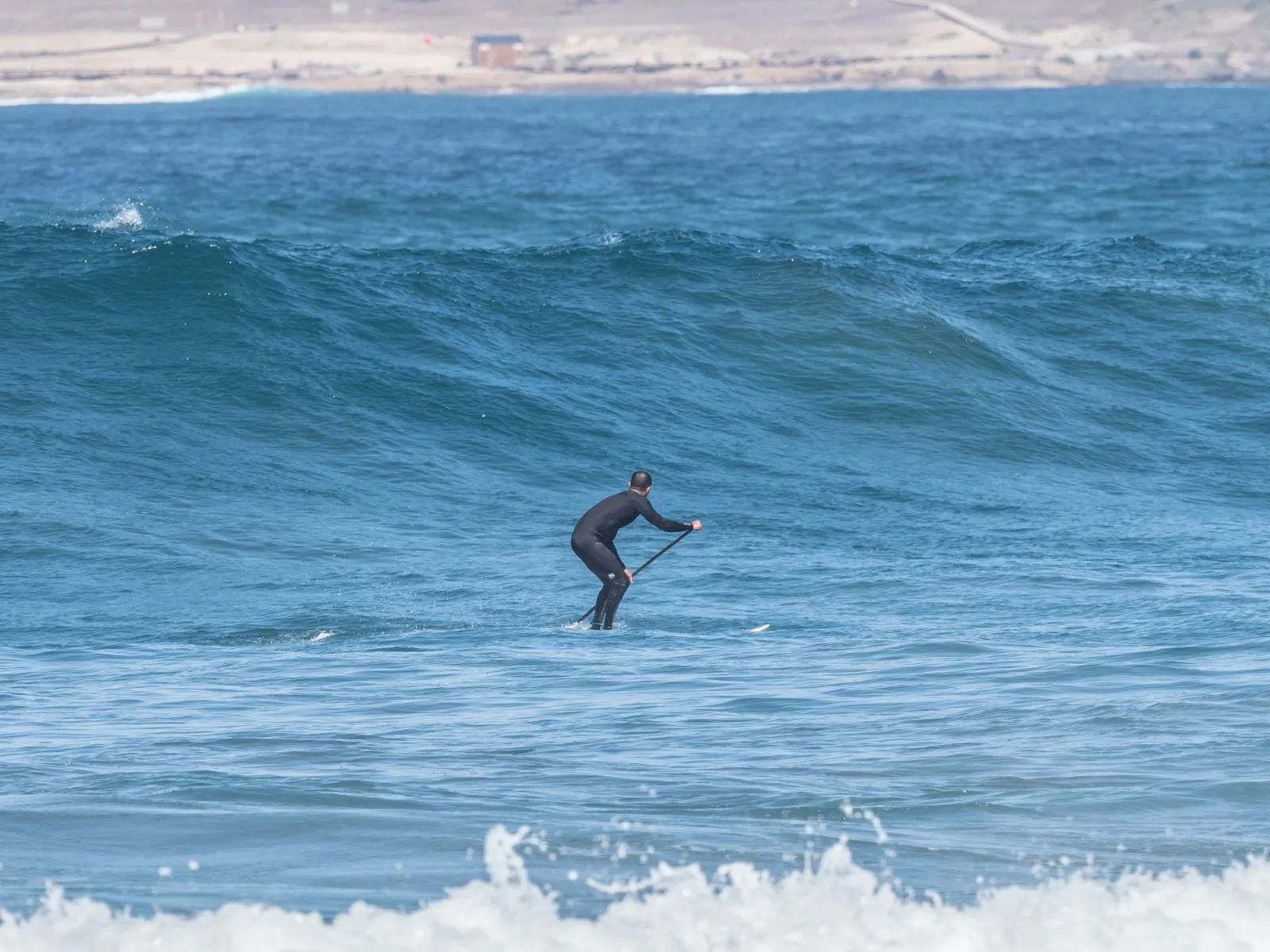
Photo: Bengt Nyman · CC BY 2.0 · Wikimedia Commons · scaled
Where to paddle
Gran Canaria
The calm, horseshoe-shaped bays of the south-west are ideal. The gentle, protected water at Amadores is perfect for first-timers and SUP, while paddles out of Puerto Rico and Puerto de Mogán take you along dramatic cliffs to quiet coves. Several operators here run guided kayak-and-snorkel trips.
Tenerife
The south-west coast around Los Cristianos, Playa Paraíso and Los Gigantes is a highlight, with guided kayak trips that paddle beneath the mighty Los Gigantes cliffs and often encounter the resident turtles — a genuinely special experience. The water here is sheltered and clear.
La Gomera and the western islands
Quiet, unspoilt La Gomera offers wonderfully wild paddling along its cliff-lined coast, with sea caves and near-empty beaches — a real away-from-the-crowds experience for confident paddlers on a settled day. Neighbouring La Palma and El Hierro also reward kayakers who don't mind that facilities are more limited.
Lanzarote and Fuerteventura
The eastern islands have superb spots too, from the turquoise lagoons near Papagayo to the calm flats that make Fuerteventura a fine place to learn SUP — though both islands are windier, so pick your day and your sheltered bay carefully.
Sea caves and dolphin trips
The real magic of kayaking here is squeezing into the coastline's nooks — volcanic sea caves, arches and tiny hidden beaches accessible only from the water. Guided cave-and-snorkel tours are a brilliant half-day, combining paddling with a swim in a secret cove. Some trips are timed and routed to give you a good chance of seeing dolphins or turtles from your board; sightings are never guaranteed, but a quiet kayak is one of the most intimate ways to meet marine life. For more on the islands' wild residents, see our guide to whale and dolphin watching.
Where to learn and hire
You'll find kayak and SUP hire on many of the busier resort beaches — just turn up and rent by the hour — while dedicated watersports centres and schools offer proper lessons, guided tours and better kit. For anything beyond a paddle in a calm bay, a guided trip is well worth it: the guide knows the safe routes, the caves, the currents and the wildlife, and provides buoyancy aids and a briefing. If you're building a broader watery holiday, our overview of boat trips and watersports covers everything else the islands' coast has to offer.
Respect the wind and the currents — the Atlantic is not a swimming pool. The same trade winds that cool the beaches can quickly push a paddleboarder or kayaker offshore, and an easy-looking paddle out can become an exhausting slog back. Always check the forecast, stay close to shore in a sheltered bay unless you're with a guide, wear the buoyancy aid provided, and never paddle out in strong or offshore (blowing out to sea) wind. Tell someone your plan, take water and sun protection, and if you're an inexperienced swimmer or paddler, go with an operator rather than alone. Obey the beach flags — red means stay out of the water.
Is it worth it?
Very much so. It's affordable, healthy, suitable for almost anyone, and it shows you a side of the coast the beach crowds never see — all while you're gently gliding over water warm enough to swim in most of the year. Pick a calm bay to start, book a guided cave trip for the wow factor, and keep a respectful eye on the wind. For more ideas on and off the water, explore the full list of things to do and our island-by-island beach guides.