There are few nicer ways to see the Canary Islands' quieter corners than from the saddle — ambling along a golden beach at sunset, picking through a palm-filled ravine, or climbing a mountain track to a viewpoint the tour buses never reach. The islands' mild, dry climate means riding is a year-round pleasure, and because most centres cater to holidaymakers rather than seasoned equestrians, you don't need to be an experienced rider to take part. From absolute beginners led at a gentle walk to confident riders wanting a proper cross-country hack, there's something for everyone.
Here's what to expect, the kinds of rides on offer, and where to find riding centres island by island.
What kind of ride can you do?
Most centres offer a menu of options, so you can match the outing to your ability and how much time (and saddle-soreness) you fancy:
- Short taster rides — an hour or so, often led at walking pace, perfect for first-timers and children. A gentle way to test whether riding is for you.
- Half-day trail rides — a couple of hours through the countryside, ravines, farmland or coastal scrub, usually with a mix of paces once the guide is happy you can handle it.
- Beach rides — the classic holiday experience, walking or trotting along the sand, sometimes timed for sunset. Genuinely magical, though beach access for horses is restricted in many resort areas, so these run on specific stretches only.
- Full-day and multi-day treks — for confident riders, longer routes into the mountains with a picnic stop, and on some islands multi-day trails linking villages.
Be honest about your experience when you book. A good centre matches the horse and the pace to your ability, giving nervous beginners a calm, well-schooled pony and saving the livelier mounts for those who can ride. If you've never sat on a horse, say so — you'll enjoy it far more on the right animal.
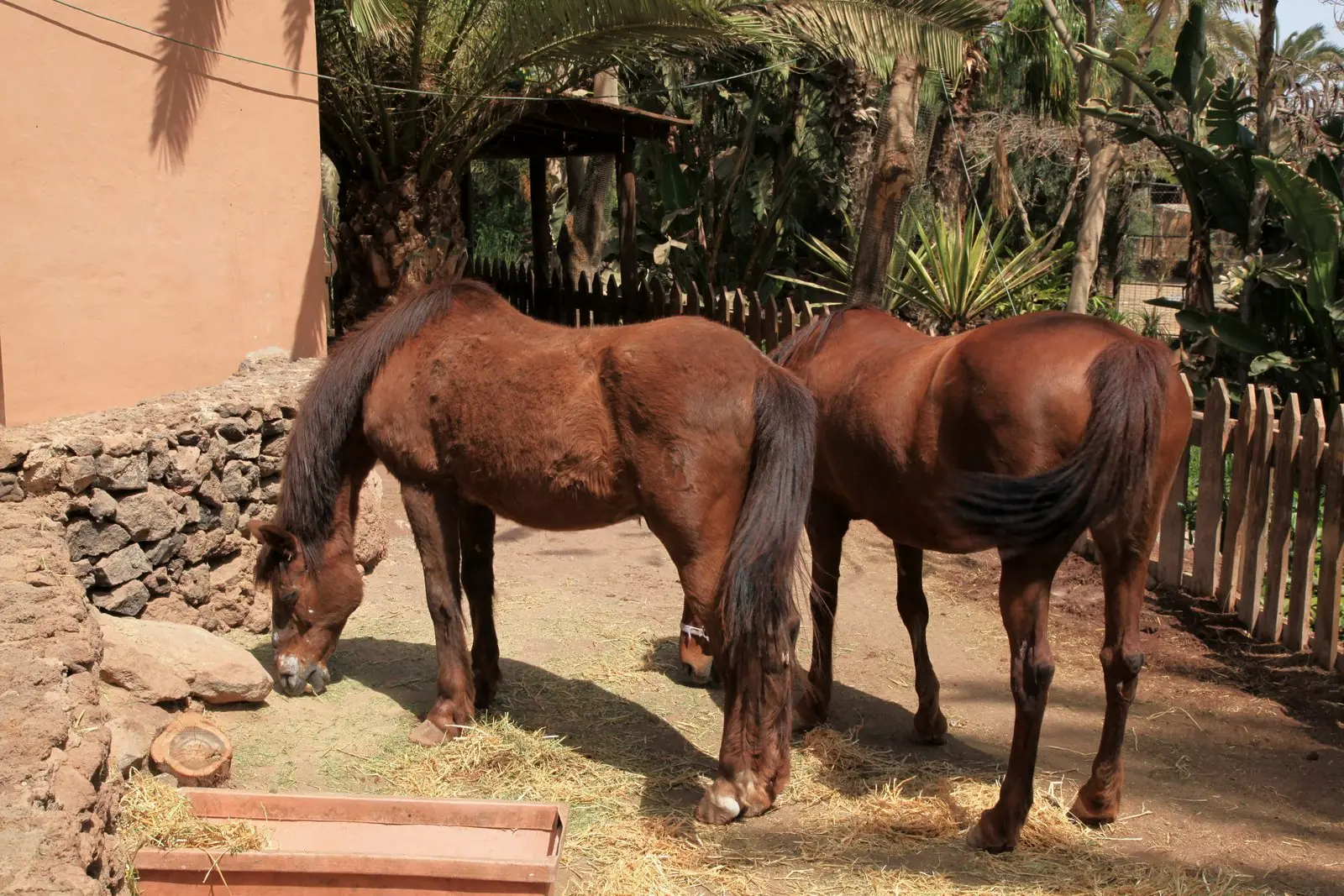
Photo: Frank Vincentz · CC BY-SA 3.0 · Wikimedia Commons · scaled
Riding centres island by island
Gran Canaria
Gran Canaria has the widest choice, with riding schools and trekking centres in the countryside behind the southern resorts and in the greener interior. Trails climb from the coast into palm groves and mountain villages, and it's an easy add-on to a beach-based holiday around Maspalomas and Playa del Inglés.
Fuerteventura
With its open, empty landscapes and long sandy beaches, Fuerteventura is arguably the most scenic island for riding. Several stables offer rides across the volcanic plains and, on permitted stretches, along the coast — the big skies and horizon-wide views make for a real "cowboy country" feel.
Tenerife
Tenerife's varied terrain gives everything from gentle rides in the south to forest trails in the cooler, greener north around the pine woods below Teide. Centres here range from small family stables to larger trekking operations.
Lanzarote and the other islands
Lanzarote offers atmospheric rides through its volcanic, moon-like scenery, and the greener western islands of La Palma and La Gomera have small centres running trails through spectacular mountain and forest landscapes. Availability is more limited here, so book ahead.
Riding for all abilities — and for children
You really don't need to be experienced. Reputable centres start beginners with a safety briefing and a led walk, building up only as your confidence grows. Many also offer pony rides and lessons for children, making a stable visit a lovely family outing — and a welcome change of pace from the pool. Just check minimum-age and weight limits when you book, as these vary by centre and by horse.
Choose your centre with care, both for your safety and the horses' welfare. Look for a well-run stable with visibly healthy, well-kept animals, hard hats (helmets) provided as standard, and guides who match horses to riders rather than putting nervous beginners on strong mounts. Avoid anywhere the horses look thin, sore or overworked, or that lets you ride without a helmet. Wear long trousers and closed shoes with a small heel, and remember the sun is strong even on horseback — hat, sunscreen and water are essentials.
Is it worth it?
For a change from the beach and a slow, scenic look at the islands' interior, a trail ride is a delight — and a beach ride at sunset is the kind of holiday memory that sticks. It's not the cheapest activity, and the very short led rides can feel brief, so if you're a confident rider, book a longer trail to get the most out of it. Pair it with one of our walking routes for an outdoorsy few days, or spend the rest of your time on the water with our guide to boat trips and watersports. For more ideas, browse the full list of things to do.