The Canary Islands sit on the edge of some of the richest big-game fishing water in the Atlantic — and you barely have to leave the harbour to reach it. Because the islands are the tips of huge undersea volcanoes, the seabed plunges to enormous depths just a short run offshore, funnelling nutrient-rich currents and the ocean giants that feed on them close to the coast. That deep-water drop-off is why anglers travel here from all over the world in the hope of a blue marlin, and why even a first-timer can climb aboard a charter, motor out for a couple of hours, and be into serious fish before lunch.
Here's what's out there, where the charter fleets sail from, and how to fish these waters responsibly.
What can you catch?
The star of Canary big-game fishing is the blue marlin, which runs through the warmer months and grows to spectacular sizes — the islands have a genuine reputation as a world-class marlin ground. Alongside them you might tangle with:
- Tuna — bigeye, yellowfin, skipjack and albacore, hard-fighting and often the most reliable catch.
- Wahoo — blisteringly fast and prized for the fight (and, if kept, the table).
- Dorado (mahi-mahi), barracuda, bonito and various sharks, depending on the season and how far you head out.
The marlin and other billfish are strongly seasonal, broadly peaking in the summer and early autumn, while tuna and smaller species are around much of the year. A good skipper will tell you honestly what's realistic for the week you're visiting rather than promising a marlin in January.
New to it? You don't need any experience or your own gear — charters supply everything, and the crew rig the lines, set the drag and coach you through the fight. Just bring a hat, sunscreen, a light layer and, if you're prone to it, seasickness tablets taken before you sail. Half-day trips (around three to four hours) are plenty for a first taste and easier on the stomach.
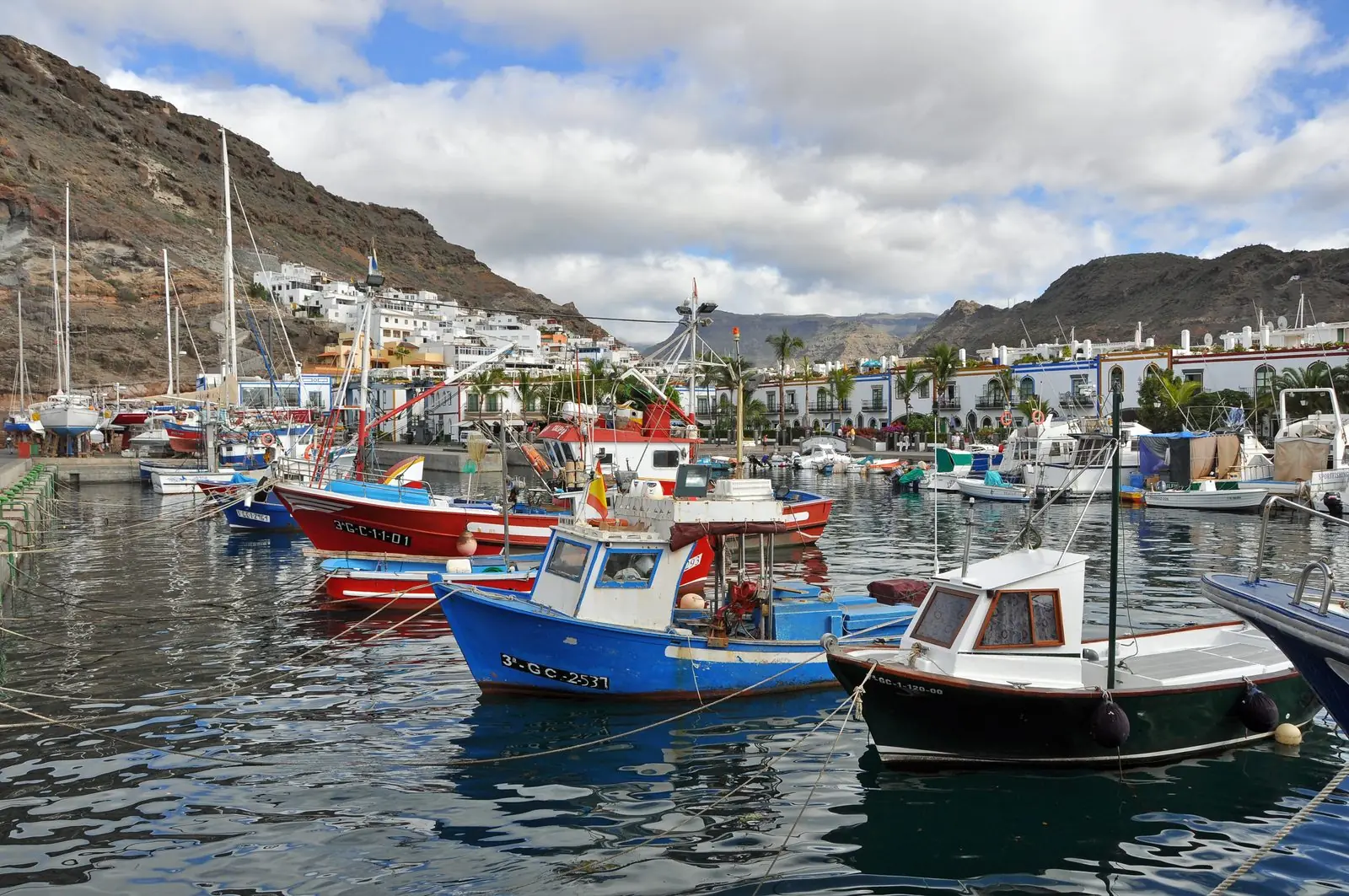
Photo: Marc Ryckaert (MJJR) · CC BY 3.0 · Wikimedia Commons · scaled
The main charter ports
Most big-game charters work out of the sheltered southern marinas, where the deep water is closest and the weather most reliable. The best-known bases are:
- Puerto Rico, Gran Canaria — the island's main sport-fishing hub, with a large marina and a fleet of well-equipped charter boats running half- and full-day trips out to the drop-off. An easy choice from the southern resorts.
- Pasito Blanco, Gran Canaria — a quieter marina near Arguineguín and Maspalomas, popular with serious anglers and another launch point for the deep water off the south coast.
- Los Gigantes, Tenerife — set beneath towering cliffs on Tenerife's south-west coast, with deep water almost immediately offshore and a long tradition of billfish charters.
Tenerife's other southern marinas, plus ports on Lanzarote and Fuerteventura, also run charters, so wherever you're staying there's usually a boat within reach.
Private charter or shared boat?
You can book a private charter (the whole boat for your group, best if you want to target billfish and call the shots) or a shared trip (you buy a seat and split the boat with other anglers, cheaper and fine for a fun half-day). Private boats cost more but give you the crew's full attention and flexibility over where and how long you fish.
Catch-and-release and fishing ethics
Billfish like marlin are increasingly fished on a catch-and-release basis, and for good reason — these slow-growing ocean predators are far more valuable alive, and releasing them keeps the fishery healthy for the future. Reputable Canary charters release all billfish as standard, using circle hooks and careful handling to give the fish the best chance of survival. Choose an operator that does this. Eating species such as tuna, wahoo and dorado is fine and part of the appeal, but there's no good reason to kill a marlin for a photo when a boat-side picture and a clean release make a better story anyway.
When you book, ask about the crew's release policy, whether they use circle hooks, and how they handle fish for the camera. The best skippers are proud conservationists who want the fishing to last — and they'll happily explain it all.
Practical tips for booking
- Compare a few operators and read recent reviews — look for well-maintained boats, experienced crews and honest descriptions rather than guaranteed-catch hype.
- Check what's included — most charters cover tackle, bait, licences and often drinks; confirm before you pay.
- Book the right length — a half-day covers the closer grounds; full days reach further offshore and give you the best shot at a big fish, but they're a long time at sea.
- Mind the conditions — the Atlantic can get lumpy, and a good skipper will reschedule if it's too rough. Take that as professionalism.
Is it worth it?
If the idea of hooking a fish bigger than you thrills you, absolutely — few holiday activities match the drama of a screaming reel and a marlin cartwheeling behind the boat. It's not cheap, and sea days are never guaranteed, but even a quiet trip is a grand few hours out on a legendary stretch of ocean. If you'd rather stay gentler on the water, our guide to boat trips and watersports covers calmer cruises, and there's plenty more in our full list of things to do.