The Canary Islands are naturally breezy — the steady north-easterly trade winds (the alisios) blow almost constantly, especially in summer — but how windy your holiday feels depends enormously on which island and which coast you choose. Fuerteventura, eastern Lanzarote and the north-facing coasts catch the full force of the wind (which is exactly why they're world-class windsurfing spots), while the south-facing resorts sit in the wind shadow and enjoy calm, sheltered, sun-trap conditions. Pick the right side of the right island and you'll barely notice a breeze.
Why the Canaries are windy: the trade winds
The islands sit squarely in the belt of the north-east trade winds, known in Spanish as the alisios. These are remarkably reliable winds that blow from the north-east for much of the year, strengthening through the summer months. They're a big reason the Canaries have such a famously pleasant climate — the trades pull in cooler Atlantic air that keeps the heat comfortable and the humidity low, so even a hot day rarely feels oppressive. Our Canary Islands weather guide puts the wind in the context of the year as a whole.
So a bit of breeze is part of the deal, and mostly a blessing. The wind is what stops the low latitude feeling stifling. The trick isn't avoiding wind altogether — it's knowing where it's strongest and where it isn't.
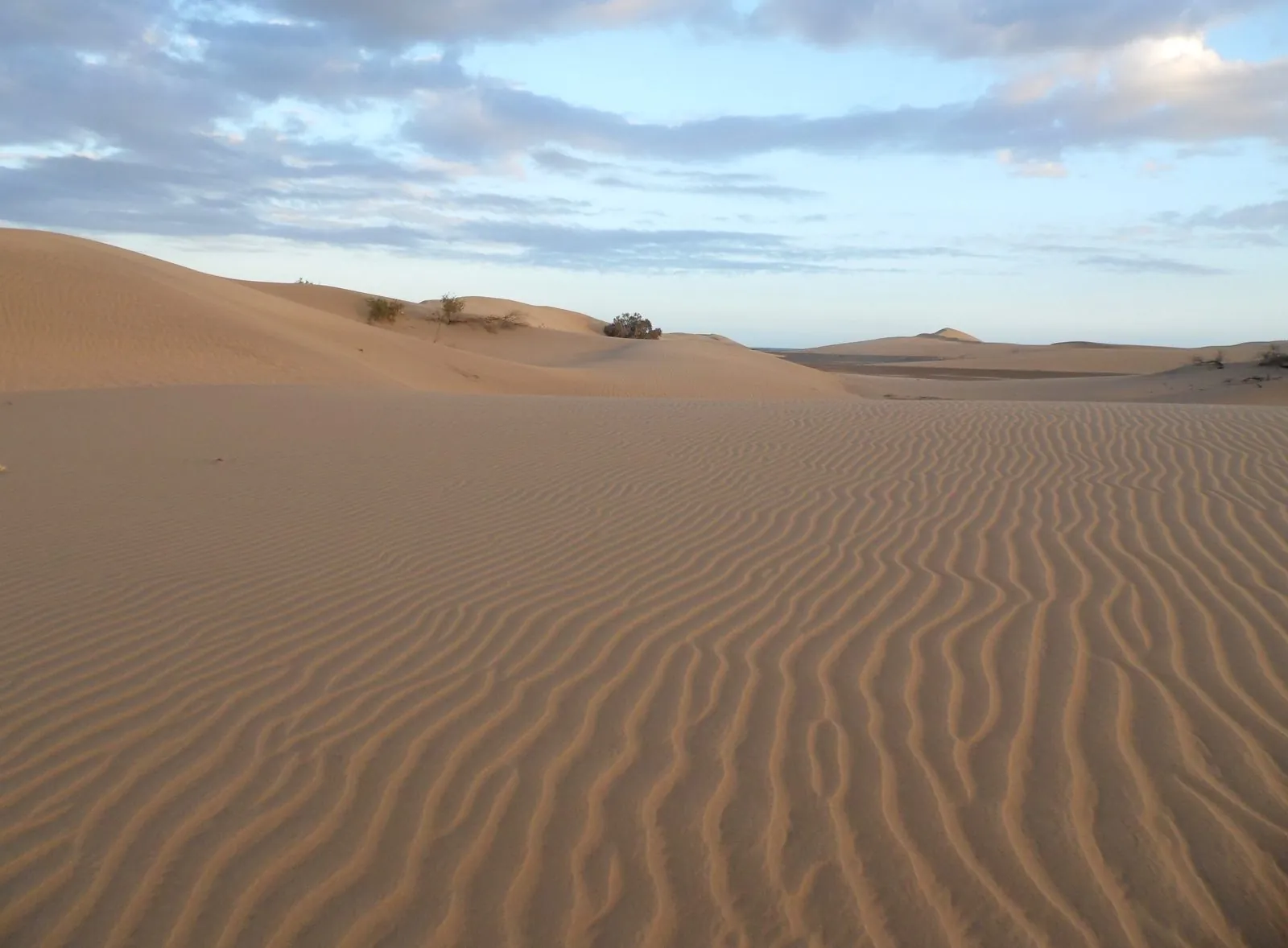
Photo: Krzysztof Ziarnek, Kenraiz · CC BY-SA 4.0 · Wikimedia Commons · scaled
The windiest islands and coasts
Wind is very unevenly spread across the archipelago. The most exposed places are:
- Fuerteventura — the flattest, most open island, with little high ground to block the trades. It's breezy almost everywhere and its beaches are legendary among watersports fans. See our Fuerteventura island guide.
- Eastern Lanzarote — the windward side of the island, notably around the sandy stretches that draw kite- and windsurfers.
- North-facing coasts everywhere — on every island, the coast that faces the incoming north-east wind is the breezier, cooler, cloudier one, with bigger Atlantic swell.
These aren't places to avoid — they're spectacular, and the wind is a feature, not a fault. It's simply worth knowing before you book a north-coast apartment expecting still, hot beach days.
Why windsurfers and kitesurfers love it
The same wind that might ruffle your parasol makes the Canaries one of the best watersports destinations on the planet. The dependable trades give windsurfers, kitesurfers and surfers reliable conditions for much of the year, and Fuerteventura in particular hosts world-class events. If you fancy trying it yourself, our guide to surfing in the Canary Islands covers where to catch the waves and the wind. One island's "too windy to sunbathe" is another traveller's dream holiday.
If watersports are the point of your trip, book on a windward coast and go in summer when the trades are strongest. If you want to lie still on a lounger, do the opposite — read on.
The sheltered south: sun-trap resorts
Here's the good news for sun-worshippers. Because the wind comes from the north-east, the high volcanic peaks of the larger islands cast a wind shadow over their southern coasts. That's precisely why the big holiday resorts cluster on the south and south-west — they're the calmest, sunniest, most sheltered spots in the archipelago. If you want to sunbathe without chasing your beach towel down the sand, aim for the south-facing side. Our where to stay guide maps out the resort areas and the trade-offs.
Classic sheltered sun-traps include the southern resorts of Tenerife and Gran Canaria, tucked below their big mountains, where you can have a still, hot afternoon on the beach while the north of the same island is breezy and green.
How to pick a calm spot
A few simple rules will steer you towards the conditions you want:
- Choose your coast, not just your island. South- and south-west-facing beaches are almost always calmer than north-facing ones on the same island.
- Look for beaches in bays and coves, or those backed by cliffs, which shelter you from the breeze.
- Consider the season. Winter and spring tend to be a touch calmer than the peak-trade-wind summer, though it's never truly still.
- Time your day. Wind often picks up in the afternoon, so mornings can be calmer if you're on a breezier coast.
- If sun-lounging is the priority, the flat, wide-open beaches of Fuerteventura, gorgeous as they are, will usually be breezier than a sheltered southern cove elsewhere.
A steady breeze also masks the strength of the sun. Because the wind keeps you feeling cool, it's easy to burn without realising — always keep the sun cream topping up, however comfortable the air feels.
Wind versus the calima
Not all Canary wind is the pleasant trade-wind kind. Occasionally the wind swings round to the east and brings a hot, dusty haze off the Sahara — the calima — which feels completely different: still, stifling and murky rather than fresh and breezy. It's a separate phenomenon worth understanding, and we cover it fully in our page on what the calima is.
The bottom line
Yes, the Canaries are breezy — the reliable north-east trade winds blow year-round and strengthen in summer — but that wind is a big part of what makes the climate so pleasant, and you have real control over how much of it you feel. Fuerteventura, eastern Lanzarote and every north-facing coast are the windiest (and the watersports havens), while the south-facing resorts sit in a sheltered wind shadow that makes them proper sun-traps. Match the coast to what you want from your holiday and the wind works for you, not against you.